I was sitting in the kitchen Wednesday when I overhead on Zoom the pastor at my wife's church tease the next week's Bible study with a question: Is it possible for someone else to teach Jesus?
As questions go, that one’s a no-brainer. I haven’t seen set foot in the church for two years, but I couldn’t help myself. I answered immediately.
“Yes.”
The proof lies in Mark 7, and in a parallel passage in Matthew 15. Mark explains that a Syrophoenician woman came to Jesus to ask him to heal her daughter, whom the distraught mother said was afflicted by an unclean spirit.
If you've been paying attention to the gospels so far, you probably can guess how this will play out. Jesus will rebuke the spirit. He'll embrace the girl in a hug and breathe on her. He might be dramatic, or he might be matter-of-fact, but this story is going to end with the girl better and her mother relieved and grateful. One thing that will not happen, is Jesus will not say no.
Except no is exactly what Jesus does say. In fact, he doesn't just give the poor woman a paper cut; he pours lemon juice on it and delivers a biting insult.
"It is not right to take the children's bread and feed it to the dogs."
This is the sort of thing that can sink a political campaign. Over the years I've heard lots of attempts at damage control by God's PR team. None of them has been especially convincing.
"Dogs are beloved pets," goes one. "Jesus was basically calling this woman a member of the family."
Except the gospel comes from a culture without $70 bags of Purina dog food for small breeds. Jesus was not comparing the Syrophoenician woman to a toy poodle named Fifi. Dogs in ancient Galilee were unclean animals that inhabited the city dump. They known for their viciousness. not their adorable penchant for sitting on your lap.
"Jesus was testing the woman's faith."
By calling her a dog? We've already seen Jesus heal lepers and blind people without such tests. Luke reports that a woman simply touched the hem of his robe and was healed with no effort on his part.
Here's the simple explanation, in Jesus' own words: "I was only sent for the lost sheep of Israel." He wasn't going to provide the healing because the woman and her daughter weren't Jewish.
But this woman was determined. Her daughter needed help,, and she was confident Jesus was the one to help. Don't give your children's bread to the dogs? OK, then. She had a quick wit and a ready response.
"Dogs can eat the crumbs that fall from the master's table."
One imagines Jesus stopping, stunned. Of course she was right. The Bible was filled with stories of favored Gentiles. Ruth the Moabitess, a woman from a people so reviled that the book of Genesis recounted a crude ethnic joke about their origins. Rahab of Jericho, who hid Israelite spies scouting out the land. Naaman the Aramean. whom Elisha the prophet had healed of leprosy.
Blown away by the response, Jesus turned and fed the dog a whole loaf of bread, straight from the oven.
“For such a reply, you may go," he said. "The spirit has left your daughter.”
It's a stunning moment, mostly because it goes against our notions of Jesus as a perfectly enlightened bodhisattva, but the gospels note that Jesus' whole life was an odyssey of learning. It began with his birth , when he had to learn to latch on to his mother's breast in order to eat. From there he had to learn to crawl and then to walk, and somewhere along the line he picked up Aramaic, along with Hebrew, Greek and probably some Latin. The evangelist Luke notes that Jesus read from the scroll of Isaiah, while John reports that he could write as well. Someone had to teach him these skills, along with the trade he learned at Joseph's knee.
This should be no surprise to us. The gospels describe Jesus as one with the Father, and to look at God in the Hebrew Bible is to see a God who is eager to try new things, to see what happens.
God plays in the dirt and sculpts a man. Then he breathes life into this new creature and names him Adan, (There's a first time for everything.)
He brings the animals by. What's Adam going name them? ("Well, this one is a frog. I'm calling this thing a badger. This one is an oliphaunt, and this useless lump over here is called Kevin.")
Any suitable companions to be found? ("Well, the capybara is kind of funny, the way it eats watermelon and soaks in the hot tub; and it's really cute the way the hamster stuffs its cheeks just before we say grace. But the bananaquit seems kind of vicious, and none of them is a big conversationalist...")
The adventure plays out over the years. "Come, let us make bricks," man says, and God drops in for a closer look. "Well, what have we here?' he asks, and then he finds out.
God learns.
Sometimes what we teach him isn't what he wanted to know. "You're doing things that never even occurred to me!"
Sometimes God is impressed by our ability to change, and a great city (and its cattle) are spared judgment.
Sometimes it even seems people manage to teach God about himself.
"Shall not the judge of all the earth do what is right?" Abraham asks. And God blinks, and he changes his mind.
God, it appears, is always willing to learn about showing mercy. The real question is whether we have anything to teach him.
Sunday, May 05, 2024

teaching ii
I was sitting in the kitchen Wednesday when I overhead on Zoom the pastor at my wife's church tease the next week's Bible study with a question: Is it possible for someone else to teach Jesus?
The answer lies in Mark 7, and in a parallel passage in Matthew 15. Mark explains that a Syrophoenician woman came to Jesus to ask him to heal her daughter, whom the distraught mother says is afflicted by an unclean spirit. Jesus' response is shocking. He doesn't just say no and give the woman a paper cut; he has to go and pour lemon juice on it too, with a biting insult.
"It is not right to take the children's bread and give it to dogs."
It's the sort of misstep that can sink a political campaign, and over the years I've heard lots of attempts at damage control by God's PR team. None of them has been especially convincing.
"Dogs are beloved pets," goes one. "Jesus was basically calling this woman a member of the family."
Except the gospel comes from a culture without bags of $70 Purina dog food for large breeds. Jesus was not comparing the Syrophoenician woman to a toy poodle named Fifi. Dogs in ancient Galilee were unclean animals that inhabited the city dump. They known for their viciousness. not their adorable penchant for sitting on your lap.
"Jesus was testing the woman's faith."
By calling her a dog? We've already seen Jesus heal lepers and blind people without such tests. Luke reports that a woman simply touched the hem of his robe and was healed with no effort on his part.
Here's the simple explanation, in Jesus' own words: "I was only sent for the lost sheep of Israel." He wasn't going to provide the healing because they weren't Jewish.
But this woman was determined. Her daughter needed help,, and she was confident Jesus was the one to help. Don't give your children's bread to the dogs? OK, then. She had a quick it and a ready response.
"Dogs can eat the crumbs that fall from the master's table."
One imagines Jesus stopping, stunned. Of course she was right. The Bible was filled with stories of favored Gentiles. Ruth the Moabitess, a woman from a people so reviled that the book of Genesis recounted a crude ethnic joke about their origins. Rahab of Jericho, who hid Israelite spies scouting out the land. Naaman the Aramean. whom Elisha the prophet had healed of leprosy.
Blown away by the response, Jesus turned and fed the dog a loaf of bread.
"For such a reply, you may go," he said. "The spirit has left your daughter."
It's a stunning moment, mostly because it goes against our notions of Jesus as a perfectly enlightened bodhisattva, but the gospels note that Jesus' whole life was an odyssey of learning, beginning with his birth and had to learn to latch on to his mother's breast in order to eat. He had to learn to crawl and then to walk, and somewhere along the line he had to learn Aramaic, along with Hebrew, Greek and probably some Latin. The evangelist Luke notes that Jesus read from the scroll of Isaiah, while John reports that he could write as well. Someone had to teach him these skills, along with the trade he learned at Joseph's knee.
This should be no surprise to us. The gospels describe Jesus as one with the Father, and to look at God in the Hebrew Bible is to see a God who is eager to try new things, to see what happens.
God plays in the dirt and sculpts a man. Then he breathes life into this new creature and names him Adan, (There's a first time for everything.)
Bring the animals by. What's Adam going name them. ("Well, this one is a frog. I'm calling this thing a badger. This one is an oliphaunt, and this useless over here is named Kevin.")
Any suitable companions to be found? ("Well, the capybara is kind of funny, the way it eats watermelon and soaks in the hot tub; and it's really cute the way the hamster stuffs its cheeks just before we say grace. But the bananaquit seems kind of vicious, and none of them is a big conversationalist...")
The adventure plays out over the years. "Come, let us make bricks," man says, and God drops in for a closer look. "Well, what have we here?' he asks, and then he finds out.
God learns.
Sometimes what we teach him isn't what he wanted to know. "You're doing this that never occurred to me."
Sometimes he's impressed by our ability to change, and a great city 9and its cattle) are spared judgment.
Sometimes it even sees people manage to teach God about himself.
"Shall not the judge of all the earth do what is right?" Abraham asks. And God blinks, and he changes his mind.
God, it appears, is always willing to ;earn about showing mercy. The real question is whether we have anything to teach him.
The answer lies in Mark 7, and in a parallel passage in Matthew 15. Mark explains that a Syrophoenician woman came to Jesus to ask him to heal her daughter, whom the distraught mother says is afflicted by an unclean spirit. Jesus' response is shocking. He doesn't just say no and give the woman a paper cut; he has to go and pour lemon juice on it too, with a biting insult.
"It is not right to take the children's bread and give it to dogs."
It's the sort of misstep that can sink a political campaign, and over the years I've heard lots of attempts at damage control by God's PR team. None of them has been especially convincing.
"Dogs are beloved pets," goes one. "Jesus was basically calling this woman a member of the family."
Except the gospel comes from a culture without bags of $70 Purina dog food for large breeds. Jesus was not comparing the Syrophoenician woman to a toy poodle named Fifi. Dogs in ancient Galilee were unclean animals that inhabited the city dump. They known for their viciousness. not their adorable penchant for sitting on your lap.
"Jesus was testing the woman's faith."
By calling her a dog? We've already seen Jesus heal lepers and blind people without such tests. Luke reports that a woman simply touched the hem of his robe and was healed with no effort on his part.
Here's the simple explanation, in Jesus' own words: "I was only sent for the lost sheep of Israel." He wasn't going to provide the healing because they weren't Jewish.
But this woman was determined. Her daughter needed help,, and she was confident Jesus was the one to help. Don't give your children's bread to the dogs? OK, then. She had a quick it and a ready response.
"Dogs can eat the crumbs that fall from the master's table."
One imagines Jesus stopping, stunned. Of course she was right. The Bible was filled with stories of favored Gentiles. Ruth the Moabitess, a woman from a people so reviled that the book of Genesis recounted a crude ethnic joke about their origins. Rahab of Jericho, who hid Israelite spies scouting out the land. Naaman the Aramean. whom Elisha the prophet had healed of leprosy.
Blown away by the response, Jesus turned and fed the dog a loaf of bread.
"For such a reply, you may go," he said. "The spirit has left your daughter."
It's a stunning moment, mostly because it goes against our notions of Jesus as a perfectly enlightened bodhisattva, but the gospels note that Jesus' whole life was an odyssey of learning, beginning with his birth and had to learn to latch on to his mother's breast in order to eat. He had to learn to crawl and then to walk, and somewhere along the line he had to learn Aramaic, along with Hebrew, Greek and probably some Latin. The evangelist Luke notes that Jesus read from the scroll of Isaiah, while John reports that he could write as well. Someone had to teach him these skills, along with the trade he learned at Joseph's knee.
This should be no surprise to us. The gospels describe Jesus as one with the Father, and to look at God in the Hebrew Bible is to see a God who is eager to try new things, to see what happens.
God plays in the dirt and sculpts a man. Then he breathes life into this new creature and names him Adan, (There's a first time for everything.)
Bring the animals by. What's Adam going name them. ("Well, this one is a frog. I'm calling this thing a badger. This one is an oliphaunt, and this useless over here is named Kevin.")
Any suitable companions to be found? ("Well, the capybara is kind of funny, the way it eats watermelon and soaks in the hot tub; and it's really cute the way the hamster stuffs its cheeks just before we say grace. But the bananaquit seems kind of vicious, and none of them is a big conversationalist...")
The adventure plays out over the years. "Come, let us make bricks," man says, and God drops in for a closer look. "Well, what have we here?' he asks, and then he finds out.
God learns.
Sometimes what we teach him isn't what he wanted to know. "You're doing this that never occurred to me."
Sometimes he's impressed by our ability to change, and a great city 9and its cattle) are spared judgment.
Sometimes it even sees people manage to teach God about himself.
"Shall not the judge of all the earth do what is right?" Abraham asks. And God blinks, and he changes his mind.
God, it appears, is always willing to ;earn about showing mercy. The real question is whether we have anything to teach him.
Saturday, April 06, 2024
This coat I wear

I don't remember when I first got this coat. It must have been when I was very young, because I've had it for almost as long as I can remember. I've no idea how someone else might have enjoyed it; for my part, I have found it to be perfectly suitable for long and meandering walks.
It didn't mean much to me for the longest time. I wore it like I was expected to, but it wasn't until I was almost 17 that I really began to appreciate what having a coat like this means, and what it could mean for me personally.
For a while I ran with a crowd that wore coats like it, but they were a fairly unpleasant group: a little snobbish, very cliquish and carrying a huge chip on their collective shoulder. I took the coat off for a while, but discovered on the eve of college that it was worth more than I had realized. Over the next four years, I patched it up, made alterations and tried to get it to fit but it never did.
I realized eventually how bad a job I had done with it, and I took it to a tailor. He didn't say anything about the alterations I'd made to it, but he took them out and mended the coat properly so that it fit comfortably for the first time that I could remember.
Some years ago, I took a bad spill in the coat, right down the rocky side of a hill, all the way to the bottom. The coat was shredded on the way. The buttons came off, I lost one of the sleeves, and a few pockets ripped open. A few people thought I'd lost it for good.
Nothing doing. Some people don't like the way it looks, or think that their coats are better than mine, which is fine. I've found that the raggedy look suits me. It's certainly not too stiff and uncomfortable, and if I'm cold sometimes, at least I know why.
The coat's got me through a lot. All those tears, those holes, those stains and those missing pieces remind me of places I've been, experiences I've had, and even things that I didn't need after all. I've worn this coat for years, and I expect I'll wear it for many more.
See you on the trails.
Monday, September 25, 2023
A grief observed: a year already
It’s been a year since my mom died.
I can’t wrap my mind around either one, quite. Mom’s dead? For an entire year? It doesn’t feel at all believable. I talked to her just yesterday, and saw her not long before that.
A year? Without mom? Inconceivable.
A mother is one of the fundamental building blocks of life. She was there when I came squalling into the world, she was there when I suffered the indignity of my little brother moving into the room, and she was there for a thousand other triumphs and humiliations.
Mom, dead? How?
She was there to bear witness my every school concert, to watch me lose games of soccer and baseball on teams I’d been forced to join against my will. She was at the airport when I left in 1987 for a year with AFS, and she was there when I returned.
Mom saw me leave for college, and though she worried, she saw me leave for Haiti. She saw me join my life to my wife’s, and she welcomed the arrival of her first granddaughter sixteen months later.
She was a part of my life for so long, and witness to so many of its highs and so many of its lows that I still can’t wrap my mind around the idea that she’s not there anymore. Does the earth vanish? Does the sun disappear? It defies expectation.
She died on a riverboat cruise, reading a book because she couldn’t sleep. One imagines her eyes growing heavy as she begins to drift off, and she realizes the Angel of Death is standing patiently to one side.
“I’m sorry,” she says, thoughtful to the last. “I didn’t mean to keep you waiting.”
“It’s not a problem,” says the angel. “We have all the time in the world. Do you need a few more minutes to finish the chapter?”
A year.
A mother is many things in our life. A cheerleader. A coach. A voice of hope when we’ve given up. A bottomless well of love when we’ve none left for ourselves. A signpost that points us to God.
We are all rivers, and Mother is the source from which we flow. Her passing when it comes is a loss that threatens to turn us dry.
Yet here we are, a year later, and the river still flows fast, deep and full of life.
That’s how deep a mother’s love is, and always will be.
Wednesday, February 22, 2023
Lent: Consume

I was into stories about Thor long before Chris Hemsworth picked up the hammer and started wearing a cape for Marvel Studios.
The stories I knew were written in the 13th century by a man named Snorri Sturluson. In one story, Thor takes Loki on a trip to Jotunheim and Loki boasts that he can eat faster than anyone. He's soon put to the test: a wooden platter is laden with meat, and as Loki starts eating at one end, his opponent begins at the other.
They meet in the middle, but Loki loses because all he ate was the meat. His opponent ate meat, bone and platter alike, leaving nothing. It was all consumed.
Consumed.
There's something so final, so total about that word. A consuming desire is one that devours you, overthrowing wit, wisdom and any semblance of self-restraint. It brooks no distraction, permits no other recourse. It's as relentless as fire itself, and ultimately as destructive.
Years ago in church we sang a tune by Hillsong, "Inside Out," that expresses the longing that drives worship: "In my heart and my soul, Lord, I give you control. Consume me from the inside out." One can almost see the worshiper drawing closer to the Eternal Flame, until they are lit from within, and holy fire consumes them beginning in their chest and spreading outward until nothing is left but embers that soon are gone themselves.
In the end we're all consumed by something, but be comforted. The experience is only as glorious or as terrible as the consuming fire that we choose to be caught in.
Tuesday, June 28, 2022
One final mountain to climb
When Moses was old and full of years, and his legs were no longer as fast as they once had been, God called him up the mountain.
The prophet climbed for most of the day, until the sweat on his face had turned dry and his skin was pulled taut like the papyrus scrolls he had held and read as a boy in pharaoh's court. His hair was matted to his head, and his eye had begun to twitch in time with the strange pulsing noise that came from the sun. His head was light but his arms were heavy, and God spoke to him as he had many years ago.
"Moses," the voice said. "Look down on the land below."
The prophet looked, and it was a beautiful thing to see. A river flowed through the land, and watered trees and fields alike. The prophet could almost taste the figs and the dates growing on the trees, he could almost smell the honey the bees kept in their hives, and his tired throat could feel clean water coursing through it.
It was a good land, he thought. "Flowing with milk and honey," as they used to say.
"Moses," God told him. "Lie down."
So Moses lay down, and the grass atop the mountain was soft and soothing on all the places where he ached. It was a nicer bed than he had lain in for forty years as he had led his people through the desert. It carried him back to his younger days in Midian with his wife; or further still, to the luxury he'd known in the royal court. It was odd to think that all this time such comfort had awaited him up here in a mountaintop meadow.
"Moses," God said. "You can no longer feel your legs."
And it was true. He couldn't. They had been bothering Moses for days beyond reckoning, and the climb up the mountain had brought aches to places he'd never felt before. But now they were relaxed and it seemed as though his legs had drifted away.
"Moses." He'd heard the voice of God thunder between the mountains when he'd climbed Sinai, but now the voice of the Almighty was little more than a whisper and he had to strain to hear it. "You can no longer feel your arms."
It was such a relief. He had carried such heavy loads with those arms, but they were fading away.
"Moses. Close your eyes."
The sky disappeared. The evening sun and the clouds vanished from view. There was no sky, there were no birds. All the prophet could hear was a steady drumbeat that filled his chest, his ears, his whole head.
And then -- "Moses. You're dead."
And there was silence on Mount Nebo.
Copyright ©2022 by David Learn
Friday, January 14, 2022
This is not about 7 Wonders
Most of my family loves to play "7 Wonders." I never learned.
Part of it, I will admit, is the complexity of the game. When I sit down for a tabletop adventure, it's to relax and enjoy myself. D&D is fun when there's a story unfolding with a chance to roleplay and use the imagination; it's not as much fun when the rules require special certification and if Chris and Tom spend every round of combat consulting three different sets of rulebooks on how to do the grapplechecks.
7 Wonders, it must be noted, has a set of rules that require more hours of study than my master's degree did.
But part of is also the difference in how my wife and I learn the rules. She reads the rules out loud, in full, to understand them. To be sure, this approach can work if you're wired for it. Rulebooks can teach everything you need to know to play, if that's how you learn.
I don't. I prefer to play, follow the lead of more experienced players. and then check the rulebook once I'm in the swing of things, to clear up vague points. It's not that I don't take rules seriously. It's because with the way I'm wired, rulebooks work much better as reference material once I'm acquainted with game mechanics than they do as an introduction to the game.
This practice has served me well for years. I learn the game quickly, develop strategies based on experience, and then finesse my understanding as I encounter gaps in my knowledge.
Monday, February 01, 2021
My Black Lives Matter hoodie and me
Allow me to recommend this Black Lives Matter hoodie. It's warm and comfortable.
It also makes an important anti-racist message of solidarity. I was wearing it during the blizzard tonight when my car broke down and I needed police assistance.
A lot of things went through my mind as I sat in my car and waited for police to arrive. What kind of reception would this hoodie get? What if the responding officer had a chip on his shoulder and took offense at its "anti-police" message?
Theater of the mind suggested all sorts of outcomes. Maybe there'd be an unpleasant conversation. Given the scope of officer discretion, maybe there would be charges. Failure to maintain vehicle, careless driving, who knows?
"Great night to wear this hoodie," I thought.
Police showed up. The officer on the scene was a consummate professional. Friendly, helpful, stayed with me until the tow came. He never said boo about the hoodie, although he did ask what the bumper sticker with the equals sign ( = ) was for.
"Marriage equality," I said. (I'm all in as a liberal.)
Is there a point to this story? Yes. Tonight was a night I needed police assistance, and I called for it. If I was a little nervous about what would happen, I'm fortunate enough to know that those nerves are a matter of projection and not rooted in personal experience.
But those nerves were a product of wearing a BLM hoodie and choosing to identify with the black victims of police violence and oppression. I wouldn't have been nervous at all if the hoodie had featured a picture of Tom Baker and said "You always remember your first Doctor."
Tonight I got not a taste, nor a sample, but maybe a shadow of what it's like to be a black motorist. I'd guess most black experiences with police go without incident too, beyond the initial stop and dreaded wait as the cop walks to the window.
Most, that is. But not all.
Too many of those encounters, and disproportionately far more than with white motorists, end in violence or even death.
Jonathan Ferrell was shot and killed by police after his car broke down and he asked for help. Sandra Fluke was pulled over, removed from her car and incarcerated. She was found, hanged in her cell. days later. Walter Scott was shot in the back when he ran from police over a traffic stop. Philando Castille was shot to death in his car while complying with police instructions.
Do I need to go on?
I hated feeling that shadow tonight, but at least I can always wear something different when I go out in the cold.
Black motorists can't change their skin.
I'm not changing that hoodie either.
Friday, January 01, 2021
My wishes for you in the new year
Today is New Years Day. The old year is gone, the new year has begun. Happy New Year!
I hope this year to you is not a second chance to succeed where you've struggled or fallen. I hope instead it's a new beginning on a clean slate, with no record of past wrongs.
I hope someone tells you "I love you," and I hope that you say “I love you” too.
I hope you rediscover the pleasures of touch: on the hair, on the arm, the face, the back.
I hope you're someone's priority this year, not just an option.
I hope that one of your dreams comes true, and another sees progress.
I hope you read, for pleasure, something you really enjoy; and the experience transports you to places familiar and new.
I hope you find your work meaningful and satisfying.
I hope you sing, by yourself and with friends.
I hope you seize the opportunity to dance, in the kitchen or in the living room, with someone you love.
When you cry, I hope you're not alone.
Also when you laugh.
I hope this is a good year for you. one where you make new friends, enjoy the company of old friends, and reconnect with friends whom you've forgotten.
Where you've been hurt, I hope you can extend grace if you can't forgive; and when you're alone I hope you reach out and take the hand of one more alone than you.
The old year is over, but it may take a while for us to escape the shadows it has cast, and longer still until it's been forgotten. But a new year is here, and it offers us a new beginning. That beginning is ours. If we take it. Together.
Happy New Year.
Monday, December 28, 2020
Advent: Moving
I moved out of the house when I was 16.
As I recall, the process started sometime before then. I expressed an interest to my parents in becoming an exchange student, and once the idea had won their acceptance, we began exploring the process together.
No one really knew what the process involved, except that it started with an application. There were questions I had to answer, essays I had to write, endorsements from adults I had to procure. There were interviews I had to go through, in person and on the phone. More questions, more essays. and finally resolution: I was going to Rotorua, New Zealand, where I'd been matched with a family called the Hannahs.
At the end of the process was another process. I'd already got a passport. Now I had mere weeks to learn about New Zealand, get any necessary vaccinations for travel, buy tickets and supplies, and do whatever else I had to do to prepare my life and the people whose lives intersected it for the massive disruption that was about to ensue.
I've moved a number of times since then. Back to Pittsburgh. To college. To Haiti. To an apartment in Easton, Pa. To New Jersey. It's never as simple as going from A to B; there's always a process, there's always planning, and there's always a change in store: for me, for those who live with me, for those I move among, and for those I leave behind.
And isn't that what this season is? Advent is a moving notice. God is moving into the empty apartment next door. He hopes his parties don't get too loud, but if they do, please come knock on his door and let him know.
God's from a far-off country, but he's been dreaming for years of coming to town and being neighbors with us. Which pubs serve the best beer for thirsty people, cook the best food for hungry people, and provide the best place for strangers to meet?
When you're new in town, what's a good place to go for a walk? Where can you go to unwind?
The first advent ended, we're told, when God got a lease with some working-class newlyweds who taught him the local language, set him up with a trade, and helped him for a while to keep a low profile and blend in. That move-in, we are told, turned the world on its ear.
And now in the season in which we celebrate that first Advent, we wait for the second one, harder to see because it's by faith, when the move will be permanent, and the glory will be unhidden.
As I recall, the process started sometime before then. I expressed an interest to my parents in becoming an exchange student, and once the idea had won their acceptance, we began exploring the process together.
No one really knew what the process involved, except that it started with an application. There were questions I had to answer, essays I had to write, endorsements from adults I had to procure. There were interviews I had to go through, in person and on the phone. More questions, more essays. and finally resolution: I was going to Rotorua, New Zealand, where I'd been matched with a family called the Hannahs.
At the end of the process was another process. I'd already got a passport. Now I had mere weeks to learn about New Zealand, get any necessary vaccinations for travel, buy tickets and supplies, and do whatever else I had to do to prepare my life and the people whose lives intersected it for the massive disruption that was about to ensue.
I've moved a number of times since then. Back to Pittsburgh. To college. To Haiti. To an apartment in Easton, Pa. To New Jersey. It's never as simple as going from A to B; there's always a process, there's always planning, and there's always a change in store: for me, for those who live with me, for those I move among, and for those I leave behind.
And isn't that what this season is? Advent is a moving notice. God is moving into the empty apartment next door. He hopes his parties don't get too loud, but if they do, please come knock on his door and let him know.
God's from a far-off country, but he's been dreaming for years of coming to town and being neighbors with us. Which pubs serve the best beer for thirsty people, cook the best food for hungry people, and provide the best place for strangers to meet?
When you're new in town, what's a good place to go for a walk? Where can you go to unwind?
The first advent ended, we're told, when God got a lease with some working-class newlyweds who taught him the local language, set him up with a trade, and helped him for a while to keep a low profile and blend in. That move-in, we are told, turned the world on its ear.
And now in the season in which we celebrate that first Advent, we wait for the second one, harder to see because it's by faith, when the move will be permanent, and the glory will be unhidden.
Saturday, December 26, 2020
Never again: Remembering is our responsibility
I never thought I'd be here again, but the river has many twists and turns, and it's surprising at times where life will bring us back.
In 2003 I was the managing editor of the Cranford Eagle. One day my reporter, Josh Salt, came back from an outing he'd been on with a group of Cranford High School students. As part of their education on the Holocaust, the students had all been to see "The Pianist," a movie set during World War II and focused on a Jewish concert pianist's efforts to avoid capture and stay alive during this time.
The movie affected its teen audience, and Josh had found it well done.
"You should see it," he said.
"No thanks," I said. "I'm good."
We'd worked side by side for months, kabbitzed about life outside the newsroom, and generally got along well. My reaction caught him off-guard.
"Why not?" he asked, so I explained.
I had read "Night" in the dawning months of 1989, in one of my religion classes at college, and I had been so shaken to the core by Elie Wiesel's account of the Shoah that I think I cried for three days. At one point, he writes of his arrival at Auschwitz, "I will never forget that first night in the camp." I wasn't there, but I will never forget either.
That same class we saw "Night and Holocaust," a black-and-white documentary of Nazi atrocities, filmed around the Nuremberg hearings. There were piles of hair shaved from the heads of Jewish prisoners, snippets of film where Jews at the camps were shot for entertainment, and more horror presented matter-of-factly. I was so upset by that one I couldn't eat.
"We keep saying 'Never forget,'" I told him. "I won't."
Josh nodded thoughtfully and accepted my explanation.
"Fair enough," he said.
Yet here we are, and here I am. In the past four years we've seen a groundswell of racism and anti-Semitism in the country and around the world. Four years ago, Donald Trump linked Hillary Clinton to the imaginary cabal of Jews running the world economy; more recently he's repeated the tired calumny that America can't count on her Jewish citizens because their first loyalty is to Israel. Our country has seen armed gunmen shooting worshipers at a synagogue in Pittsburgh, and we've witnessed a parade of white supremacists marching through an American city and chanting "Jews will not replace us!" I've heard people at my church who should know better talk about George Soros and the riots and caravans of illegal immigrants he finances to destabilize America.
And let's not forget Candace Owens, who in 2019 said Hitler would have been just fine if he'd focused on making Germany great, as though foreign policy were his only flaw.
So I find myself returning to Holocaust literature deliberately for the first time in decades. Earlier this month I finished reading Wiesel's existentialist novel, "The Town Beyond the Wall," set against the backdrop of the Shoah. Now I'm opening Malka Adler's "The Brothers of Auschwitz." More of these books and these stories, I am sure, lie in my reading list in the coming weeks and months.
Hitler and his fellows, it should be remembered, systematically killed six million Jews during the period of World War II, in an act we remember as the Shoah, or the Holocaust. This was not a crime against humanity; as Wiesel once argued, it was aimed at Jews specifically because they were Jews, and in the eyes of the Nazis and much of the rest of the world that made them less than human. There were others who died at the camps, but none was targeted for extermination as methodically nor as purposefully as the Jews were.
Never again. We dare not let ourselves forget.
In 2003 I was the managing editor of the Cranford Eagle. One day my reporter, Josh Salt, came back from an outing he'd been on with a group of Cranford High School students. As part of their education on the Holocaust, the students had all been to see "The Pianist," a movie set during World War II and focused on a Jewish concert pianist's efforts to avoid capture and stay alive during this time.
The movie affected its teen audience, and Josh had found it well done.
"You should see it," he said.
"No thanks," I said. "I'm good."
We'd worked side by side for months, kabbitzed about life outside the newsroom, and generally got along well. My reaction caught him off-guard.
"Why not?" he asked, so I explained.
I had read "Night" in the dawning months of 1989, in one of my religion classes at college, and I had been so shaken to the core by Elie Wiesel's account of the Shoah that I think I cried for three days. At one point, he writes of his arrival at Auschwitz, "I will never forget that first night in the camp." I wasn't there, but I will never forget either.
That same class we saw "Night and Holocaust," a black-and-white documentary of Nazi atrocities, filmed around the Nuremberg hearings. There were piles of hair shaved from the heads of Jewish prisoners, snippets of film where Jews at the camps were shot for entertainment, and more horror presented matter-of-factly. I was so upset by that one I couldn't eat.
"We keep saying 'Never forget,'" I told him. "I won't."
Josh nodded thoughtfully and accepted my explanation.
"Fair enough," he said.
Yet here we are, and here I am. In the past four years we've seen a groundswell of racism and anti-Semitism in the country and around the world. Four years ago, Donald Trump linked Hillary Clinton to the imaginary cabal of Jews running the world economy; more recently he's repeated the tired calumny that America can't count on her Jewish citizens because their first loyalty is to Israel. Our country has seen armed gunmen shooting worshipers at a synagogue in Pittsburgh, and we've witnessed a parade of white supremacists marching through an American city and chanting "Jews will not replace us!" I've heard people at my church who should know better talk about George Soros and the riots and caravans of illegal immigrants he finances to destabilize America.
And let's not forget Candace Owens, who in 2019 said Hitler would have been just fine if he'd focused on making Germany great, as though foreign policy were his only flaw.
So I find myself returning to Holocaust literature deliberately for the first time in decades. Earlier this month I finished reading Wiesel's existentialist novel, "The Town Beyond the Wall," set against the backdrop of the Shoah. Now I'm opening Malka Adler's "The Brothers of Auschwitz." More of these books and these stories, I am sure, lie in my reading list in the coming weeks and months.
Hitler and his fellows, it should be remembered, systematically killed six million Jews during the period of World War II, in an act we remember as the Shoah, or the Holocaust. This was not a crime against humanity; as Wiesel once argued, it was aimed at Jews specifically because they were Jews, and in the eyes of the Nazis and much of the rest of the world that made them less than human. There were others who died at the camps, but none was targeted for extermination as methodically nor as purposefully as the Jews were.
Never again. We dare not let ourselves forget.
Wednesday, June 17, 2020
The last ride of Sir Galahad
Many children have a period marked by imaginary friends.
This is a staple of childhood and often indicate a healthy imagination.These friends help the lonely child to pass an hour in pleasant company, playing games together, running through the back yard, and even practicing social skills as they carry on conversations together. I had a few imaginary friends myself, as I recall.
 My younger brother had an imaginary horse whom he called Sir Galahad.
Steve was perhaps 4 years old at the time, and he already was well on his way to developing what would become a lifelong love of horses. We were driving from our home to the middle of the state to visit our grandmother, and my brother had decided the trip would go faster if he were riding a horse.
Cars in those days had a bench seat in the front as well as in the back, including head rests for the driver and at least the main adult passenger, that could be extended to whatever height was comfortable. To our father, this head rest was at the perfect height for comfort as he drove.
To Steve, the head rest was perfect for a horse.
As we were getting loaded into the car, Steve took a jump rope and worked it under the front of our father's head rest so its two ends dangled down into the back seat like a pair of reins. Steve took them in hand and cried out "Giddyap!' and "yeehaw!" as he rode.
As the car drove down the road, my brother was in his element, riding Sir Galahad across the plains of Texas while clouds of dust trailed behind him and marked where he had been. While Route 22 carried us steadily and uneventfully eastward, a dry zephyr blew across Steve's face and he saw herds of cattle waiting to be driven through the sagebrush and ill-mannered desperadoes awaiting the justice of the frontier.
He whooped and hollered, and loved every minute of it as Sir Galahad moved like water underneath him and carried him ever onward, further up and further in to this wondrous land he had discovered.
This was all a new experience to our father, who once claimed to have been born 18 years old. He had been raised with his younger sister, in a household where children were quiet, well behaved and seen more than they were heard.
He was a good man and long on patience, but life had not prepared him to be the father of four boys all younger than 10. Nor had it suggested that one of his sons would enjoy galloping all over the Old West, using the driver's seat of the family station wagon for his horse. Life had just dropped him in that situation and told him to handle it, the way it does.
It was around the time that Steve had ridden into town to deliver the settlers from the bandits who had rustled the cattle, shot the preacher and stolen all the yellow Zingers from the snack machine that my father finally had enough.
At a traffic light, with that quiet and unspoken exasperation that fathers everywhere think they are concealing from their faces and that children everywhere know and cower from inside the nearest bedroom closet, my father turned around in his seat and grabbed the headrest with both hands. Without a single word, he yanked it violently upward. If a safety mechanism hadn't been in place, I am sure he would have pulled the entire thing from the seat entirely and thrown it into the intersection.
My brother stared in shock at Sir Galahad's broken neck. The return from his cowboy adventures to the back seat was so sudden that Steve gaped, wide-eyed, and suddenly he began to laugh. A second later, I joined in.
Within five minutes we had found a new way to annoy our parents, together. After all, imaginary friends are a lot of fun, but for some jobs only the real thing will do.
Copyright © 2001, 2020 by David Learn. Used with permission.
Tweet
This is a staple of childhood and often indicate a healthy imagination.These friends help the lonely child to pass an hour in pleasant company, playing games together, running through the back yard, and even practicing social skills as they carry on conversations together. I had a few imaginary friends myself, as I recall.

Steve was perhaps 4 years old at the time, and he already was well on his way to developing what would become a lifelong love of horses. We were driving from our home to the middle of the state to visit our grandmother, and my brother had decided the trip would go faster if he were riding a horse.
Cars in those days had a bench seat in the front as well as in the back, including head rests for the driver and at least the main adult passenger, that could be extended to whatever height was comfortable. To our father, this head rest was at the perfect height for comfort as he drove.
To Steve, the head rest was perfect for a horse.
As we were getting loaded into the car, Steve took a jump rope and worked it under the front of our father's head rest so its two ends dangled down into the back seat like a pair of reins. Steve took them in hand and cried out "Giddyap!' and "yeehaw!" as he rode.
As the car drove down the road, my brother was in his element, riding Sir Galahad across the plains of Texas while clouds of dust trailed behind him and marked where he had been. While Route 22 carried us steadily and uneventfully eastward, a dry zephyr blew across Steve's face and he saw herds of cattle waiting to be driven through the sagebrush and ill-mannered desperadoes awaiting the justice of the frontier.
He whooped and hollered, and loved every minute of it as Sir Galahad moved like water underneath him and carried him ever onward, further up and further in to this wondrous land he had discovered.
This was all a new experience to our father, who once claimed to have been born 18 years old. He had been raised with his younger sister, in a household where children were quiet, well behaved and seen more than they were heard.
He was a good man and long on patience, but life had not prepared him to be the father of four boys all younger than 10. Nor had it suggested that one of his sons would enjoy galloping all over the Old West, using the driver's seat of the family station wagon for his horse. Life had just dropped him in that situation and told him to handle it, the way it does.
It was around the time that Steve had ridden into town to deliver the settlers from the bandits who had rustled the cattle, shot the preacher and stolen all the yellow Zingers from the snack machine that my father finally had enough.
At a traffic light, with that quiet and unspoken exasperation that fathers everywhere think they are concealing from their faces and that children everywhere know and cower from inside the nearest bedroom closet, my father turned around in his seat and grabbed the headrest with both hands. Without a single word, he yanked it violently upward. If a safety mechanism hadn't been in place, I am sure he would have pulled the entire thing from the seat entirely and thrown it into the intersection.
My brother stared in shock at Sir Galahad's broken neck. The return from his cowboy adventures to the back seat was so sudden that Steve gaped, wide-eyed, and suddenly he began to laugh. A second later, I joined in.
Within five minutes we had found a new way to annoy our parents, together. After all, imaginary friends are a lot of fun, but for some jobs only the real thing will do.
Copyright © 2001, 2020 by David Learn. Used with permission.
Tweet
Wednesday, May 06, 2020
There's a city full of the dead, and we've barely noticed
There have been 70,477 deaths from Covid-19 so far, and yet this somehow has barely entered our public consciousness.
 Think about that a moment, because this isn't sinking in. Seventy thousand lives lost so far. Seventy thousand mothers and fathers, brothers and sisters, grandparents and children.
The federal government estimates that by June the death toll may hit 3,000 people daily.
When I was a newspaper editor we'd have focused on the human angle to bring it home. Someone local died of covid? Give me a news story. Talk to family, create a legacy to the life cut short. Show our readers what this is doing to their community. This is history unfolding, and it's our job to chronicle it as it happens in real time, to leave a record for future generations.
Our news media have been so ravaged by layoffs the past 20 years, though, they can't really do it justice, so we're stuck with anodyne numbers and the antics of our Oompa Loompa in chief as he talks about getting light inside people's bodies and injecting them with disinfectant
70,477 in a two months is a lot. That's more than died in the Vietnam War, when the nation was moved to grief by the daily news broadcasts of soldiers' bodies coming home..We're not seeing the bodies this time, though. Instead we're seeing job openings at Walmart and we're seeing that Wendy's is out of fresh beef, and we're not making the connection
I live in New Brunswick, New Jersey. Our population is 56,100.
All dead.
Next door Highland Park has a population of 14,000
All dead too.
That's how serious this disease is. In the past four or five weeks, it has killed enough people to empty my city and the borough next door. Walk down George Street, stroll through our three university campuses and visit every school. It's a ghost town, because everyone is dead. Go across the Albany Street Bridge and it's the same story all over.
Three thousand deaths a day means that in another month, this devastation will repeat itself every three weeks.
If a mid-size city or two just died every two or three weeks, don't you think we might be more worried about stopping it then how soon we could get a haircut or go out to eat again? If the disease hit like that we would sit up. We would take notice. We would grieve. We wouldn't be talking about the economy, and we sure wouldn't want to listen to Trump insulting his critics and complaining about how unappreciated he is.
We would mourn the dead, and we would demand better support for our hospitals and medical workers. We would demand, better pay for people who show up at work and running the risk of dying to keep our nation's food supply lines running.
If an entire city died every three weeks, gasping for breath we would want it to stop. We would demand some common decency from people claiming that the loss of 70,000 people is no big deal.
That's what is happening, and as a nation that's not our reaction.
We. Must. Do. Better.
Please.
For all our sakes.
Copyright © 2020 by David Learn. Used with permission.
Tweet

The federal government estimates that by June the death toll may hit 3,000 people daily.
When I was a newspaper editor we'd have focused on the human angle to bring it home. Someone local died of covid? Give me a news story. Talk to family, create a legacy to the life cut short. Show our readers what this is doing to their community. This is history unfolding, and it's our job to chronicle it as it happens in real time, to leave a record for future generations.
Our news media have been so ravaged by layoffs the past 20 years, though, they can't really do it justice, so we're stuck with anodyne numbers and the antics of our Oompa Loompa in chief as he talks about getting light inside people's bodies and injecting them with disinfectant
70,477 in a two months is a lot. That's more than died in the Vietnam War, when the nation was moved to grief by the daily news broadcasts of soldiers' bodies coming home..We're not seeing the bodies this time, though. Instead we're seeing job openings at Walmart and we're seeing that Wendy's is out of fresh beef, and we're not making the connection
I live in New Brunswick, New Jersey. Our population is 56,100.
All dead.
Next door Highland Park has a population of 14,000
All dead too.
That's how serious this disease is. In the past four or five weeks, it has killed enough people to empty my city and the borough next door. Walk down George Street, stroll through our three university campuses and visit every school. It's a ghost town, because everyone is dead. Go across the Albany Street Bridge and it's the same story all over.
Three thousand deaths a day means that in another month, this devastation will repeat itself every three weeks.
If a mid-size city or two just died every two or three weeks, don't you think we might be more worried about stopping it then how soon we could get a haircut or go out to eat again? If the disease hit like that we would sit up. We would take notice. We would grieve. We wouldn't be talking about the economy, and we sure wouldn't want to listen to Trump insulting his critics and complaining about how unappreciated he is.
We would mourn the dead, and we would demand better support for our hospitals and medical workers. We would demand, better pay for people who show up at work and running the risk of dying to keep our nation's food supply lines running.
If an entire city died every three weeks, gasping for breath we would want it to stop. We would demand some common decency from people claiming that the loss of 70,000 people is no big deal.
That's what is happening, and as a nation that's not our reaction.
We. Must. Do. Better.
Please.
For all our sakes.
Copyright © 2020 by David Learn. Used with permission.
Tweet
Wednesday, February 26, 2020
Ways you can help foster families
Do you have friends who are foster parents? Are you looking for easy ways to make a big difference in their lives as they shoulder the burden of caring for someone else's abused or neglected child?
 The graphic on the right has a few suggestions. Here are a couple more, born of my personal experience as a foster father. Do these, and I guarantee your friends will never forget, no matter how many years pass.
The wounds we get from those we consider friends often still hurt years later. Some never heal.
Copyright © 2020 by David Learn. Used with permission.
Tweet

* Tell them you’re too busy to watch the kids so they can keep a doctor’s appointment.
* Leave them to deal with case termination on their own after promising to stick with them the whole way through.
* Drop out of their lives because you’re leaving the church they also attend.
* When they’re grieving the loss of a child you can tell them to get over it.
* Be sure to reprove them for a lack of faith.
And after all that, motherfucker, you can just go to hell. By that point it’s the most helpful thing left to do.
The wounds we get from those we consider friends often still hurt years later. Some never heal.
Copyright © 2020 by David Learn. Used with permission.
Tweet
The Ash Wednesday holocaust
It started in June with a spark.
 The spark found a dry place to take shelter and it grew, and grew. And grew. Before long it was a raging fire, consuming deadwood, undergrowth and everything else combustible that it could find. No one worried at first. Fires are a part of the life cycle of forests, and the National Park Service had a policy of letting them burn themselves out.
But as the fire grew, people started questioning that wisdom. Homes and lives were threatened, and before long the fire had created its own weather system, sucking in air to keep itself going, and triggering lightning strikes that caused still more fires.
That summer more than 25,000 firefighters from across the United States traveled to Yellowstone to contain the fire. By the time the fire drifted quietly to sleep, lulled by the soft winter snows of November of 1988, more than 1.2 million acres in the greater Yellowstone National Park area were in ashes.
As the winter passed, fears grew that the park -- the oldest in the nation -- had been destroyed. It wasn't just a horrible forest fire. It had been a holocaust.
Ashes are the gray ruins of beauty. Stream flowers in your hair and you look as lovely as a dryad in the spring. Streak ashes on your face and you're just filthy. Grass rolls when the wind blows, and trees sway; but ashes just spread, covering everything in a fine layer of bitter.
Ashes mark the end of things. They're the funeral, the dissolution of life's chemistry, the final debasement. Oh, look, it's a pile of ashes! Was this a cedar tree, a house, or Aunt Sally? Can't tell. Move on, move on.
Except a phoenix, when its end comes, will burst into flames, crumble into ashes, and then emerge as its own chick.
Tragic ending. Beautiful beginning.
So it was at Yellowstone. As spring came in 1989 it brought with it an explosion of new life. Ground that hadn't felt sunlight in decades brought forth a new arrangement of plants, fueling an explosion of insects and the birds that ate them. Rivers teemed with fish. Wildflowers and wild grasses burst from soil laden with new depths of carbon, so that herds of grazing animals swelled in number and grew fat.
There is a lesson here.
Today is Ash Wednesday, the day we come together and recall the things that we have endured, together and as individuals.
The consuming fire was intense. It was more than we were ready for, and we thought it would destroy us. When we stood in the ashes left in its wake, we thought it had, and we wept.
Have faith. The ashes are only the beginning. In time we will find ourselves transformed us and made into something more beautiful than we can remember ever being in the past.
Copyright © 2019 by David Learn. Used with permission.
Tweet

But as the fire grew, people started questioning that wisdom. Homes and lives were threatened, and before long the fire had created its own weather system, sucking in air to keep itself going, and triggering lightning strikes that caused still more fires.
That summer more than 25,000 firefighters from across the United States traveled to Yellowstone to contain the fire. By the time the fire drifted quietly to sleep, lulled by the soft winter snows of November of 1988, more than 1.2 million acres in the greater Yellowstone National Park area were in ashes.
As the winter passed, fears grew that the park -- the oldest in the nation -- had been destroyed. It wasn't just a horrible forest fire. It had been a holocaust.
Ashes are the gray ruins of beauty. Stream flowers in your hair and you look as lovely as a dryad in the spring. Streak ashes on your face and you're just filthy. Grass rolls when the wind blows, and trees sway; but ashes just spread, covering everything in a fine layer of bitter.
Ashes mark the end of things. They're the funeral, the dissolution of life's chemistry, the final debasement. Oh, look, it's a pile of ashes! Was this a cedar tree, a house, or Aunt Sally? Can't tell. Move on, move on.
Except a phoenix, when its end comes, will burst into flames, crumble into ashes, and then emerge as its own chick.
Tragic ending. Beautiful beginning.
So it was at Yellowstone. As spring came in 1989 it brought with it an explosion of new life. Ground that hadn't felt sunlight in decades brought forth a new arrangement of plants, fueling an explosion of insects and the birds that ate them. Rivers teemed with fish. Wildflowers and wild grasses burst from soil laden with new depths of carbon, so that herds of grazing animals swelled in number and grew fat.
There is a lesson here.
Today is Ash Wednesday, the day we come together and recall the things that we have endured, together and as individuals.
The consuming fire was intense. It was more than we were ready for, and we thought it would destroy us. When we stood in the ashes left in its wake, we thought it had, and we wept.
Have faith. The ashes are only the beginning. In time we will find ourselves transformed us and made into something more beautiful than we can remember ever being in the past.
Copyright © 2019 by David Learn. Used with permission.
Tweet
Saturday, July 20, 2019
On this, the 50th anniversary of the moon landing

The ceremonies began as my brother Bill chased me around the house so that I ran headfirst into a wall and started bleeding profusely. The babysitter, who had anticipated a quiet night, began screaming and called her mother. An ambulance soon was summoned, and I was rushed to the hospital.
As the festivities spread, my dad soon after excused himself from my mother's side in the neonatal unit and went to check on me. I was admitted and given several stitches to my forehead, all unknown to my mother, who was preoccupied with a newborn.
Back home as they lay in bed in the darkness amid the glow of the evening's activities, Blair leaned over and whispered to Bill, "David's dead. You killed him."
I hope this, the 50th anniversary of Neil Armstrong's first steps on the moon, is a memorable one for you and your whole family.
Tuesday, June 25, 2019
Hopkinsville Goblins
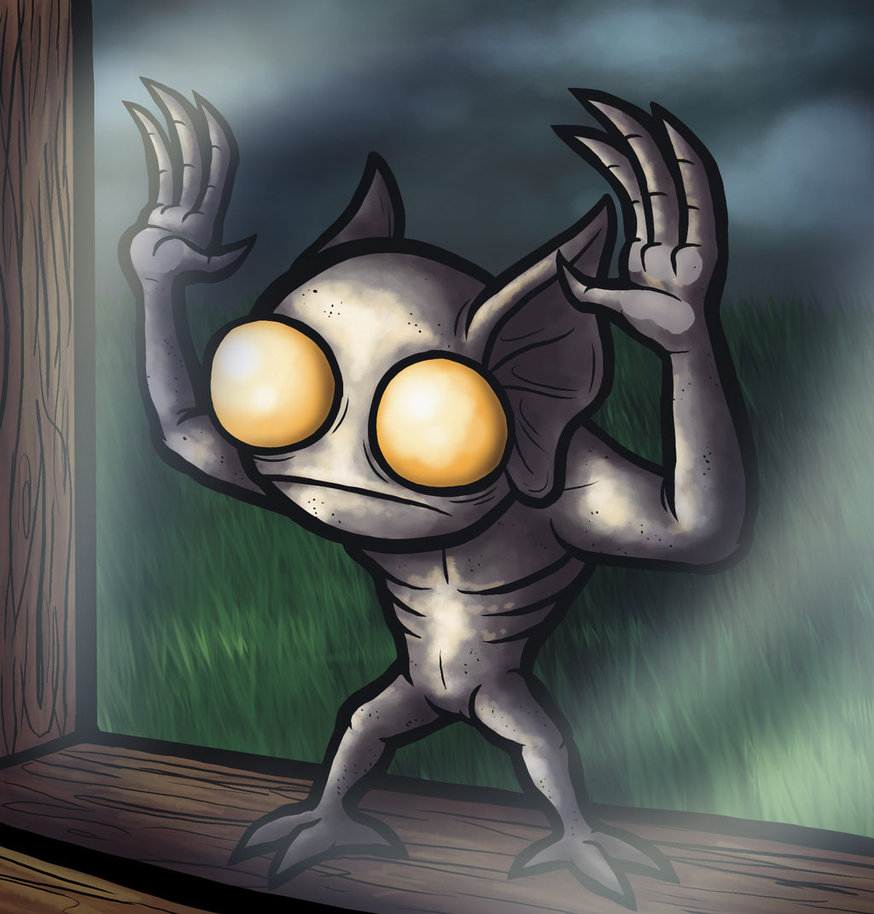 As every fan of science fiction knows, the universe is a vast place, with terrors both subtle and gross, and wonders to freeze the soul. There are a billion billion stars out there, and some monsters come from places darker than the blackest woods.
That was the case at the Sutton farmhouse in 1955, in the wild expanse between Kelly and Hopkinsville,Ky. Legend has it that the Suttons' guest, Billy Ray Taylor, had stepped outside to fetch water from a pump when he saw lights in the sky.
Being from the big city, Taylor had never seen such a thing before, and assumed they must be those "stars" his friends had been puling his leg about, although these moved through the sky and appeared to land in the middle of the cornfield. (Stars are bright lights that country folk say come out at night once the sun has set. Science fiction writers have run with this idea further, and suggested that stars are like the sun, but more remote and may even have life-sustaining planets like our own orbiting them. No one has explained why the sun should be only star ever visible in big cities, but we'll indulge this silliness a little further.)
Not long after, the house was set upon by a dozen or so small, green and glowing creatures with spindly legs and clawed hands. Bullets soon flew, and those that found their mark echoed with a metallic pa-ting! until the strange visitors from another world left the way they came.
In the morning, the Suttons found notes the aliens had been carrying with titles like "Cure for Cancer and All Human Diseases," "New Agricultural Techniques Guaranteed to end Famine," "You Won't Believe the Simple Trick this Girl Used to Lift her Entire Nation out of Poverty" and "Generals Hate This Combat-Free Solution to War. None of them was readable.
The Suttons, who had fired 57,000 rounds of ammunition, quickly were hailed as true American heroes by the NRA and given jobs by FOX.News to discuss the "liberal menace from outer space."
As every fan of science fiction knows, the universe is a vast place, with terrors both subtle and gross, and wonders to freeze the soul. Some monsters come from places darker than the blackest woods.
That was the case at the Sutton farmhouse in 1955.
ETA: The encounter is depicted in the stage musical "It Came From Kentucky."
Monday, June 17, 2019
Understanding the wounded heart of God
I wonder sometimes about God's attachment pattern.
He claims he wants a close, loving relationship with us, and frequently describes an ideal where all know and are fully known, where our dignity and identity are affirmed, and when we pull away, he pursues.
Think of the Garden, when he comes looking for Adam and Eve after they break fellowship with him; or the Parable of the Prodigal Son, where the father goes out looking for the son who wandered away, and then for the self-righteous son who won't celebrate his brother's homecoming. These are all examples of a healthy attachment style. He wants to be close, but recognizes our moral agency. He asks respectful questions to understand our choices, but doesn't press the issue beyond what is comfortable,
In practice, he's extremely dysfunctional. You can talk to him for hours, asking the same question over and over, and never get an answer. He says he wants a close relationship, but then have you seen how he treats people who care about him? And on those rare occasions when he does speak to someone, off they go to get psychoactive medication so they don't have to go through that again.
I have a friend with a fearful avoidant attachment style, but at least I understand that because I know my friend's story.
Sometimes I just want to hold God close, let him cry it out, and ask "Who hurt you?" but if I did that, he'd probably just tell me to go to hell.
Copyright © 2019 by David Learn. Used with permission.
Tweet
He claims he wants a close, loving relationship with us, and frequently describes an ideal where all know and are fully known, where our dignity and identity are affirmed, and when we pull away, he pursues.
Think of the Garden, when he comes looking for Adam and Eve after they break fellowship with him; or the Parable of the Prodigal Son, where the father goes out looking for the son who wandered away, and then for the self-righteous son who won't celebrate his brother's homecoming. These are all examples of a healthy attachment style. He wants to be close, but recognizes our moral agency. He asks respectful questions to understand our choices, but doesn't press the issue beyond what is comfortable,
In practice, he's extremely dysfunctional. You can talk to him for hours, asking the same question over and over, and never get an answer. He says he wants a close relationship, but then have you seen how he treats people who care about him? And on those rare occasions when he does speak to someone, off they go to get psychoactive medication so they don't have to go through that again.
I have a friend with a fearful avoidant attachment style, but at least I understand that because I know my friend's story.
Sometimes I just want to hold God close, let him cry it out, and ask "Who hurt you?" but if I did that, he'd probably just tell me to go to hell.
Copyright © 2019 by David Learn. Used with permission.
Tweet
Tuesday, May 21, 2019
Building bridges with my Muslim neighbors
Sunday evening found me at the local Islamic center cynically debating the merits of interfaith meetings and events such as the one I was attending, my third iftar in as many years. (The iftar is the sunset breaking of the fast during Ramadan, when faithful Muslims do not eat during daylight hours, to celebrate the revelation of the Quran.)
 I've been to enough of these that I have the whole routine memorized. First the director of the Islamic center will say a few words to introduce the hafiz, who will proceed to chant a passage of the Quran. After he finishes, a rabbi from the area will speak, followed by a local representative of the Christian clergy. A few local political figures will speak, followed again by the director of the Islamic center. Everyone will say how nice it is that we're all here together; and everyone will stress our commonality and the value of community.
At sunset, there will be a signal, and everyone will take a date or a candy from the middle of the table and break the fast. (Children often sneak candies before sunset while the adults pretend not to notice.) After this there's a call to prayer and everyone moves into another room for the prayer service. The men pray up front and the women pray in back, everyone face down and turned toward Mecca.
With the prayers done, everyone returns to the dining area and eats the meal, which is delicious as always. Polite conversation ensues between guests and hosts. What's your name? Where do you live? (This year we sat with a gentleman who grew up in Bridgewater, attended Rutgers University, and now lives in Somerset. I'm pretty sure I sat with him the first year we came too.)
The whole evening is congenial and pleasant, but when it's over, we've built no bridges, and closed no gaps. Our communities are still separate from one another, our knowledge of our respective faiths is no deeper than it was before, and that great interfaith moment still hasn't arrived.
Meanwhile the hatred and Islamophobia that has permeated our nation for at least the past 11 years is as strong as ever. This interfaith event, which we attended to light a candle against the darkness, seems weak and pallid. What can it possibly do to thwart a Christian nationalist with a gun?
Never mind the nightmare scenarios, what about the smaller hatreds? For all our pretty words, I'm certain that if the preacher's son at my church attended one of these events and began a spiritual odyssey that led him to convert to Islam, there would be a strong negative reaction from some quarters of our church. A few people would affirm his right to self-determination if not his actual decision, but others would feel hurt, angry and betrayed. Some might even call for removing the pastor as unfit for the job.
I know very little about the internal culture of the local mosque, but I wouldn't be surprised if something similar happened should a family member of the hafiz convert to Christianity.
As we all attest at these interfaith events, Islam, Judaism and Christianity do have a lot in common. All three are Abrahamic religions, for starters, tracing a common spiritual heritage to a nomadic Hebrew who lived 3,500 years ago and worshiped one god. Our sacred books tell many of the same stories, about Noah and the Flood, God calling Abraham to sacrifice his son, Solomon and his wisdom, and more.
But for all that we have in common, there remain impressive gaps that keep us separate. Even when our different sets of Scriptures align with one another, our understanding of what they mean often will disagree. All three religions place a premium on peace, but the 1500 to 2000 years of history that we share are marred by bigotry, conflict and even outright war. And, amazingly, we can't even agree what monotheism looks like.
When the evening comes to an end, my hosts at the Islamic center and I are still strangers to one another, belonging to two separate communities that live side by side and rarely interact.
We need to stop waving the Mission Accomplished banners at these events. They're just the start.
I do have hope that we can forge a deeper interfaith connection. The director of the Islamic center laments that his children don't know the Beatles. I've heard Muslim congregants lament when speakers take too long that the food is getting cold, and I've watched as teens in hijab text their friends on the phone during the recitation of the Quran.
With minor variants, these are all things that happen in churches all over America. They seem minor and inconsequential, but they all speak to our common humanity. For all the differences in our religious beliefs, we're all weighted down by the same concerns, faced with the same distractions, and led ever onward and ever upward by the same insatiable longing for purpose and meaning.
It's a mystery how it works, but with effort we can find common cause in our common questions. Even if the answers each of us finds don't satisfy us all equally, still we can learn to appreciate the value others do see in them. Like everything of value, it won't come in just one evening. It will take work, and it will take time – a whole lifetime, to be exact – of respect, listening and open conversation.
As my family left the iftar Sunday night, the director of the Islamic center intercepted us at the door and invited us to come back for Family Night. It involves a talk or sermon, followed by group discussion. He stressed the other parts as well, such as the food and childcare. I joked later to my wife "We've been tagged as potential converts." (I'm sure that's not the main intent. He's probably just noticed we come whenever we're invited.)
So I find as I leave the iftar that I am given the answer to the quandary I mulled when I entered. Want to gain understanding and build bridges with the local Muslim community? Want to dispel stereotypes and poke a finger in the eye of those who peddle hate?
Family night is the fourth Friday of the month. Discussion and dinner start at 7:30 p.m., and child care is provided. This year the talks are based on "Treatise for the Seekers of Guidance," by Imam al-Muhasibi. I have no idea what that means.
I guess I'll find out on Friday.
Copyright © 2019 by David Learn. Used with permission.
Tweet

At sunset, there will be a signal, and everyone will take a date or a candy from the middle of the table and break the fast. (Children often sneak candies before sunset while the adults pretend not to notice.) After this there's a call to prayer and everyone moves into another room for the prayer service. The men pray up front and the women pray in back, everyone face down and turned toward Mecca.
With the prayers done, everyone returns to the dining area and eats the meal, which is delicious as always. Polite conversation ensues between guests and hosts. What's your name? Where do you live? (This year we sat with a gentleman who grew up in Bridgewater, attended Rutgers University, and now lives in Somerset. I'm pretty sure I sat with him the first year we came too.)
The whole evening is congenial and pleasant, but when it's over, we've built no bridges, and closed no gaps. Our communities are still separate from one another, our knowledge of our respective faiths is no deeper than it was before, and that great interfaith moment still hasn't arrived.
Meanwhile the hatred and Islamophobia that has permeated our nation for at least the past 11 years is as strong as ever. This interfaith event, which we attended to light a candle against the darkness, seems weak and pallid. What can it possibly do to thwart a Christian nationalist with a gun?
Never mind the nightmare scenarios, what about the smaller hatreds? For all our pretty words, I'm certain that if the preacher's son at my church attended one of these events and began a spiritual odyssey that led him to convert to Islam, there would be a strong negative reaction from some quarters of our church. A few people would affirm his right to self-determination if not his actual decision, but others would feel hurt, angry and betrayed. Some might even call for removing the pastor as unfit for the job.
I know very little about the internal culture of the local mosque, but I wouldn't be surprised if something similar happened should a family member of the hafiz convert to Christianity.
As we all attest at these interfaith events, Islam, Judaism and Christianity do have a lot in common. All three are Abrahamic religions, for starters, tracing a common spiritual heritage to a nomadic Hebrew who lived 3,500 years ago and worshiped one god. Our sacred books tell many of the same stories, about Noah and the Flood, God calling Abraham to sacrifice his son, Solomon and his wisdom, and more.
But for all that we have in common, there remain impressive gaps that keep us separate. Even when our different sets of Scriptures align with one another, our understanding of what they mean often will disagree. All three religions place a premium on peace, but the 1500 to 2000 years of history that we share are marred by bigotry, conflict and even outright war. And, amazingly, we can't even agree what monotheism looks like.
When the evening comes to an end, my hosts at the Islamic center and I are still strangers to one another, belonging to two separate communities that live side by side and rarely interact.
We need to stop waving the Mission Accomplished banners at these events. They're just the start.
I do have hope that we can forge a deeper interfaith connection. The director of the Islamic center laments that his children don't know the Beatles. I've heard Muslim congregants lament when speakers take too long that the food is getting cold, and I've watched as teens in hijab text their friends on the phone during the recitation of the Quran.
With minor variants, these are all things that happen in churches all over America. They seem minor and inconsequential, but they all speak to our common humanity. For all the differences in our religious beliefs, we're all weighted down by the same concerns, faced with the same distractions, and led ever onward and ever upward by the same insatiable longing for purpose and meaning.
It's a mystery how it works, but with effort we can find common cause in our common questions. Even if the answers each of us finds don't satisfy us all equally, still we can learn to appreciate the value others do see in them. Like everything of value, it won't come in just one evening. It will take work, and it will take time – a whole lifetime, to be exact – of respect, listening and open conversation.
As my family left the iftar Sunday night, the director of the Islamic center intercepted us at the door and invited us to come back for Family Night. It involves a talk or sermon, followed by group discussion. He stressed the other parts as well, such as the food and childcare. I joked later to my wife "We've been tagged as potential converts." (I'm sure that's not the main intent. He's probably just noticed we come whenever we're invited.)
So I find as I leave the iftar that I am given the answer to the quandary I mulled when I entered. Want to gain understanding and build bridges with the local Muslim community? Want to dispel stereotypes and poke a finger in the eye of those who peddle hate?
Family night is the fourth Friday of the month. Discussion and dinner start at 7:30 p.m., and child care is provided. This year the talks are based on "Treatise for the Seekers of Guidance," by Imam al-Muhasibi. I have no idea what that means.
I guess I'll find out on Friday.
Copyright © 2019 by David Learn. Used with permission.
Tweet
Wednesday, March 06, 2019
The Unremarkable Man at the River
The sun was high above the ground, and the air was filled with the buzz of the crowd when the unremarkable man walked into the river.
 He'd walked a long way to get here, over rocks and hills, past sheep and goats, and among both countrymen and foreigners. He was tired from the walking, but even since he'd heard there was a prophet down by the river, the unremarkable man had felt his soul stir within him, compelling him to go see this strange man who wore clothing made from camel's hair.
Everyone in the crowd had a reason to see the prophet. The world was ending, and some of them just wanted to know how to survive. Others were desperate and wanted nothing more than shelter from a life that left them battered and ashamed of what they did to survive, and some were just curious.
For Jesus, visiting the Jordan River was the first leg on a journey of self-discovery.
Ever since he was little, he'd felt out of place in his hometown. It wasn't just the time he'd spent in Egypt with his parents, and it wasn't just the scandal around his birth that people had whispered about behind his back when they thought he and his parents weren't listening. This was something else.
All his childhood and even into his adulthood he'd been just like the other children in Nazareth and yet not like them.
Sometimes he'd felt it keenly, like the year they had gone on the annual pilgrimage to Jerusalem to visit Herod's temple, and Jesus had decided to stay behind when everyone else had gone home. (His parents rarely mentioned it in the years afterward, but too many times he'd felt his mother's eyes on him and he knew she was thinking of that trip.)
Other times the difference was harder to identify but still felt as keenly as if he had swallowed a coal. His heart would ache with a distress he couldn't understand, or he would see things with such clarity he couldn't understand why everyone else was confused. And through it all was woven a longing he couldn't express and a loneliness even his younger siblings couldn't always lift.
But then the prophet had arrived in the desert, and Jesus knew without anyone telling him that his time had arrived. He'd handed the carpentry shop over to his brothers, and set out for the prophet and the river.
The water was cool when he stepped in, and it cleaned the dirt and dust from his feet as it swirled past. Another step, and it was up past his ankles, and then it was up to his calves and his clothes were getting soaked.
What happened next, people disagree about. Some said that when the prophet baptized the unremarkable man, a rumble of thunder rolled across the sky. They pulled their children from the water and looked for a safe place to be when the storm hit. Others looked around, decided nothing was amiss, and shrugged their shoulders.
Others looked at the unremarkable man with curiosity in their eyes and wonder on their faces, as he climbed up the river bank, water streaming from his clothes and hair, and then strode off into the desert. In the thunder, he had heard a voice and he had to know what it had meant.
For the next forty days, he would fast and he would empty himself. The experience would harrow him like no other, but the odyssey he was undertaking would reveal himself to himself like nothing else ever had.
And when he returned, the people who heard him would know he was speaking with the very voice of God.
Copyright © 2019 by David Learn. Used with permission.
Tweet

Everyone in the crowd had a reason to see the prophet. The world was ending, and some of them just wanted to know how to survive. Others were desperate and wanted nothing more than shelter from a life that left them battered and ashamed of what they did to survive, and some were just curious.
For Jesus, visiting the Jordan River was the first leg on a journey of self-discovery.
Ever since he was little, he'd felt out of place in his hometown. It wasn't just the time he'd spent in Egypt with his parents, and it wasn't just the scandal around his birth that people had whispered about behind his back when they thought he and his parents weren't listening. This was something else.
All his childhood and even into his adulthood he'd been just like the other children in Nazareth and yet not like them.
Sometimes he'd felt it keenly, like the year they had gone on the annual pilgrimage to Jerusalem to visit Herod's temple, and Jesus had decided to stay behind when everyone else had gone home. (His parents rarely mentioned it in the years afterward, but too many times he'd felt his mother's eyes on him and he knew she was thinking of that trip.)
Other times the difference was harder to identify but still felt as keenly as if he had swallowed a coal. His heart would ache with a distress he couldn't understand, or he would see things with such clarity he couldn't understand why everyone else was confused. And through it all was woven a longing he couldn't express and a loneliness even his younger siblings couldn't always lift.
But then the prophet had arrived in the desert, and Jesus knew without anyone telling him that his time had arrived. He'd handed the carpentry shop over to his brothers, and set out for the prophet and the river.
The water was cool when he stepped in, and it cleaned the dirt and dust from his feet as it swirled past. Another step, and it was up past his ankles, and then it was up to his calves and his clothes were getting soaked.
What happened next, people disagree about. Some said that when the prophet baptized the unremarkable man, a rumble of thunder rolled across the sky. They pulled their children from the water and looked for a safe place to be when the storm hit. Others looked around, decided nothing was amiss, and shrugged their shoulders.
Others looked at the unremarkable man with curiosity in their eyes and wonder on their faces, as he climbed up the river bank, water streaming from his clothes and hair, and then strode off into the desert. In the thunder, he had heard a voice and he had to know what it had meant.
For the next forty days, he would fast and he would empty himself. The experience would harrow him like no other, but the odyssey he was undertaking would reveal himself to himself like nothing else ever had.
And when he returned, the people who heard him would know he was speaking with the very voice of God.
Copyright © 2019 by David Learn. Used with permission.
Tweet
Subscribe to:
Posts (Atom)
