Honestly, I feel sorry for the people who signed the Nashville Statement, in ways that I can't even begin to express. They've imagined a god who is small and petty and made themselves more like it through their worship.
It's not that they consider male-on-male sex to be a sin, it's the way they have elevated it to become the Sin before all Sin, the one that warrants special attention, the one that must be guarded against before all others, and all the while the wall is breached, the enemy has poured through the walls, and the city has been taken.
They could have spoken against racism, against the seduction of wealth and power, against the dangers of polarization and division, against cruelty, child abuse, divorce, domestic violence and so much more, but instead they focused on this.
There are some very real and very personal demons bedeviling these guys, and hope they get the help they need.
Showing posts with label social justice. Show all posts
Showing posts with label social justice. Show all posts
Thursday, November 02, 2017

Wednesday, November 09, 2016
keeping the faith in a trump presidency
Let's talk for a moment about our president-elect.
During the past year, Trump has maligned Hispanics, villified Muslims, mocked the disabled, spread racist lies about blacks and Jews, advocated violence against his critics, and bragged about sexually assaulting women.
 He has attacked the legitimacy of major institutions in this country: the news media, the Congress, both parties, our political process, our intelligence agencies and our military. He has indicated he would like to weaken the protections of the First Amendment itself, to make it easier to sue people who criticize him or who he feels treat him "unfairly." He has shown support for ending marriage equality, and for chipping away at the recently enacted protections for transgender youth at schools.
His business record is an open drain, one where he once lost nearly $1 billion in a single year and and where he has filed for personal bankruptcy not once but multiple times. He regularly has cheated small businesses by reneging on contracts and burying them in litigation to prevent them from collecting what he owes them. He also is subject to ongoing litigation over his business practices, particularly Trump University. This is someone whom we have elected to preside over our economy.
He has run a campaign not on substance and ideas but on innuendo, personal attacks, and one outsize lie after another. We have entrusted him with our international standing, our military and economic alliances, and with partnerships that go back decades if not centuries.
He has advocated violence at his rallies, directed it toward protesters and minorities; and when his supporters have engaged in violence he has praised them for their enthusiasm. As president, Trump will be the chief law enforcement officer of the nation.
Trump's supporters have commended him for "honesty" and not bowing to "political correctness"; but he has not pushed aside the bounds of political correctness to allow a free exchange of ideas, but to mock, humiliate and belittle others. He has not emboldened us toward greater discussion or honesty. He has instead encouraged us to indulge our worst impulses. We have given him the largest bully pulpit in the world.
And now that he's been elected to the presidency, I'm hearing from people that we on the Left are acting hysterically. Conservative Christians are telling us that we need to have faith, that God is on the throne.
Let me be clear: This is not hysteria. This is a reasoned, calm and rational assessment of the existential threat a Trump presidency poses to the Republic.
My 6-year-old is worried that her friends are going to have to leave the country because their parents are here without proper documentation. I comforted my 14-year-old today because she is worried about the increased bullying she fears her LGBTQ friends will face now, and because of the heightened threats to her friends and classmates of color.
Yes, God is on the throne, and by faith we attest that all these things work toward his greater glory. But God was on the throne on Aug. 20, 1934, and we all know what cold comfort his sovereignty proved to be to those who lived under the Führer. God also was seated on the throne on Oct. 29, 1929, when Herbert Hoover presided over the greatest economic crash in world history; and he was on the throne when George W. Bush presidend over the second greatest. God's sovereignty does not lessen the burden of enduring the things that happen in this world.
This isn't about faith or lack of faith in God's sovereignty. It's a recognition that we're about to see a lot of progress ripped up as millions of our most vulnerable citizens likely will lose their health insurance, as a right-heavy Congress votes to repeal the Affordable Care Act; as it further rips up the Civil Rights and Voting Rights acts; as our gay and trans neighbors, friends and relatives face losing the legal protections and recognition they had begun to win; and as an unpredictable demagogue very possibly will get to make multiple lifetime appointments to the Supreme Court.
This is not panic, and it is not hysteria. This is recognizing what our country likely will have to endure, and it is the start of understanding the monumental task God has called us to in pursuing his justice here on earth under an unjust government.
Copyright © 2016 by David Learn. Used with permission.
During the past year, Trump has maligned Hispanics, villified Muslims, mocked the disabled, spread racist lies about blacks and Jews, advocated violence against his critics, and bragged about sexually assaulting women.
His business record is an open drain, one where he once lost nearly $1 billion in a single year and and where he has filed for personal bankruptcy not once but multiple times. He regularly has cheated small businesses by reneging on contracts and burying them in litigation to prevent them from collecting what he owes them. He also is subject to ongoing litigation over his business practices, particularly Trump University. This is someone whom we have elected to preside over our economy.
He has run a campaign not on substance and ideas but on innuendo, personal attacks, and one outsize lie after another. We have entrusted him with our international standing, our military and economic alliances, and with partnerships that go back decades if not centuries.
He has advocated violence at his rallies, directed it toward protesters and minorities; and when his supporters have engaged in violence he has praised them for their enthusiasm. As president, Trump will be the chief law enforcement officer of the nation.
Trump's supporters have commended him for "honesty" and not bowing to "political correctness"; but he has not pushed aside the bounds of political correctness to allow a free exchange of ideas, but to mock, humiliate and belittle others. He has not emboldened us toward greater discussion or honesty. He has instead encouraged us to indulge our worst impulses. We have given him the largest bully pulpit in the world.
And now that he's been elected to the presidency, I'm hearing from people that we on the Left are acting hysterically. Conservative Christians are telling us that we need to have faith, that God is on the throne.
Let me be clear: This is not hysteria. This is a reasoned, calm and rational assessment of the existential threat a Trump presidency poses to the Republic.
My 6-year-old is worried that her friends are going to have to leave the country because their parents are here without proper documentation. I comforted my 14-year-old today because she is worried about the increased bullying she fears her LGBTQ friends will face now, and because of the heightened threats to her friends and classmates of color.
Yes, God is on the throne, and by faith we attest that all these things work toward his greater glory. But God was on the throne on Aug. 20, 1934, and we all know what cold comfort his sovereignty proved to be to those who lived under the Führer. God also was seated on the throne on Oct. 29, 1929, when Herbert Hoover presided over the greatest economic crash in world history; and he was on the throne when George W. Bush presidend over the second greatest. God's sovereignty does not lessen the burden of enduring the things that happen in this world.
This isn't about faith or lack of faith in God's sovereignty. It's a recognition that we're about to see a lot of progress ripped up as millions of our most vulnerable citizens likely will lose their health insurance, as a right-heavy Congress votes to repeal the Affordable Care Act; as it further rips up the Civil Rights and Voting Rights acts; as our gay and trans neighbors, friends and relatives face losing the legal protections and recognition they had begun to win; and as an unpredictable demagogue very possibly will get to make multiple lifetime appointments to the Supreme Court.
This is not panic, and it is not hysteria. This is recognizing what our country likely will have to endure, and it is the start of understanding the monumental task God has called us to in pursuing his justice here on earth under an unjust government.
Copyright © 2016 by David Learn. Used with permission.
Wednesday, July 20, 2016
life in the desert
The Taklamakan Desert may be the most hostile place on the planet to live.
 By day the sun hangs overhead like a hot coal that burns the eyes and the skin, and scorches the earth below the traveler's feet. There is no water to be found, and sand dunes stretch in every direction. At the end of the desert lies another desert. The Taklamakan's name may come from the Turkish phrase “The place of ruins.” When he set a story there in 1992, Neil Gaiman offered a more picturesque name: If-You-Go-In-You-Won't-Come-Out-Again.
The worst part of the Taklamakan is its winds. During the summer temperatures pass 100 degrees, and during the winter, they can drop below zero. During the spring, as the ground begins to warm, the air begins to move and gale winds arise with the force of a hurricane. Sand and dust blow and fill the air, creating a fog of dirt that reaches heights of 13,000 feet.
In these conditions, the sky can get so dark that visibility is imaginary. Your only hope of survival is to stay together, and your only hope of staying together is to affix bells to the camels and to one another so that you can hear how close you are to one another. The sand dunes constantly rearrange themselves, so your only hope of staying on your path is to set up a sign each night before you go to sleep so you can be sure to continue in the same direction when you waken in the morning.
Try to imagine living in those conditions. Try to imagine crossing a desert like that. The Taklamakan is a no man's land. It is a nowhere that lies between two places, an empty space that no one claims for their own. If you go in, you won't come out again.
Deserts come in all degrees and varieties. Far to the north are deserts where rain never falls and plants struggle to grow, but the ground is cold and frozen year-round. There are deserts where rains come often enough for cacti to grow and to bloom, and even for trees and animals to grow that have adapted to the climate.
Other deserts used to be green and fair, until men came and felled the trees and overgrazed their flocks until there was nothing left but wasteland. These deserts may be among the worst. Their desolation bears silent witness to the violence we have done to the land and to ourselves because we refuse to see what we are doing.
And then there are the deserts we make of our own societies, spiritual wastelands where we strip away justice and allow those with power to wield it with only a pretense of accountability. Executives loot the pensions of their workers and never face jail time or admit their wrongdoing. Government officials cut support for the needy and refuse to require a living wage. Power exists to serve the powerful and not the powerless.
In this desert, the victims of police violence are legion. Philando Castile. Alton Sterling. Walter Scott. Tamir Rice. John Crawford. Eric Garner. Michael Brown. The list of names is too long. It goes back too far to remember, and it joins the names of others martyred to white fears of a black country. James Byrd. Emmett Till. Greenwood, Okla.
Justice denied fuels anger, and as violence begets violence the body count begins to rise, and the voice of God rises in reprimand. “What have you done?” he asks, as he has since the first story was told. “The voice of your brother’s blood is crying to me from the ground.”
In the desert we rally to support a man who ridicules the disabled while he belittles and savages women. We rush to elect a man who lies outrageously, encourages violence, and incites hatred of Muslims and Jews, Mexicans and blacks.
In this desert, our nation's most avowedly religious Christians support this man, while we make a tremendous point of displaying our piety around the flagpole and at the National Mall, and everywhere we go. We shout our faith to the heavens, but heaven is a place that demands justice first and foremost.
From the book of Amos:
The Taklamakan lives in the shadow of the Himalayas, mountains so tall that they block rain clouds from ever reaching the Taklamakan or the rest of the Gobi Desert region. About an inch-and-a-half of precipitation gathers in the West, and less than half an inch in the East. Even cacti find the Taklamakan too extreme. Most of the area is barren.
Most, but not all. Even that inhospitable desert comes to life where the water rolls down. Around the edges of the desert region are river valleys and deltas, and places where the groundwater comes close enough to the surface to ease the oppression of the desert sun. Herds of gazelles run free through these open spaces, and wild boars live among the river valleys, where even wolves and foxes hunt.
Justice is not a force of destruction. It is an agent of renewal. Where the river flows through the desert, trees put down roots. They grow fruit when it's the season, and even in the summer heat their leaves do not wither. The trees that line the river provide shade for the weary, the grass along the river is easy on the feet, and there is food to eat.
In the desert, an oasis like this is a place to rest, to recover, to heal and to stay a while, perhaps even to put down roots of our own. The justice of God is a shelter in our society, a place where black lives matter as much as white lives, where everyone is welcome to be themselves, and where no one is viewed with suspicion because of race or color.
Here in our desert, Sunday morning remains the most segregated hour of the week. Perhaps we don't know the burdens people of color face in our society because too often we still haven't taken the time to let them share, nor believed them when they've told us.
Hate evil, and love good; establish justice in the gate.
Let justice roll down like waters, and righteousness like an ever-flowing stream.
Let it begin with me.
Copyright 2016 by David Learn. Used with permission.
Tweet
The worst part of the Taklamakan is its winds. During the summer temperatures pass 100 degrees, and during the winter, they can drop below zero. During the spring, as the ground begins to warm, the air begins to move and gale winds arise with the force of a hurricane. Sand and dust blow and fill the air, creating a fog of dirt that reaches heights of 13,000 feet.
In these conditions, the sky can get so dark that visibility is imaginary. Your only hope of survival is to stay together, and your only hope of staying together is to affix bells to the camels and to one another so that you can hear how close you are to one another. The sand dunes constantly rearrange themselves, so your only hope of staying on your path is to set up a sign each night before you go to sleep so you can be sure to continue in the same direction when you waken in the morning.
Try to imagine living in those conditions. Try to imagine crossing a desert like that. The Taklamakan is a no man's land. It is a nowhere that lies between two places, an empty space that no one claims for their own. If you go in, you won't come out again.
Deserts come in all degrees and varieties. Far to the north are deserts where rain never falls and plants struggle to grow, but the ground is cold and frozen year-round. There are deserts where rains come often enough for cacti to grow and to bloom, and even for trees and animals to grow that have adapted to the climate.
Other deserts used to be green and fair, until men came and felled the trees and overgrazed their flocks until there was nothing left but wasteland. These deserts may be among the worst. Their desolation bears silent witness to the violence we have done to the land and to ourselves because we refuse to see what we are doing.
And then there are the deserts we make of our own societies, spiritual wastelands where we strip away justice and allow those with power to wield it with only a pretense of accountability. Executives loot the pensions of their workers and never face jail time or admit their wrongdoing. Government officials cut support for the needy and refuse to require a living wage. Power exists to serve the powerful and not the powerless.
In this desert, the victims of police violence are legion. Philando Castile. Alton Sterling. Walter Scott. Tamir Rice. John Crawford. Eric Garner. Michael Brown. The list of names is too long. It goes back too far to remember, and it joins the names of others martyred to white fears of a black country. James Byrd. Emmett Till. Greenwood, Okla.
Justice denied fuels anger, and as violence begets violence the body count begins to rise, and the voice of God rises in reprimand. “What have you done?” he asks, as he has since the first story was told. “The voice of your brother’s blood is crying to me from the ground.”
In the desert we rally to support a man who ridicules the disabled while he belittles and savages women. We rush to elect a man who lies outrageously, encourages violence, and incites hatred of Muslims and Jews, Mexicans and blacks.
In this desert, our nation's most avowedly religious Christians support this man, while we make a tremendous point of displaying our piety around the flagpole and at the National Mall, and everywhere we go. We shout our faith to the heavens, but heaven is a place that demands justice first and foremost.
From the book of Amos:
“I hate, I despise your feasts,Justice. That word sounds threatening, but it doesn't need to. What is it that makes the Taklamakan so dangerous? It's not the wind, or the sand, or the soft geography. It's not even the sun. It's the lack of water.
and I take no delight in your solemn assemblies.
Even though you offer me your burnt offerings and cereal offerings,
I will not accept them,
and the peace offerings of your fatted beasts
I will not look upon.
Take away from me the noise of your songs;
to the melody of your harps I will not listen.
But let justice roll down like waters,
and righteousness like an ever-flowing stream.
The Taklamakan lives in the shadow of the Himalayas, mountains so tall that they block rain clouds from ever reaching the Taklamakan or the rest of the Gobi Desert region. About an inch-and-a-half of precipitation gathers in the West, and less than half an inch in the East. Even cacti find the Taklamakan too extreme. Most of the area is barren.
Most, but not all. Even that inhospitable desert comes to life where the water rolls down. Around the edges of the desert region are river valleys and deltas, and places where the groundwater comes close enough to the surface to ease the oppression of the desert sun. Herds of gazelles run free through these open spaces, and wild boars live among the river valleys, where even wolves and foxes hunt.
Justice is not a force of destruction. It is an agent of renewal. Where the river flows through the desert, trees put down roots. They grow fruit when it's the season, and even in the summer heat their leaves do not wither. The trees that line the river provide shade for the weary, the grass along the river is easy on the feet, and there is food to eat.
In the desert, an oasis like this is a place to rest, to recover, to heal and to stay a while, perhaps even to put down roots of our own. The justice of God is a shelter in our society, a place where black lives matter as much as white lives, where everyone is welcome to be themselves, and where no one is viewed with suspicion because of race or color.
Here in our desert, Sunday morning remains the most segregated hour of the week. Perhaps we don't know the burdens people of color face in our society because too often we still haven't taken the time to let them share, nor believed them when they've told us.
Hate evil, and love good; establish justice in the gate.
Let justice roll down like waters, and righteousness like an ever-flowing stream.
Let it begin with me.
Copyright 2016 by David Learn. Used with permission.
Tweet
Monday, July 04, 2016
Forgiveness is a Struggle
I've been having a hard time with forgiveness lately. I'm sorry, did I say lately? It's been a problem for years. More than a decade, even.
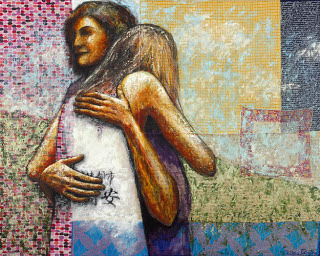 Fourteen-and-a-half years ago, my wife and I opened our home to a foster child. At the age when our own daughter could climb stairs, feed herself, draw pictures with crayons or pencils, and communicate her thoughts with laughter, tears and words; Isaac could barely stand, much less walk. His vocabulary consisted of wordless but excited moaning, and he had no idea how to play. (He could sit still for TV, though. His parents taught him to do that extremely well.)
We didn't do this alone, though. I was from Pittsburgh and my wife was from Tuscon, Ariz., but we did have the support of our church, a community of believers we had been a part of since we came to the area. As one they stood before God and swore an oath to support us as we took this child into our hearts, and to support not just us, but also another couple who were offering their home his sister.
Isaac's problems were worse than we initially realized, but for those first few months things went gloriously. One of the women in our church was a licensed social worker, and at the beginning she and her husband handled arrangements for supervised visits. They gave us support in other ways too, as she gave us perspective, explained state regulations and even offered advice on how to engage a 2-year-old who was used to being ignored.
Isaac's mother had started coming to our church several weeks before the state removed the children from her custody, and Carla had difficulty understanding boundaries; so other friends ran interference for us. And everyone expressed great enthusiasm for what we were doing. If shouldering the burden of caring for someone else's abused child is Paradise, then that winter was Eden.
The serpent had arrived in Eden by springtime. The pastor our church had hired a year previously was showing his colors, as he used his pulpit to manipulate, to bully and to control. As quickly as he had drawn new congregants in his first several months, he was now driving people away, and as they went, our support network unraveled.
The social worker and her husband disappeared from the scene first. Then other people began to realize that they were overextended, and they began to pull back as well. We couldn't. There was a child depending on us.
My wife bore the worst of it. In addition to the extra attention Isaac needed, we had to care for our own daughter and there was a second child on the way. Harder still, I had started a job that spring that demanded more than 50 hours a week, including almost all day Monday and Tuesday. I could get relief by going off and working in the garden, but for my wife, Eden became a cage with iron bars.
She tried to get help. She called people from the church and asked them to watch our daughter for an hour or two just so she could attend a medical appointment. They told her no.
Time went on, and soon it became evident that Isaac was returning to his birth parents. We watched as the progress he had made in our home was torn up by the roots and thrown out. If our church was grieving with us, we couldn't tell. By midsummer, the church had all but fallen apart, and the people who had sworn to be with us were nowhere to be seen.
Isaac had come into our lives with a great deal of fanfare, but when it came time for him to depart we were almost completely alone. When I came home from work at two in the morning and found my daughter sitting at the stop of the stairs crying because her brother wasn't around, I was there to comfort her.
When the quiet and the grief overwhelmed with a depth too profound for words, the community I had believed would be with me, was gone.
So I say this to my old church: You screwed up, big time.
These people had sworn before God that they would be there for us throughout the entire time we fostered. They sang our praises, and told us how our faith inspired theirs. When we lost Isaac, they were nowhere to be found. We didn't even get a lousy sympathy card. One person when I saw her barely a month later actually told me to get over it.
Those last two really hurt. Fifteen years later, and forgiveness is still a struggle.
Copyright 2016 by David Learn. Used with permission.
1 | 2 | 3
Tweet

We didn't do this alone, though. I was from Pittsburgh and my wife was from Tuscon, Ariz., but we did have the support of our church, a community of believers we had been a part of since we came to the area. As one they stood before God and swore an oath to support us as we took this child into our hearts, and to support not just us, but also another couple who were offering their home his sister.
Isaac's problems were worse than we initially realized, but for those first few months things went gloriously. One of the women in our church was a licensed social worker, and at the beginning she and her husband handled arrangements for supervised visits. They gave us support in other ways too, as she gave us perspective, explained state regulations and even offered advice on how to engage a 2-year-old who was used to being ignored.
Isaac's mother had started coming to our church several weeks before the state removed the children from her custody, and Carla had difficulty understanding boundaries; so other friends ran interference for us. And everyone expressed great enthusiasm for what we were doing. If shouldering the burden of caring for someone else's abused child is Paradise, then that winter was Eden.
The serpent had arrived in Eden by springtime. The pastor our church had hired a year previously was showing his colors, as he used his pulpit to manipulate, to bully and to control. As quickly as he had drawn new congregants in his first several months, he was now driving people away, and as they went, our support network unraveled.
The social worker and her husband disappeared from the scene first. Then other people began to realize that they were overextended, and they began to pull back as well. We couldn't. There was a child depending on us.
My wife bore the worst of it. In addition to the extra attention Isaac needed, we had to care for our own daughter and there was a second child on the way. Harder still, I had started a job that spring that demanded more than 50 hours a week, including almost all day Monday and Tuesday. I could get relief by going off and working in the garden, but for my wife, Eden became a cage with iron bars.
She tried to get help. She called people from the church and asked them to watch our daughter for an hour or two just so she could attend a medical appointment. They told her no.
Time went on, and soon it became evident that Isaac was returning to his birth parents. We watched as the progress he had made in our home was torn up by the roots and thrown out. If our church was grieving with us, we couldn't tell. By midsummer, the church had all but fallen apart, and the people who had sworn to be with us were nowhere to be seen.
When the quiet and the grief overwhelmed with a depth too profound for words, the community I had believed would be with me, was gone.
So I say this to my old church: You screwed up, big time.
These people had sworn before God that they would be there for us throughout the entire time we fostered. They sang our praises, and told us how our faith inspired theirs. When we lost Isaac, they were nowhere to be found. We didn't even get a lousy sympathy card. One person when I saw her barely a month later actually told me to get over it.
Those last two really hurt. Fifteen years later, and forgiveness is still a struggle.
Copyright 2016 by David Learn. Used with permission.
1 | 2 | 3
Tweet
Monday, June 27, 2016
Freedom of religion and gay marriage
The U.S. Supreme Court, in a decision certain to be blasted as an assault on freedom of religion, has ruled that county clerks may not refuse to issue marriage licenses to same-sex couples because of religious objections.
This is as it should be.
 The decision should be the final word in an argument that has been brewing ever since the court issued its 5-4 ruling on June 26, 2015, that recognized the right of same-sex couples in America to marry. Particularly in the South, a number of Christian conservatives reacted with dismay to the decision. One, Kim Davis, the Rowan County, Ky., county clerk, actually went to jail rather than issue marriage licenses to gay couples, on the grounds that Christianity forbids her from having anything to do with supporting gay marriage.
The basis for this sort of opposition is handful of places in the Bible that mention homosexuality, including two verses in Leviticus, a passage in Romans, and another passage in 1 Corinthians. Because these writings unequivocally present homosexuality in a negative light, Davis and her defenders have argued that they should not sign off on marriage licenses, and that the First Amendment protects that right.
They are wrong. The Supreme Court got this one right.
Some of my fellow Christians may disagree; however, I would point out firstly that those whose consciences are deeply troubled by same-sex marriage are free to leave jobs that require officiating at them or that in some way assisting with their processing. If we believe that there is a fundamental conflict between their faith and their job, our faith instructs us to place our faith first and recognize that we cannot meet the requirements of the job. Freedom of religion does allow us to make that choice. A lack of religious freedom would require us to stay in those jobs and perform those tasks.
More fundamentally, though, this does not rise to the level that we should feel it requires civil disobedience, nor should we pretend it does. Don't approve of same-sex marriage? OK, don't approve. The First Amendment grants you that right. There is no punishment for having a religious position on anything.
But if you take the view that same-sex marriage offends the Almighty, the best you can argue is that it offends him morally and not because it is an issue of justice that requires a principled stand. Look at all the prophets in the Bible. They were angry about things like workers denied wages, exploitation of the poor and the immigrant, and acts of cruelty. When the prophets warned of God's coming judgment, it was never because of gay people or same-sex relationships. Not even once.
Those other issues, though? Number-one theme of the Bible, Genesis through Revelation.
If we can't affirm the dignity and right of same-sex couples to marry, then let's at least stop fighting it, and focus our energies on the things that actually matter to God.
Copyright ©2016 by David Learn. Used with permission.
This is as it should be.

The basis for this sort of opposition is handful of places in the Bible that mention homosexuality, including two verses in Leviticus, a passage in Romans, and another passage in 1 Corinthians. Because these writings unequivocally present homosexuality in a negative light, Davis and her defenders have argued that they should not sign off on marriage licenses, and that the First Amendment protects that right.
They are wrong. The Supreme Court got this one right.
Some of my fellow Christians may disagree; however, I would point out firstly that those whose consciences are deeply troubled by same-sex marriage are free to leave jobs that require officiating at them or that in some way assisting with their processing. If we believe that there is a fundamental conflict between their faith and their job, our faith instructs us to place our faith first and recognize that we cannot meet the requirements of the job. Freedom of religion does allow us to make that choice. A lack of religious freedom would require us to stay in those jobs and perform those tasks.
More fundamentally, though, this does not rise to the level that we should feel it requires civil disobedience, nor should we pretend it does. Don't approve of same-sex marriage? OK, don't approve. The First Amendment grants you that right. There is no punishment for having a religious position on anything.
But if you take the view that same-sex marriage offends the Almighty, the best you can argue is that it offends him morally and not because it is an issue of justice that requires a principled stand. Look at all the prophets in the Bible. They were angry about things like workers denied wages, exploitation of the poor and the immigrant, and acts of cruelty. When the prophets warned of God's coming judgment, it was never because of gay people or same-sex relationships. Not even once.
Those other issues, though? Number-one theme of the Bible, Genesis through Revelation.
If we can't affirm the dignity and right of same-sex couples to marry, then let's at least stop fighting it, and focus our energies on the things that actually matter to God.
Copyright ©2016 by David Learn. Used with permission.
Sunday, March 31, 2013
Life of Cesar Chavez celebrated on Easter, people freak out

Google has a custom of altering the logo on its main page to mark major holidays, significant events and anniversaries, and just because it can. A lot of these doodles are fun, like the time it replaced the Google logo with a functioning Pac-Man game. (My daughter still plays that.) Others are educational, like the time Google honored M.C. Escher. Other times, they're just odd, like the logo honoring the 150th birthday of L.L. Zamenhof, the creator of Esperanto. (For what it's worth, I speak the language, and just shrugged at that one.)
But heck, it's their logo, they can do whatever they want with it. Right?
Apparently not. On Easter Sunday this year, Google honored Cesar Chavez, a labor activist born on March 31, 1927, and not the Resurrection, and that, apparently, was too much. Glenn Beck got all snarky at the imagined disrespect; other Twitterfolk suggested that Google was elevating Chavez over Christ, or even found it a tremendous insult to their religion.
Come on, really?
I fully understand that Christians on Easter may greet one another with cries of "He is risen!" and "He is risen indeed!" But it's silly, it's pointless, it's completely un-Christlike, to demand that everyone else celebrate the Resurrection with us, and to take offense when a corporation like Google, with users who are Hindu, Muslim, Buddhist, Jewish, agnostic, atheist, Jainist, Shinto, Sikh and Wiccan as well as Christian, does not take the time to affirm our particular set of religious beliefs, or even to celebrate our holiday with us.
The empty tomb on the first Easter is foundational to my faith. It is the basis for my belief that Jesus is the Son of God, the foundation of my hope that one day I too will rise from the dead, and for my conviction that God's dream is for us one day to live in a world free of pain, disease, death and infirmity, for us to walk with him as his people and for him to walk with us as our God.
I don't need a Google Doodle to affirm my faith today, and even if Google actually savaged Christians today with a doodle that declared "He's dead, you nitwits," my faith would be unrattled. (Though at least in that case I could understand being upset.)
But, in fact, Google's choice of doodles today is one that affirms my faith, and if you're a Christian you also should find it encouraging.
Cesar Chavez, after all, was a tireless advocate for the rights of poor workers. Himself an American farm worker, Chavez was a leader in the labor movement in the 1960s and also worked for civil rights, encouraging Mexican Americans to become registered voters involved with the political process.
With Dolores Huerta, he co-founded the National Farm Workers Association, a labor union that worked to ensure laborers were paid well and treated with dignity. One of the hallmarks of his activism was his strict commitment to nonviolence.
Chavez, it should be noted, was a devote Christian, He drew his inspiration for all these stands and for his actions from the person, the teachings and the life of Jesus Christ.
And isn't a transformed life the best way to honor the man we believe rose from the dead?
Copyright © 2013 by David Learn. Used with permission.
Tweet
Wednesday, February 04, 2009
Pete Seeger: 'My Name is Liza Kalvelage'
I've spent a lot of the last two days listening to "A Link in the Chain," a two-CD collection of Pete Seeger songs. It's an amazing collection, sometimes hilarious, sometimes inspiring, sometimes innocent fun, and often challenging.
One of the songs that's been haunting me is "My Name is Liza Kavelage." The song -- and it's really more of a singsong delivery, rather than a song proper -- is a true first-person account of a woman who grew up in Nazi Germany and immigrated to the United States after the war.
Here in the United States, she was repeatedly asked, "Where were you when the Nazis were doing all those horrible things? Why didn't you stop them?" She found that saying, "I was only a child, no more than a teenager" wasn't enough; her questioners wanted to know where her parents had been.
And so, Kavelage was burdened with national guilt, a phenomenon that is unfamiliar to many Americans. She came to realize that there was no explanation for her parents' presumed silence, nor for anyone else's, and in 1966, she decided that once in her life was enough to bear the guilt of a nation's silence in the face of its government's actions.
She and three other housewives went to a factory that was manufacturing napalm bombs for use in the Vietnam War, and protested. More than protested, actually; they got in the way of the workers, and ended up being arrested.
To that point, peace protesters largely had been teenagers and hippies. The arrest of four housewives changed the picture dramatically, and made them an instant media sensation.
In the statement that become the basis for Seeger's song, Kavelage essentially said, "I want my children to have an answer when they are asked what their mother did when she saw her government committing an injustice." She made the news again six years ago, when she protested the Iraq War, despite her age. (She was 80 at the time.)
It makes me think, mostly because it makes me uncomfortable.
My parents were both born in 1940, which means they grew up during McCarthyism and saw the 1960s in all its glory and shame. Mom and Dad have never really talked about duck-and-cover drills, loyalty oaths, Freedom Riders, draft dodgers, nor any of the other hallmarks of two very interesting decades.
Perhaps I shouldn't make rash presumptions about what they did in the 1960s, but the truth is, I don't know what they were doing while the Civil Rights was transforming America, nor how they felt about U.S. intervention in Vietnam. (Since my father was stationed in Panama after college because of his ROTC commitment, I would speculate that they at least tacitly supported it.)
But I don't know. My mother has said previously that she had heard of neither Seeger nor the song "We Shall Overcome," which I have to admit doesn't bode well for their social consciousness during the 1960s. Where were my folks when a lot of their peers were trying to make the world a better place? I don't know. (I am certain that they weren't involved with the destructive outlets of the 1960s, though.)
More to the point, though, what will my children be able to say 20 or 30 years from now, when their children ask them where I was while the United States was torturing prisoners, holding people without a trial, denying gays the right to marry, and kicking people out of their homes when the economy had gone sour while bailing out the businesses and people who had made it go sour?
What will they say when asked where I was when anti-immigrant sentiment surged, and we saw the bitter flower "English only" begin to bloom, or when Muslims and Arabs were viewed with suspicion as likely terrorists?
Where was I?
Guilty as charged.
I like Seeger's music quite a lot. It is simple and easy on the ear, but its folksy sound should never be mistaken for easy listening. In his music I hear the ironic voice of God speaking prophetically about the state of our country, our attitudes and our values. I look at the life I have lived so far, and find that the world has changed me more than I have changed it, and find that it changes me more every year. As revelations go, this is not a pleasant one.
I am running for re-election to the school board this year. I have determined that when I give my speech, I will give it in both English and Spanish, without the aid of a translator, even if I make a fool of myself. I don't think it's necessary to speak English to be a good American, and I hope that even if I mangle their language in the process, our Hispanic parents will understand that I want to connect with them where they have the home advantage.
I am fishing for a suitable way to be heard concerning the other issues mentioned. Particularly in matters of economic injustice, like the rescue of multibillion-dollar businesses and their CEOs while homeowners are left to eat the rotten fruit of a predatory economy, I believe we can no longer play by the rules that we inherited. There are deeper truths set down to guide us, and we must find them.
Copyright © 2009 by David Learn. Used with permission.
Tweet
Wednesday, October 01, 2008
bailout blues
I'm not opposed to the government stepping in and bailing out some of the financial giants that have gone down the past week. When your patient has gone into cardiac arrest, you need to keep the heart functioning. The financial sector is the heart of our economy.
What I object to is that there has been little effort made to provide support for Joe and Jane America who have lost their homes in this bubble burst. The benefit they will receive from this will amount to the "trickle down," which is to say that it does not exist. Those who do stand to benefit are the power brokers and uberwealthy whose decisions and actions put the economy into this mess. This is the government once more taking the side of the wealthy.
The economic effect of the bailout would have the same effect by bailing out homeowners, with the additional benefit of allowing working class homeowners to remain in their homes. This has been rejected for reasons that elude me. Discussions instead center on allowing homeowners to be thrown out of their homes, and protecting the brokers whose irresponsibility created the market crash.
From what I understand of the bailout that was rejected Monday -- and I can't imagine the one being considered now differs much in this regard -- is that it would have allowed no golden parachutes for CEO's hired after the bailout. Those who presided over the worse financial collapse in 70 years, however, still get theirs.
In other words, it still protects the wealthy malefactors while managing to screw over the little guy. What a country.
This may be how the world works, and how it always has worked, but I see no reason why we should tolerate or accept it, nor that we should facilitate it. Our government was founded to protect the people from tyranny, and that includes economic and financial tyranny as well as political. It is within the purview of the government, in granting the emergency aid, to lay down stipulations for receiving that aid. That includes "No bonus for failing."
The people who have presided over the crash of WaMu, Lehman Bros., AIG and the others are not entitled to turn a hefty profit over their greed and incompetence. The U.S. Government was, the last I knew, planning a rescue operation that would reward them personally for their failure, and then close the barn door after all the horses had left, so there would be no more golden parachutes for later failures.
I call that wrong. Anyone with me?
Copyright © 2008 by David Learn. Used with permission.
Tweet
Monday, May 12, 2003
staff devotions

Devotions more typically are shallow readings of Scripture or similarly light stories intended more to make us feel good than they are intended to challenge us to think more deeply about God or a life of holiness. Poems like "Footprints" are popular material for devotions. They reassure us that God is in control of things, and no matter how it seems to get, everything will turn out all right in the end.
We had daily devotions at Central Christian Academy in Bethlehem, Pa., when I taught there, and man the other teachers hated when it was my turn. I've always felt that the purpose of reading the Bible is to discover something new about holiness and our pursuit of God; and that we should share what we've been learning, rather than repeating the same homilies everyone knows and shares all the time.
In other words, I couldn't just be normal and light and fluffy, no, I had to do something different and sometimes even downright bizarre.
So one time I shared Orson Scott Card's different versions of the woman caught in adultery. In one the teacher spares the woman's life because he is corrupt, and sees an advantage in sparing her life; and in the other telling he kills her to uphold justice. That got a horrified gasp from one teacher, but I enjoyed Card's point that Christ strikes the perfect balance between justice and mercy, and that's why we strive to follow him and his example.
Another time I shared a passage from Don Richardson's "Eternity in their Hearts" about the redemptive analogies found in pre-Christian cultures, that missionaries connected to the gospel story so that Christianity would grow organically in the culture rather than being imposed from outside with its Western baggage. I was a former missionary and found this sort of thing fascinating; the other teachers found it tedious and pointed out how long it was taking.
These were not normal fare for devotions, I guess, but then it was my turn to lead devotions, and I found them both more interesing and inspiring that hearing that damn "Footprints" poem again.
Then of course there was the other school, Cradle of Life Christian School in Haiti. We had staff devotions there only twice a week, as I recall, and when I shared "what God was teaching me," it was about the obligation we have to the poor. I offered no answers, only the questions I was asking, and what I was seeing in Scripture and in literature.
No one in the staff objected to my knowledge, but the administration really didn't like that. I was put on probation the next day, and at the end of a month I was fired.
I'm not a fan of devotions, but I'm pretty confident I did that one right.
Copyright © 2003 by David Learn. Used with permission.
Tweet
Subscribe to:
Posts (Atom)
