Showing posts with label haiti. Show all posts

Wednesday, June 06, 2018

Taking a road trip with Papa

When you're college age and don't have wheels but want to get around, pretty much the only way to do it is to stick out your thumb and catch a ride.

​I had a friend in college named Brad who used to go all over the Northeast that way during breaks, despite the risk. Brad was from California, so when spring and fall break rolled around, he'd hitch a ride to see friends going to school in Cambridge or upstate New York, or once even in Toronto.

The trip that put a stop to it was the trip he took to Baltimore his junior year. Funny part is, I don't think he even knew anyone there. He just wanted to go see it because he could. Even when he didn't have friends he was going to visit, Brad had an uncanny knack for meeting people and finding places to stay on the cheap, that would have made the rest of us anxious.

He left campus around four o'clock with his backpack in tow, and walked along William Penn Highway and other roads that kept parallel with Route 22 until he finally got a lift that was headed his way, about an hour or two later. The ride picked up the interchange before 78, and took him down I-476, past Swarthmore, before dropping him off at Ridley Park, Pa.

Brad hadn't been able to get a ride on Route 22 until around six o'clock, he said; and by the time they dropped him off at Ridley Park it was easily 8:30. He thought about getting a room somewhere, but that's not a cheap option, and usually if you find a truck stop, you can find someone who's willing to give you a ride just so they have someone to talk to as they drive through the night and into the early morning.

The truck stop was open, but there weren't many people in it, and none of the drivers was interested in giving a lift to him. Baltimore was too close, and a stop there just wasn't in the cards.

Brad was starting to wonder if he was going to be stuck in Ridley park overnight, when he noticed someone watching him.

He cut a colorful figure. He was short, dressed in black tails and wearing a high hat like he was going to a formal ball. There was the core of an apple he had been eating on his table, and he sat there puffing a cigar. When he noticed Brad looking, he grinned widely, raised his right hand and crooked his finger at Brad to call him over.

"Looking for a ride to Baltimore?" he asked, as he shuffled a deck of cards on the table in front of him. "I can give you a ride."

Brad told us that the man seemed little off to him, the way people sometimes do, but he also seemed friendly and Brad hated the idea of being stranded overnight or having to use a large chunk of his money on a hotel, so he agreed.

"Excellent!" the driver said. "Want to play a game of cads before we go?" He spread out the deck across the table. The cards were vulgar and pornographic. Brad made a face and the man full-out laughed at him. "Frightened by a woman's boobies?" he said, and laughed again. That was the least graphic part of the cards.

Brad was having second thoughts, but the driver grabbed his hand and practically dragged him out of the truck stop and toward the parking lot where his car was parked. It was a sedan as black as the man's coat tails, with tinted windows. He opened the trunk and threw Brad's pack in before opening the front door and shoving Brad in just as unceremoniously.

The seats of the car were covered with leather, and every surface on the inside of the car was spotless, but the air was smoky and it smelled like used bedsheets. Brad was starting to second-guess his decision to take this ride when the driver got in the car and gave his top hat to Brad, to hold in his lap; and then they were gone.

"Papa, who's with you in the front seat?" came a voice from the back seat, and Brad suddenly realized that there were two other passengers in the car. A pair of women were lounging in the back seat, either drunk or high, in their late 20s.

"He's a friend of mine I am taking to Baltimore," the driver said, and the car tore down the road so fast that Brad instinctively grabbed the arm of the door for support and pushed his right foot against the floor of the car in front of him. The driver noticed and laughed again, his bright white teeth showing in the darkness. "There's no brake over there," he said. "Don't worry, you'll be there in no time!"

Worrying was something Brad couldn't help but do. The road in front of him held his eyes captive, and he stared unblinking and open-mouthed as they would zip up to the rear of one car after another and then weave into the other lane to pass them at a dizzying speed. He stole a glance at the speedometer and saw that it was already past 80.

"Can you — can you slow down?" he finally managed.

"What's that?" his driver asked, and he pressed the accelerator further to the floor. "I couldn't hear you."

There was a flash of red and blue behind them, and the driver laughed again. Brad was beginning to hate that sound.

"Hey look, my friend," the driver said, "boss police wants to chase me. Do you think he can catch me?" And impossibly, the car sped up again, and the police car disappeared behind them.

The driver was laughing again. If a demon in hell laughed at the souls in its clutches, it would laugh like that. The laughter, the heady smell, and the dizzying speed were a terrible concoction, and Brad felt himself getting sick.

The driver noticed.

"Hey girls," he said. "Papa's little friend isn't feeling well. Think you can make him feel better?"

Hands reached out from behind the car seat and started to touch Brad on the arms, on his chest and the sides of his head, while soft voices whispered to him to relax. At one point, he told us, somebody actually passed him a cup with a fruity drink in it that he later realized was rum. He wondered if it was drugged, because at some point he became convinced that he was dead. He had died back at the truck stop, and the rider was taking him into the afterlife. The driver had taken Brad out of his body, put him in a small clay jar and was lowering the jar into a dark pool of water that had gathered in a crypt from the rains that had fallen on the cemetery.

"Just stay here for a year, my friend, and we'll be back," he said. His voice echoed off the walls of the stone mausoleum where he had tossed Brad's bones with a jumble of others. There was a heavy grating noise as the lid was being closed, and then Brad had enough.

"For the love of Christ!" he shouted. "This isn't funny. Stop it. Let me out!"

The driver turned and glared at him, smiles all gone. He pulled over to the side of the interstate, opened the back of the car to get Brad's pack, and threw him out right there. They were on I-95, with signs for the Fort McHenry National Monument and Historic Shrine coming up.

As Brad watched, the driver got back into his car, pulled back out onto the road and drove off. In a moment, the car had vanished.

The highway patrol found him sitting there on the side of the highway about 20 minutes later, out of his mind and violently ill, still holding the top hat. They took him to the University of Maryland Medical Center, where they treated him for shock, although toxicology couldn't find anything wrong with him.

There was one doctor, he said, who took an interest in his story, a doctor whose accent made it sound like she might be from Martinique or one of the other islands in the Caribbean. She had him tell the story again and again, and after he had told it to her to her satisfaction, she crossed herself and told him he had been lucky.

When they discharged him on Sunday, this doctor was supposed to be the one to sign him out, but then she saw the top hat among his personal things, and left the room immediately. She wouldn't come back in, and somebody else had to sign him out instead.

To the best of my knowledge, Brad never hitchhiked again.


Copyright © 2018 by David Learn. Used with permission.

Tuesday, October 04, 2016

ajax remembered

It is a lonely soul that has never known the love of a dog, but let's not kid ourselves. Sometimes "man's best friend" is just phoning it in.

When I was a humble schoolteacher living in Haiti, I had a large black Labrador retriever for a companion. ​Named after one of the heroes of "The Iliad," at 80 pounds Ajax was a mountain of a dog. Dogs are abundant in Haiti, but they are a melange of many breeds and usually weigh no more than 20 to 30 pounds. At more than 80 pounds, Ajax was a bruiser, and when I took him places with me, people gave us a wide berth.

Ajax also was solid black, and had both a red leash and a red collar. As black and red are colors associated with voodoo, these became even more reasons for people to avoid him.

Ah, if only they knew. Ajax looked tough, he had a tough name, and he barked even tougher, but that dog was a quivering mass of useless.

Consider the evening I went to visit my friend Brian van Wyhe. Brian had injured himself on his motorcycle and consequently was taking it easy and watching the house of a friend near our school while the friend was in the United States. This was in the spring of 1994, at the height of the embargo before the U.S. invasion, and gasoline was at a premium. Ajax and I had walked three miles or so to see Brian, and now we were walking back.

This involved walking past a police checkpoint on Route de Delmas where a police officer stopped me and asked for proof that Ajax was mine, in an attempt to shake me down for money. I managed to get away without paying anything, partly because I had no money to give him and primarily because I can be a stubborn, respectful person when I need to be.

About two miles uphill, in Petionville, is a second checkpoint, at the start of Route de Kenscoff, the road I would need to take to my apartment. Not wishing a repeat of my previous shake-down, I decided to take a slightly different route through Petionville, and decided to cut through the ravine that runs along Route de Kenscoff.

That was where we met the pack of dogs.

Americans largely think of dogs in the singular. We might own two, or even three, but we typically refer to them as "my dog," or "the family dog." We even engage in charming Western customs like giving the dogs their own dishes to eat from and spending hard-earned money on tins of meat for them. When we're feeling especially cruel, we may even put them in sweaters.

This is not how it works in most of the developing world. Wealthier Haitians may still name their dogs and buy them food and so on, but by and large, dogs there have a function. They protect the people whose homes they live in, by raising the alarm when there is a burglar. For most of Haiti, a dog's only name is chen, and when it raises an alarm it does so as part of a pack of other dogs, with an ungodly chorus of howls, yowls and barking. The commotion is loud enough to wake the dead.

I discovered the truth of this that evening, as Ajax and I entered the ravine and almost immediately were surrounded by a pack of baying, barking, howling dogs. Ajax, who by rights outclassed any three of these dogs put together -- and by "put together," I mean melted down and poured into a very large mold, one with lots of teeth -- did what any loyal dog would do for his master. He rushed into the pack and tore them limb from limb to secure our safe passage.

Ha ha, just kidding! What he really did was to jump up on me for protection and pee on my leg.

People often assume that this reaction means that Ajax was frightened, so badly that he lost control of his bladder like a small child who has had a bad scare at the day care. What we forget is that dogs use urine the way Americans use things like trademarks and cease-and-desist letters. It's meant to mark something as their own and to warn others from trying to take it. Essentially Ajax was telling the other dogs, "This one is mine. Get your own dinner somewhere else."

We ultimately made it through the ravine and got up to Route de Kenscoff fine, unharmed by the dogs and probably giving all the Haitians whom we had woken up something to laugh about.

To this day, I am certain there are tales told in Petionville of the dumb blan who wanders through packs of semi-feral dogs and risks a severe mauling, just to avoid the police. There probably also are debates over whether this isn't actually a good idea, all things considered.

Another time, when I had been up late grading tests and student writing by candlelight, I stepped outside my basement apartment, dressed in my pajamas and wearing sandals to avoid stepping on scorpions or centipedes.

Ajax, always eager to be with me, followed me out. A moment later, he jumped up onto me as was his wont, but missed and hit the apartment door. The door swung shut and latched. With my key inside.

It was 1 a.m. and my landlord, while he lived upstairs, was sound asleep. There was a bench outside my apartment, and though I wasn't adequately dressed to sleep outside at that time of year, it wasn't like I had much choice.

I stretched out on the bench, a 90-pound black Lab curled up on the porch beside me, and slept until 7 a.m. when the landlord came out, saw me, and let me back in.

That dog was such a goofball. I really miss him.


Copyright © 2016 by David Learn. Used with permission

You may also like:
Morale Builder: The legacy of Ajax
Losing Man's Best Friend: Thoughts on the passing of my dog Hamlet:

Thursday, August 16, 2012

It's never a good time to go

One of my traveling companions called today and asked if I was ready to go to Haiti on Monday. "I'm never ready," I answered truthfully. "I just go."

I've traveled to Haiti three times in the past two years, and each trip was preceded by language study, sleepless nights, lots of prayer, reams of introspective blog and journal entries, and a general sense of inadequacy. The need is so overwhelming, and I am so inadequate.

On my first trip to Haiti in January 1991, I held a 2-year-old boy named Samuel who was starving to death. His hair was orange, an advanced stage of malnutrition. He hadn't eaten in three weeks. What did our team leaders instruct us to do in the face of this great need? We handed out bouillon cubes as we went house to house in an attempt to convert people.

Quisqueya Christian SchoolThe trip changed my life. I returned to Haiti after graduation, and worked first with STEM Ministries and then at Quisqueya Christian School. While I worked with STEM, we took teams to Jacques Fourcand's Mission of the Trinity and helped serve lunch to the children of  Cite Soleil, one of the poorest and most wretched slums in the nation. My clearest memory: We sat about 500 children, then discovered we only had enough food for 300.

We turned the rest away.

Haiti is one of the most special places in the world to me. I feel the closeness of God in that country in a way I rarely feel it here in the United States, and each time I have returned there the past two years, I have known with ironclad certainty that I was where I needed to be, and doing what I needed to do.

But Haiti has never let me be in peace. Every time I look in the mirror, I feel the morality that ties my weight problem to Samuel's. Every time I hear Americans whine about the Republicans and the Democrats, I think of a land that is still suffering from a culture of corruption and oppression nurtured under the Duvaliers.

I remember rows of people who lost arms and legs when the earth shook and their houses fell.

I remember the prostitutes who tried to get me to have sex with them, and then finally just begged for a couple bucks so they could buy food.

I remember the hunger that peered out from the eyes of every man, woman and child I passed in the streets; that followed me to restaurants I visited with friends; that looked in from the street outside the school where Georges al Reyes was throwing out a plate of food because he'd rather eat junk from the snack bar; that haunted my dreams and still haunts me today.

I think about Haiti every day. Sometimes I dream about it, and the smell of diesel fumes is so strong that I can step out my dream and be there, at the top of Route de Delmas by the sign that promises better musculation. Sometimes the dreams are nightmares, and I wake, wondering whether anything has happened to Sarah, to Nakosa or to Christina.

The need is overwhelming, and I want to be like the one who cried out
Come, all you who are thirsty,
    come to the waters;
and you who have no money,
    come, buy and eat!
Come, buy wine and milk
    without money and without cost.
I want to be like the one who feeds the nation with himself, the one who promises that one day every valley will be filled and every mountain will be humbled. I tremble when I think of him, because I am a wealthy man headed into one of the poorest nations in the world, and I know that God is just.

The need is so great. I am so small. How can I possibly meet it? I cannot.

I am going back to Haiti on Monday. I am not ready, and never will be. But I am going.


Copyright © 2012 by David Learn. Used with permission.

Tuesday, September 06, 2011

Be as good as your dog

Talk about an ego booster.

Seventeen years ago, I was a frequent visitor to House of Blessings at #4 Rue Sambour, Port-au-Prince. In large part, I availed myself of the hospitality of Phil and Lonnie Murphy, whom I had adopted as family while I was in Haiti. ("Abused" might be a better word, but I like to think that I made up for it after my return to the E.U., when I steered some support their way from the Christian school where I was teaching.)

But aside from my time with the Murphys, I put in some time with the children there as well. In particular, I paid attention to Steve and Isaac Adrien, a 4-year-old and a 2-year-old pair of brothers who had just arrived. I played with them, talked with them, and would gladly have taken them home had it been possible and realistic. (It was neither.)

I spoke for a while with Steve, during our recent September visit to Haiti. Now 19, Steve hopes in early 2012 to begin attending a unversity in Missouri, where he plans to major in business administration, so he can return to Haiti and make a difference to his people. I felt a sort of distant pride in him, aware of how much I had loved the little kid he once had been, but also aware how little I'd had to do with the man he was becoming.

Steve also told me that he had recognized me last March when he had been at the Cradle of Life Crisis Relief Center. Like me, he had volunteered with the relief efforts; and while we were there, he had been plagued by the thought that he knew me, but for the life of him, he couldn't recall why.

And then last August I led a team to Callebasse to build houses while we stayed at House of Blessings, and it clicked.

So, reader, be assured of this: If you pour your life and your love into someone, they will remember you.


* * *


Several others who had been associated with House of Blessings in 1994 still are connected with it, and I spoke with them while were in Haiti in September -- Wislande, Tania and Woody all believe me when I say I was there, even though they don't remember me.

After I left in 1994, Phil took in my dog for a month or so, until they were unable to keep him any longer. Ajax was a mountain of a dog, an indomitable Labdrador retriever, rising up over everyone, a mighty river coursing the length of his large pink tongue. He one of the best dogs I've ever known.

They all remember my dog.

And all this goes to prove that if you love someone deeply, you can mean as much to them and make as big a difference in their lives, as your dog.


Copyright © 2011 by David Learn. Used with permission.


Sunday, March 07, 2010

Tears deferred still come due

It wasn't until I held the baby that I cried.

I had been at the Centre Hospitaliere du Sacre Coeur in Port-au-Prince since about nine o'clock that morning. Lord knows, there had been plenty of reasons to cry before then. The parking lot of the medical center, after all, was a tent city of sorts, providing shelter to some 56 people who had suffered some form of injury following Haiti's disastrous earthquake on Jan. 12.

For starters, there was Joshua. It's hard to tell how old he is, but his future looks like it will be a bleak one. He suffers from club feet and cerebral palsy, two conditions that are difficult anywhere, but especially in the poorest country in the Western hemisphere.

Sitting with Joshua, it's hard to feel down. He can't speak any language that I know, but he smiles constantly and he loves to smack his eager hands onto yours. You can turn it into a game, where he tries to smack your hand before you can move it away, and he cracks up when he misses. Or you can let him get into an easy rhythm, clap-clap-clap, and he finds it hysterical you do something unexpected and suddenly change the rules.

The head nurse at the clinic told me that Joshua's mom wants him back because his condition makes him useful as a beggar. A brutal story if true, but that didn't make me cry.

Then there's Katura. She's a vivacious little girl; in the United States she would be attending kindergarten and mastering the fundamentals of reading and writing. Instead, because she lost her right leg above the knee in the earthquake, she's sleeping in a tent in the parking lot of a hospital, and getting around in a bright red wheelchair.

The skin has mostly closed up over her wound, and when the medical crews change the dressing on her wounds, it's a perfunctory thing. It doesn't ooze and it doesn't seem to hurt her at all. God willing, she'll be outfitted with a prosthetic device and can begin the task of learning to walk all over again.

She has a long road ahead of her, but I didn't cry when I played with her.

Or there was Karl. He's a little bit older than Ketura, probably somewhere between the ages of my two older daughters. When I met him on Thursday, he was quiet, but not with the quiet of deep thought. He was overwhelmed by all that had happened, from the devastation to his country down to the fracture in his left patella that had left him in a wheelchair.

I did everything I could to get a smile out of Karl, but nothing worked.

Still, when I had wheeled him to the door outside the X-ray room and asked him if he wanted me to stay with him, he said yes. So I sat there, and told him jokes, and showed him a picture of my infant daughter, and when they had finished the X-ray imaging, I wheeled him back to the parking lot where he and the other patients have been living.

I felt deeply for him, and wished I could bridge the gulf between us to bring him comfort and assurance, but still I didn't cry.

There are others there, with stories too horrible to think about. There is a woman with a pressure wound so bad that you can put your entire hand into her side; there are adults and children alike with braces screwed into their legs to immobilize the pieces of shattered bone, but I expected horrible injuries when I came to Haiti, so while I ache for them, I didn't cry.

But then there were the babies. Twins, they were born last August and came to the hospital some time with a minor injury that has since healed. They have no home to go to, their mother has no way of providing for them, and so they have been allowed to stay in a tent out of compassion and a sense of human decency.

Their lives are so innocent, their needs so simple, and their promise is unbridled.

I picked one of them up, and I held her in arms that have missed another baby for the past four days.

And then I cried.


Copyright © 2010 by David Learn. Used with permission.


Saturday, March 06, 2010

After the quake: pressure wounds and delayed treatment

The doctors told me the woman had been trapped under the rubble of her house for days.

When an earthquake shook Haiti to its foundations on Jan. 12, she was one of the lucky ones. Unlike an estimated 200,000 people killed in the earthquake, she survived. And unlike other adults and several children staying at the clinic with her, the debris that fell on her didn't break her bones or require doctors to amputate her limbs.

But she was trapped and unable to move until rescuers freed her.

The human body, with its grand design of skeleton and muscle, is meant to be a poem of smooth motion. But when it is held still for days on end, as this woman's body was, the rhythm of the poetry is ruined. The concrete pressed down on her leg, and cut off the flow of blood.

When there is no relief from the tremendous pressure, the skin breaks down and splits open; and as the pressure continues, additional tissue dies.

"For some people, the pressure wound has gone so deep that it's gone all the way to the bone," said Krista Duval, a doctor of osteopathic medicine from Ohio University in Athens, Ohio. "These people will have very serious scars for the rest of their lives."

Krista was one of 18 people on a medical team that left from Quisqueya Crisis Relief Center on Thursday to run a medical clinic at at the Centre Hospitaliere du Sacré Coeur, in downtown Port-au-Prince. The medical team treated some 100 people who came to the clinic that day, as well as another 56 who have been living in tents in the parking lot of the medical center.

While several of those patients are receiving physical therapy and followup treatment to amputations that were needed after Haiti's horrific Jan. 12 quake, many others are receiving treatment for other injuries serious in their own right, such as the pressure wounds suffered by this woman.

Treatment takes time and patience. Gauze dressings must be changed at least daily, and a steady regimen of antibiotics contains the threat posed by infection.

Time, patience, and medical personnel. Most visiting medical crews leave Haiti after a week or two, and unfortunately, Haiti still lacks the infrastructure to provide the long-term medical care these patients need.

When the earthquake struck on Jan. 12, it destroyed more than an ability to provide immediate care for the victims of the quake. It also brought crashing to the ground the country's ability to provide long-term care in the weeks and months that are still to follow.

That was particularly in evidence on Friday. The medical center we visited is an 18-bed private hospital located a short distance from the wreckage of the National Cathedral. The building, although it survived the earthquake and the many aftershocks that have followed, is badly damaged.  The hospital is still standing, and doctors and nurses working with teams from the Quisqueya Crisis Relief Center have been able to use its equipment, but until repairs can be made, the hospital is effectively closed.

And hospitals and medical care remain in great need. On the day I joined the medical team, there were some 100 patients who came to the clinic. That number has dropped from the  average of 300 that visited the clinic when it first opened, but it remains high.

In the parking lot of the medical center stand a dozen tents, housing 56 men, women and children suffering from injuries suffered in the quake, or caring for those who had.

"Every day we discharge a few and admit one or two," said Beth Milbourne, 30, a registered nurse at Greenville Memorial Hospital in South Carolina who quit her job in the United States and moved to Haiti three weeks  ago. She has been going to the clinic at the medical center every day since.

One of the patients admitted Friday was an elderly man who required an operation because of an obstructed urinary tract. Dave Drozek, a general surgeon from Ohio University who performed the surgery, spoke to me a moment about the operation as orderlies lowered the patient onto a makeshift cot under a tent in the parking lot.

"We're transitioning to more regular day-to-day needs," Dave said of the work he'd been doing that week at the clinic.

But, as he also noted, many of those needs have been delayed because of the pressing nature of the trauma inflicted by the quake.


 Copyright © 2010 by David Learn. Used with permission.


Monday, March 01, 2010

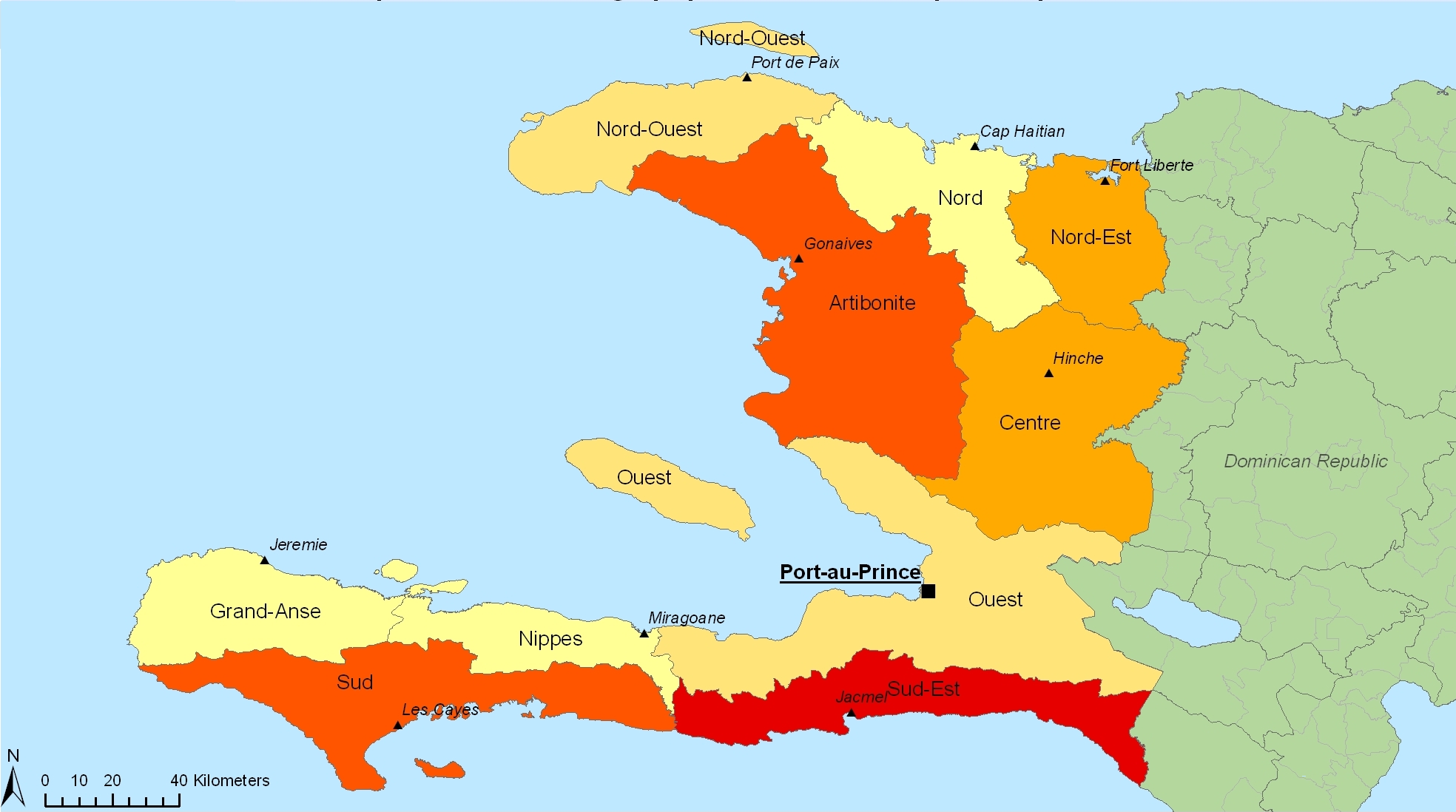
On the eve of going to Haiti: Letter to myself, age 22

Dear 22-year-old self,e

In a sense, this may be one of the most pointless things I have ever written, since it comes 17 years and some months too late to make a difference in the trip you are about to take to Haiti, but foolish or not, I am writing it.

I know that you're still upstairs, somewhere, wearing clothes that haven't fit me in years and that were never exactly fashionable in the first place, so I write this in the hope that it will do some good, somehow. Often the value is not in the hearing, but in the saying.

Right now, you're pretty excited about the trip you'll be taking in two days. This is something you've been looking forward to since January 1991. You remember that, right? That was when you took a short-term missions trip to LaGonave with STEM Ministries, while everyone else in the college fellowship headed to Urbana, Ill., for the big missions conference.

You didn't say much at the time to the others on your team, but the experience was one that you found to be deeply meaningful. There was that moment in LaSource where you realized that Pentecostalism wasn't what you had thought it was; and then there was that boy, Samuel, whose stomach was distended, whose hair was going red from malnutrition, and who you learned hadn't eaten a decent meal in weeks.

So, as I say, you're keen to be headed back to Haiti, to work with STEM. You're an idealist at heart, and since the Peace Corps called to say they were ready to assign you in Africa, and then called back 15 minutes later to say, "Never mind, we just realized you're an evangelical Christian," you've been looking forward to the door that it appears God has opened for you. No Fortune 500 job for you, you are going to make a difference!

Oh, Dave, you're such an idiot. You really have no idea what's going to happen, do you? Over the next two years, everything is going to hit the fan. Everything.

For starters, you're going to see need - real need. Not like the men at the homeless shelter you volunteered at one night your freshman year, who had a place to stay and food to eat because the United States has the wealth to feed its indigents when we want to.

No, we're talking the sort of need that comes when you have 8 million people in a nation where $3 is a decent day's wages and most people are unemployed. It's the sort of need where children sleep on the concrete driveway of the Jamaican restaurant on Route de Delmas. It's the sort of need where 14-year-olds are so underfed that they look like they might be 8.

It's a need that will slap you in the face every time you step out the door and interact with the people. The beggars in particular will overwhelm you. Some will be adults and some will be children; some will be sincere and some will merely be con men preying on you.

There will be no escaping that need. It will greet you when you wake up in the morning, it will haunt you when you get something to eat, and it will steal its way into your dreams. No matter how many times you discuss it with others, no matter how often you pray about it, and no matter how you try to rationalize your way around it, you will never make peace with it. Never.

One by one, your illusions are going to fail. Right now you have some pretty naive ideas about Christians, about Christianity, and about missionaries. You understand Christianity as forgiveness of sins, Christians as American-style conservatives, and missionaries as bastions of indomitable faith in God.

Over the next two years, you're going to realize the inadequacy of evangelicalism to deal with the problem of suffering and need; you're going to begin appreciating just how radically liberal Jesus was in his social attitudes, and you're going to discover that missionaries are just as human as the people in your church back home. Many missionaries whom you meet will disappoint you, just as you will disappoint them.

Incidentally, God is going to die while you're in Haiti. It'll be a combination of things that will finally do the old bugger in, but one day the light will fail and you will start crawling around on all fours in the dark to find the body. Eventually you will, and you'll wonder how you ever thought such a sad and miserable thing was worthy of worship.

Which is not to say it'll be all bad in Haiti, because it won't be. It'll be two of the hardest years of your life, but even though it sets you on a path that ultimately destroys the evangelical brand of faith that took you there, you will treasure your time in Haiti for the rest of your life.

You're going to meet some tremendous people and have some tremendous experiences that will still shape you years later. There'll be the Haitian church services you attend, particularly the ones with Herve; there will be the time you realize that while it hurts to turn away 200 hungry children, at least you were able to help feed 300 others; and there will be friendships with people like Elizabeth Gerritesen, Brian VanWyhe and Dan Kramer; with Tammy Lynn Johnston; with Rick Root; and with the Murphys and the Herseys.

(There is a funny story about how you meet the Murphys. I wonder sometimes if Lonnie remembers it, or what her kindergartners called you.)

The reception you get when you return Stateside will be underwhelming. I hate to say this, but your own pastor is going to dismiss what you did as "not missions work." and from time to time, the lack of interest other people have in your experiences there will lead you to question whether you really accomplished anything. Sometimes the loudest voice there will be the one in your head.

Ignore the gainsayers. The difference you make to the people you meet will be real and lasting, especially when you become a teacher. A Jewish tradition holds that to teach a child is to be as a parent to her. In less than a year of teaching, you will have 40 children who will never forget you, nor the lessons you teach them.

It's going to come to an end far too soon for you, and when it does, it won't end nicely. I haven't liked that ending for 15 years now, and frankly, I think it's time for the curtain to rise on a second act.

Now 39,

Dave Learn


Copyright © 2010 by David Learn. Used with permission.


Thursday, February 12, 2009

Repo man

About seventeen years ago, I was living in Port-au-Prince, Haiti, where I was a resident missionary with STEM Ministries.

STEM is a missions organization with a focus on the North American church. By providing groups from the United States and Canada with short-term experiences in third world nations in the Caribbean and South America, it hopes to awaken the church in two of the wealthiest nations on Earth to the global scale of God's work.

In other words, it might seem really pressing to build a state-of-the-art nursery with a cappuccino bar for the workers, but there are Christians in the Dominican Republic where they'd be grateful for a corrugated tin roof to keep the rain and sun out.

It's a pretty straightforward proposition: Show American Christians what the rest of the world is like, and let God challenge their preconceptions. Sometimes it works, sometimes it doesn't. Sometimes you forget right away, sometimes your experiences in the third world stay with you for the rest of your life.

While I was there, one of the nationals we worked with came to the ministry with a problem. He needed money, or the bank would take the land he and his family had been living on. Seventeen years is a long time, so I don't remember all the details. What I mostly remember is Steve Schmidt, our base director, mentioned that another missionary he knew would categorize this fellow's problems as the wealthy ignoring the plight of the poor, if not outright taking advantage of them.

Steve dismissed that as nonsense, since as he (correctly) pointed out, the fellow in question did have the money for the bank payment, or at least he used to. Like many people, he had used the money for other things, including things that he hadn't needed.

That's actually a common situation in Haiti, I'm afraid. A boujwa will come and buy a piece of property from someone for a handsome price, and tell him that he's going to build a house there in 10 years or so. Ten years will come and go, and then the boujwa will start building his house.

The former owner of the land, sadly, will still be on the property and will no longer have the handsome sum, which he theoretically could have used to buy land elsewhere, buy some goats or pigs to start a business and raise his family out of poverty, or something of the sort. Sadly, the owner usually will have done none of those things, and now has nothing left to show for the money he once was paid. It's all gone, and soon they are not only out of the money, they are out of the place they have lived for years.

There's no denying that the fellow who sold his home and then frittered away the money -- aside from any money that was put to a good use, like sending the kids to school -- made some really stupid decisions with his money, and in the end has to shoulder responsibility for his plight. On the other hand, it's a pretty cold thing to throw a family out of their homes, and leave them to fend for themselves.

Steve isn't that cold. He gave our national colleague some of the ministry's designated mercy money -- not enough to cover the whole payment, but a good chunk of it. The idea was that he would have to earn the rest of the money somehow, and make some adjustments, rather than us encouraging dependency on the "rich white missionaries."

Still, the story has stuck with me for the past 17 years because I can't shake the fundamental wrongness of evicting people from their homes. That feeling has stayed with me, and in recent months has grown still stronger, as banks that essentially preyed upon people by offering them mortgages that they couldn't afford, all in the name of making a buck. And while those homeowners have been thrown out onto the street, figuratively or literally, the executives responsible for the mess have been raking in huge bonuses even as the economy comes crashing down around the ears of the rest of us.

One fellow I know -- a dyed-in-the-wool God-is-a-Republican sort of Christian -- insists that capitalism is biblical. I'm not sure entirely how he justifies that, but there you have it. American-style capitalism unquestionably grew out of the Protestant work ethic practiced by groups like the Puritans and the Moravians, but it's quite a stretch to my mind to see Adam Smith's "Wealth of Nations" as being in sync with a text that never really got into particulars of economic theory beyond things like stressing the value of honest weights. At best, I can say that it is an extrabiblical economic system that can be shaped by biblical values of compassion (as opposed to the greed that drives the market most times).

But you know, home ownership is one area where capitalism keeps running afoul of biblical values, I think. In the U.S. economy, if I default on my mortgage, the bank theoretically has the legal right to foreclose on the mortgage and kick me, my wife, and our children, out onto the street.It doesn't matter if I've lost my job because of what the financial giants have done to the economy, it doesn't matter if they sold me a predatory mortgage for a market price that is three times the house's actual worth. If they have my signature on that mortgage contract, theoretically they have the legal right to kick me out of the house and try to sell it to recoup their losses.

There's something else at work here, though. While the hardcore apologists of a free market will expound on the virtues of tough love and making people take the consequences of their bad choices like parents disciplining an unruly child, it's not hard to find public sympathy for homeowners who are falling prey to economic forces that they have no control over.

There is something fundamentally unjust about evicting people from their homes. Not just unfair, but unjust. There is a fundamental connection between people and the homes they live in that we violate at our peril and to our shame.

The Bible backs me up on that. In ancient Israel, where my friend sees evidence of capitalism at work, that relationship was inviolate. An Israelite could buy the land of another Israelite, it's true, but only for seven years. Levitical law requires that when that seven-year period ended, the land had to be returned to its previous owner. The Torah also instituted the Jubilee, a period that came once every 50 years, where all debts were canceled, all slaves were set free, and all property rights were restored.

And therein lies a challenge for the American church as we stand on the cusp of what may blossom into the Second Great Depression. As we move forward, we must be mindful that we do have neither the right nor the authority to dictate to the rest of society how it should function.

But we should -- we must -- champion justice, and we have an obligation to advance alternatives to what our society practices, alternatives that respect and safeguard the basic dignity of everyone, especially those whose lives so often are chewed up in the cogs and gears of the systems that make our society work.

Some countercultural groups like The Jesus People in Chicago, or A Simple Way in Philadelphia, have explored the power and strength of communal living in contemporary society. Clearly that's not for everyone, but the alternatives are limited only by our faith and our imagination.

In the name of the one we claim to follow, we have a calling to do better.


Copyright © 2009 by David Learn. Used with permission.


Friday, February 22, 2008

Cuba, Haiti, and refugees seeking economic opportunity

Are thousands of people every year risk their lives trying to escape Cuba -- just because they want more money?

Thousands of people risk their lives every year to escape Haiti, and for the most part what they're leaving for is economic opportunities, plain and simple. Political persecution -- such as it is -- for the most part doesn't seep into the fabric of everyday life there. Most people in Haiti are more concerned with having enough food to eat from day to day than they are with which group of boujwa is busy fattening itself on their backs this year.

The few that do worry about political persecution -- and they are there, of course, they always are under oppressive regimes -- are worried about that because they're in some way involved in the political process and dialogue, by running a radio station, printing a newspaper, or organizing political activities that are considered to be in opposition to the government du jour.

Cuba has the distinction of a better-respected lobby in the U.S., and of course it has a policy that lingers from our days of fearing the Great Red Menace, under which Cuban refugees automatically are granted political asylum from the communist government.

But while there indisputably are people being politically persecuted in Cuba for their opposition to Castro, how many are simply coming here for economic opportunity?

And if they're granted refuge for that, shouldn't we extend the same protection to Haitian refugees as well?

Saturday, October 27, 2007

'o holy night'

I never even heard "O Holy Night" until I was a missionary in Haiti, back in 1993. We sang it once at a school staff Christmas party, accompanied only by guitar, and the song has forever been emblazoned in memory as having the most beautiful tune, best sung by candlelight in temperatures in the mid- to upper 80s.

Last year when Christmastime rolled around, I printed up a list of Christmas carols for us to sing during family devotions. The girls preferred "Do You Hear what I Hear," probably because it's so simple to learn, but I have high hopes that "O Holy Night" will catch on in years to come, even though our New Jersey winters are far colder than in Haiti.

Wednesday, October 27, 2004

black jesus

I'm tired of seeing the white, blond-haired Jesus, but who isn't? I want to see black Jesus some more.

White blond Jesus everywhere you look. He's in the Sunday school material, even though Jesus wasn't blonde. I taught at a Christian school in Bethlehem, Pa., and he was in all the Bible class materials, even though all but two of my students were Hispanic or African-American.

White blonde Jesus had a nice run, but let's give him a break. Let's remind ourselves that Jesus is for other people too, and not just us.

In Haiti, at the Baptist Haiti Mission in Fermathe, I saw a picture of the Holy Family in the art museum there. In this picture, a black Joseph was teaching a white Jesus the family trade while a white Mary was busily at work nearby. It was a very Haitian scene, except for the white people.

That's the damage the white Jesus can do; people forget that he's like them, and instead they see him as like another people, the missionary or the American forces. He's a foreigner, an outisder; and not someone who knows what it's like for them.

I do enjoy the other-ethnic pictures I've seen. The National Cathedral in Port-au-Prince has pictures of the black Jesus at different times of his ministry: his baptism, raising Lazarus from the dead the Last Supper.

The funniest part of the black Jesus is that he's usually pictured with a white Judas.


Copyright © 2004 by David Learn. Used with permission.


Saturday, August 07, 2004

The hardest part of being an ex pat is the language

The worst part of living in a different country is not the diseases you may catch, it's not the new climes you must weather, and it's not the disorientation of being a stranger in a strange land.

The worst part is the language.

When you don't speak the same lanuage as everyone else around you, you have the mind of an adult burdened by the survival skills of a toddler. You're fully cognizant of your needs, and fully aware of how helpless you are to do anything about them, or even to articulate what they are. In the best of times, you bear this with grace and laugh at your difficulties. The rest of the time you want to run away and cry.

When you don't speak the local language, you are unable to communicate or understand the most basic aspects of life, from "Where's the bathroom?" to "How much do you want for that mango?" In no time at all, you feel like the stupidest person on the face of the earth, such as when I told the yard boy, "Remember, I am garbage" instead of "Remember to take out my garbage."

Eventually you learn important phrases like, "I don't speak your language." This helps, but only moderately. There are times that come too frequently when you trust this trusty phrase out only to discover that the national who is speaking to you is speaking English, and speaking it tolerably well, but they are putting the emphasis on the wrong syllable, or pronouncing a silent letter, or committing some other minor gaffe that makes their speech unfamiliar to you.

Stupidest person on earth is too mild for how you feel on those occasions. Now you don't even understand English, and what's worse, you've just insulted someone who was trying to connect with you by inadvertantly telling him that he's too stupid to speak English properly.

Go get a shovel, dig a hole and climb in. Your only hope as a missionary whose enthusiasm outpaces your mastery of the language is that the Spirit will move, and people will connect with God despite your failings.

I was a missionary in Haiti, but not the sort who did led open-air services and tried to win converts. I initially worked with STEM Ministries, which brought teams to Haiti and other countries for two weeks at a time; and then with Cradle of Life Christian School, teaching English grammar and composition to middle-schoolers.

As a result, I didn't do much preaching in Haiti, but I did try to share the gospel with a other people occasion, if for no other reason than they expected me to and I had the feeling that I should. My first conversation along those lines went something like this:
"If you accept Jesus Christ, he will take away your dogs."
"My dogs? I don't have any dogs."
"Everyone has dogs, ma'am. But when Jesus forgives them, it's though you never had a dog your entire life."
Bill Smith, an Assemblies of God missionary whom I knew, told me he once preached an entire sermon in Kreyol once he felt he had gained sufficient mastery of the language. The sermon went well and the Spirit evidently was moving, so he decided to take an altar call and appeal to the congregation that if anyone wanted to follow of Christ, they should signify it by raising their legs into the air and coming forward on their hands.

He got plenty of puzzled looks, but very little response to the altar call. The Holy Spirit was quenched.

Still, my favorite embarrassing gaffe was committed by the late Dale Preiser, another Assemblies of God missionary who had left the country before I arrived. I met him once after I had returned to the United States, when he came to visit my church.

Dale had been in Haiti for a while, and was concerned that he saw a number of believers who were mixing voodoo and Christianity, and going to the voodoo priestess for help when problems arose. The word he wanted was mambo. Unfortunately, the word he used was mamba, and for three solid months he went along Highway One, using this word in his sermons.

"Stay away from the mamba," he warned them. "Mamba is of the devil. You cannot use the mamba without shipwrecking your faith and endangering the faith of others."

Mamba is peanut butter.

Still, the Spirit was moving. I am told that people were very open to this teaching, and sales of peanut butter plummeted wherever Dale went.


Copyright © 2004 by David Learn. Used with permission.


Friday, March 12, 2004

kerry for aristide

John Kerry says in The New York Daily News that he would have dispatched the armed forces to keep Aristide in power.

It sounds like Kerry is just using this as an excuse to disagree with Bush, but I'll give him the benefit of the doubt and assume he wants to see Haiti's fledgling democratic government endure. I still disagree with him.

There were more questions about Aristide's election than about Bush's. Whether we believe the Supreme Court gave him the election or think Gore should have won because of popular vote is to some degree irrelevant. He won the general election through the processes our nation has set up, and probably with no more corruption in his camp than was in Gore's. You can't say the same about Ti Tid's election. The reports of fraud were so bad there that many governments refused to recognize him as the legitimate winner and pulled their aid for the nation. The questions surrounding his election were one of the stated reasons for the insurgency.

Committing to keeping Aristide in power would be a costly move in terms of manpower, and probably in lives as well. True, our forces are better equipped and better trained than the Haitian military (although many of them graduated from West Point). But that hasn't exactly helped in Iraq, has it?

By the time the Marines removed Ti Tid from the national palace, the insurgents already had captured most of the nation's big cities. Cap Haitien, Gonaives, Jeremie and so on were all under their control. Aristide had Port-au-Prince, but that's about it. His biggest supporters, the people from the slums of Cite Soleil and Carrefour and other such places, were and are in those places (except where they've been executed), and they've demonstrated a remarkable tenacity and determination to fight, even after his departure. Failing to remove Aristide would have put these two positions in a position where they would have been fighting in close quarters, and would have left our troops in the crossfire.

And to be honest, having encountered some pretty appalling racism in our Marines stationed in Haiti, I can't say I would expect them to handle that situation with a lot of finesse. I can see a lot of unnecessary casualties in Haiti coming from a prolonged occupation of the type that Kerry is describing, with a comeasurate increase in anti-American sentiment.

Besides, with the American military backing his presidency, do you really think Ti Tid would *lose* the next election?

It's a difficult problem no matter how you slice it, but I think Bush did the best thing in this situation.

Thursday, March 11, 2004

haiti's unrest

Haiti's having an election.

Aristide's been claiming that he was abducted by the U.S. Marines. I've no idea what to make of that. I wouldn't put it past Bush to tell the troops to go in and get Ti Tid out of Port-au-Prince whether he wants to go or not, but the truth is that Haiti has about zero value to us politically, tradewise or in any other category that really matters to our presidents, Democratic or Republican.

If Bush did order the Marines to remove him, it probably was for chiefly two reasons. One, he didn't want the situation to become all-out civil war with people being massacred in the streets. That sort of intervention would appeal to him on a humanitarian level, and politically, since he probably would (deservedly) get beaten up by the Democrats and media commentators for allowing the situation to reach that point when he could have prevented it. Two, it just doesn't pay to have a situation as messy as Haiti was about to become right on doorstep, geopolitically speaking.

But in the long haul, the Bush administration probably is about as committed to Haiti as other U.S. administrations have been since Haiti won its independence in 1804. Haiti has no oil, nor gold, nor other natural resources that should make it matter to us. Its economy is dreadful, which makes it a lousy prospect for trade, and it's not being ruled by a communist dictator, so we've never had any substantial political interest in the island or human rights abuses there. (Carter was the exception. He was appalled by Duvalier's record, and refused to support his corrupt government with aid money that would just be stolen.)

Haiti has been the bastard stepchild of American politics since the beginning. There was an entire regiment of volunteer Haitians who fought for American independence from Britan, and some of those volunteers went on to fight for their own independence from France. When they won in 1804, we decided it would be a bad idea to recognize Haiti as an independent state because we had slaves of our own, and didn't want to give them any ideas. It wasn't until 1865, after the Civil War and after the Emancipation Proclamation that we recognized Haiti as an independent republic, and even so, we've never really done much for the country.

After Aristide was ousted by the first coup, in 1991, the previous Bush administration slapped the coutnry with a trade embargo that made a difficult life positively hell for the common Haitian. (You think the lack of success with trade sanctions on Iraq is something new? Economic sanctions never dissuade dictators from being tinpot bullies, and they never empower the people to rise up against their better equipped and wealthier rulers.)

Unfortunately, we've never really committed as a nation to helping the Haitian people. Boat people from Cuba are granted asylum automatically. Boat people from Haiti don't even get a hearing; they're repatriated automatically. Great solution. Bush had the military doing this even in the days right before we removed Ti Tid. If that's his brand of compassionate conservatism, I'm glad to be a bleeding heart liberal.

What's going on right now in Haiti is part of the cyclical Haitian way of life. When people have had enough of one government, they overthrow it. When they've decided that someone is keeping them down, they rise up and dechouke that person, whether he was keeping them down or not. I've heard it described this way: In America, if you have something I want, I try to go out and get one of my own. If I'm a criminal, I just steal yours. In Haiti, the more common solution is to destroy yours so that you don't have one either. So they regularly destroy their own infrastructure to keep everyone else from getting ahead. Hotels, homes, bakeries, you name it.

Democracy can't really take root there because democracy assumes certain values, mores, and education that just aren't there yet. Illiteracy estimates range from 60 percent to 80 percent; the nation officially is 10 percent Protestant and 90 percent Catholic, but if you add on "and 100 percent voodoo" you start to get a better sense of the spiritual yoke they're under.

The gospel is what that nation needs, but -- like everywhere else, I suppose -- there's a warped view of what the church is about. If you want to get rich, the answer is to become a minister. In many ways, because of the way missions is done from the United States, the Haitian church has fallen into a real serious enslavement to Mammon. I've talked to pastors who see nothing wrong with leaving their wives and children and going to the United States to serve God here. (And get lots of money, naturally.)

I don't have much faith in the current situation. Guy Philippe is connected with FRAPH, a group well-known in Haiti for political executions. A paramilitary group, it includes many former military memebers and, not surprisingly, a lot of former Tonton Macoutes. (The Tonton Macoutes took their name from the Haitian bogeyman, and were Duvalier's brute squad.) Not surprisingly, after saying all they wanted was for Aristide to leave, the insurgents now are refusing to disarm. How much do you want to bet Philippe is going to be a bid for power, either directly or covertly, as the new government takes shape?

Yet things go on. After the tense days and weeks before Aristide was removed -- and after the looting, killings and riots after he was removed -- things pretty much went back to normal, from what I'm told by friends who are still there. When you live at the subsistence level, you can't afford to stay inside for days on end. People go out and do their business, stay in at night, and life proceeds as it did before.

If you want, pray for Steve and Ruth Hershey. They're friends of mine who are down there right now, still teaching at Cradle of Life Christian School. They live in school housing with their two children. There's also Laura Busshey, who I never worked with personally but knew through STEM Ministries. She was attacked in her home by looters the day Aristide left. (Ruth, painfully, was on the phone with her at the time.) I don't how badly she was hurt, just that she was attacked. I suspect she might have been raped, but really don't know.

I also have other friends who are back in the States at the moment, named Phil and Lonnie Murphy. Phil was Stateside anyway to attend a missions conference, and Lonnie and their son David were coming to Florida to visit his sister Michelle at college. Their missions board convinced them to stay. Knowing Phil, the board probably had to work hard to do that. He and Lonnie have stayed in Haiti through at least four coups and one U.S. invasion. Both their children were born there, and they themselves probably will be there for another five to 10 years, si Bondie vlé.

Phil and Lonnie run an orphanage in the mountains north of Port-au-Prince. They used to live in downtown Port, but moved the orphanage about eight years ago so they could expand it to the next phase. In addition to raising about 20 Haitian children and teaching them valuable skills like budgeting, the value of hard work, and so on, the Murphys also are engaged in community building. They've been teaching not just the kids but their neighbors some useful agricultural techniques, from simple stuff like composting to more advanced stuff like permaculture. Their goal is to get the orphange to the point that the grown-up kids can take over for them and eventually run the place on their own.

Phil and Lonnie are really neat people. I can honestly say they had a bigger impact on me in Haiti than anyone else. They're the only American missionaries I know who are invited to participate in the lives of their Haitian neighbors, such as baptisms, weddings and funerals. You know, if anyone wants to support them, I offer the Murphys my unqualified endorsement and would be happy to share their support information.

Monday, May 12, 2003

staff devotions

I've never been a big fan of daily devotions when it comes to matters of faith, especially when we're expected to lead them with one another.

Devotions more typically are shallow readings of Scripture or similarly light stories intended more to make us feel good than they are intended to challenge us to think more deeply about God or a life of holiness. Poems like "Footprints" are popular material for devotions. They reassure us that God is in control of things, and no matter how it seems to get, everything will turn out all right in the end.

We had daily devotions at Central Christian Academy in Bethlehem, Pa., when I taught there, and man the other teachers hated when it was my turn. I've always felt that the purpose of reading the Bible is to discover something new about holiness and our pursuit of God; and that we should share what we've been learning, rather than repeating the same homilies everyone knows and shares all the time.

In other words, I couldn't just be normal and light and fluffy, no, I had to do something different and sometimes even downright bizarre.

So one time I shared Orson Scott Card's different versions of the woman caught in adultery. In one the teacher spares the woman's life because he is corrupt, and sees an advantage in sparing her life; and in the other telling he kills her to uphold justice. That got a horrified gasp from one teacher, but I enjoyed Card's point that Christ strikes the perfect balance between justice and mercy, and that's why we strive to follow him and his example.

Another time I shared a passage from Don Richardson's "Eternity in their Hearts" about the redemptive analogies found in pre-Christian cultures, that missionaries connected to the gospel story so that Christianity would grow organically in the culture rather than being imposed from outside with its Western baggage. I was a former missionary and found this sort of thing fascinating; the other teachers found it tedious and pointed out how long it was taking.

These were not normal fare for devotions, I guess, but then it was my turn to lead devotions, and I found them both more interesing and inspiring that hearing that damn "Footprints" poem again.

Then of course there was the other school, Cradle of Life Christian School in Haiti. We had staff devotions there only twice a week, as I recall, and when I shared "what God was teaching me," it was about the obligation we have to the poor. I offered no answers, only the questions I was asking, and what I was seeing in Scripture and in literature.

No one in the staff objected to my knowledge, but the administration really didn't like that. I was put on probation the next day, and at the end of a month I was fired.

I'm not a fan of devotions, but I'm pretty confident I did that one right.


Copyright © 2003 by David Learn. Used with permission.


Tuesday, January 08, 2002

zombies

The only zombie I've ever met was too brain-fried to be considered bad -- he just walked up and down the road, day in and day out. I understand he used to be a singer with a promising career ahead of him until a rival musician arranged to have the bokor curse him with a powder on his microphone.

Thursday, September 16, 1999

At Princeton U, they're building a better mouse

Like a number of other people around the nation, I read with great interest news accounts of the recently announced gene-splicing success at Princeton University.

A team of researchers, including Princeton University neurobiologist Joe Tsien, announced Sept. 1 they had engineered a super-intelligent mouse they named Doogie, after the teenager on the TV show "Doogie Howser MD," the rationale being that the character was an annoying little pipsqueak too (The Princeton Packet, Sept. 3).

This announcement immediately raises a number of questions among thoughtful folk. For starters, why on earth would an Ivy League institution pick a name with the initials PU? Even the University of Pittsburgh had the sense to put the U before the P so that the worst students at rival schools can say is only "Boy, your school is a real Pitt."

Why on earth would someone want to make a better mouse? With the sort of brains Princeton University attracts, you would think they could put their effort into something more useful, like designing a better mousetrap and dumber mice.

My first year living in Port-au-Prince, Haiti, we developed a serious mouse problem. The tracking ball kept getting stuck, so it was next to impossible for me to get a high score on our laptop computer's copy of Solitaire during the relatively brief periods that we had electricity and I could turn the thing on.

But besides that, for a couple months we had problems with little brown furry creatures sneaking in and making off with food, including food in airtight packages. Haitian cats, of course, often are used for human consumption, with the result they're not easy to find, and we were forced to rely on mouse traps and our guard dog Gideon.

Gideon's own brush with rodent control came during my second year in Haiti, when a large rat climbed in the window while we were eating dinner. For half an hour, three of us chased the rat through the living room, trying to hit the rat with a sauce pan, a baseball bat and a can of Raid (kills rats dead?).

Gideon was the only one to connect with the rat, although Dan and I both beat a chair senseless trying to flush it out of hiding. Gideon grabbed the rat in his jaws for about three seconds, until it scratched him on the nose and got away.

The rodent problem persisted, even after we introduced a variety of poisons and rat and mouse traps. All we succeeded at was increasing the intelligence level of the average mouse in our home.

At first the smarter mouse -- no doubt also engineered by Dr. Tsien and his fellow researchers -- would convince his companion to run across the trap and see if it was armed. After this had gone on a few months, the surviving mice, born from the intelligent mice, had wised up to this trick, and formed a union to protest their unsafe work conditions.

As time went on, the mice would find ways to get the bait without getting caught, and find all sorts of escape routes from a trap that would keep even James Bond in maximum security.
Ever since "Tom and Jerry" debuted, mice have been getting uppity. Believe me, they don't need any extra help from Dr. Tsien.

My whole point, of course, is that mice are a pain in the neck to get rid of as it is. By adding the gene NR2B, Dr. Tsien allowed mice to learn faster and double their SAT scores with only a few extra hours of study. The experiment succeeded so well that two of the mice plan to take a full class load at Princeton University in the Class of 2004 if they can get enough financial aid.

Now don't get me wrong. I'm not knocking these recent discoveries and what they mean for the human race years down the road. With more research, the work Dr. Tsien and his colleagues have done could become the foundation for treating Alzheimer's disease, a few mental disabilities and generally making people smarter.

Who knows? One day gene therapy might even make a scientist smart enough to invent a better mousetrap.