For those who are keeping track of these things, we continued to play Nomic today at our homeschooling logic club.
Nomic is a game of self-governance, created in 1982 by philosopher Peter Suber. Like any other folk game, there are a number of variants, but the version I am most familiar with and taught to the children begins with exactly one rule: that it takes a two-thirds majority to change the rules. We played the game last week, and even though I was introducing it to a group of preteens, the game was very well received.
We continued our previous session, and though we passed fewer rules this time than previously, we still had a good time. The new rules passed are as follows.
21. Firstly, if Billy is not present, then the writer must go first. For purposes of Rule 11, the computer counts as paper and the person operating the computer counts as the writer. Secondly, if a rule is proposed, it must be voted on unless the person proposing the rule decides to withdraw it. Thirdly, the turn changes to the next person once the vote has been cast. (This rule represents an interesting development in how the kids were viewing the game. They realized that, according to Rule 5, Billy should go first -- but Billy was absent that day. Additionally, since I had transcribed the rules to the computer and they weren't using pen and ink, they had to confront an unexpected shortcoming of their rules by redefining their terms. But most significantly, this is a rule that addresses multiple, unrelated problems at the same time. That's a huge leap in complexity.)
22. Rules pass by a simple majority. (They were doing the math and realized three-fifths might not always be easy if we didn't have five players.)
23. Turn passes by the roll of a die, rather than to the next person in the circle. (My idea. I keep trying to give the game more unexpected twists and changes, to keep people on their toes.)
24. You cannot have a turn three times in a row, no matter how the die rolls. (Oldest Daughter's suggestion. She had proposed the turn limit last week, but her effort failed when everyone favored the idea of turns rotating clockwise instead.)
25. Rules 2 5, and 7 do not go into effect until quarter past three. (I inject more chaos. Note that only two rules have been passed since my last turn. This is due in part to the X factor introduced by the roll of the die, but also because it was becoming harder to reach consensus on what rules to make, now that the basic fairness issues had been resolved.)
26. E____'s father does not have to vote on any of her rules. (There were a couple failed efforts to pass rules between Rule 25 and this one. Ironically, I was able to get my daughter's blank-check support for this rule by telling her I would support the next rule she proposed.)
27. David Diez and Mary (Joe's mother) may join the game; also, Rule 25 is no longer in effect. (The kids all thought Rule 26 was funny, but they also agreed with my daughter that it was a sneaky sort of thing to do.)
28. (I called for a vote on this rule before Joe could propose anything. The vote passed 5-1.)
The game was a hit the second week in a row, but at this point, I have no plans to continue it. Next time we meet, we will play a similar game a friend of mine in California has introduced me to, called 1,000 Blank White Cards. It looks interesting.
Copyright © 2012 by David Learn. Used with permission.
Tweet
Friday, April 27, 2012
Sunday, April 22, 2012
Introducing a group of homeschoolers to Nomic
When you have four children at your house for two hours, and only one hour of planned activities, what do you do? You play Nomic, of course!
Created in 1982 by philosopher Peter Suber, Nomic is an exercise in self-governance, quite literally. It begins with only one rule, that it takes a two-thirds majority to change the rules. Given that I was introducing it to a group of preteens who for months had been ending their weekly logic class with games like Munchkin and Pandemic, I wasn't sure if this game would fly, but it was very well received.
The game is still in its early stages of development, but it has the potential to become a major lesson in consensus-building, compromise, and parliamentary procedure -- in short, it's an interesting hands-on lesson in how government works A quick overview of the rules will reveal that the kids for the most part so far have been concerned with being fair and giving everyone a chance to be heard.
Nomic is one of those games you hear about, and tuck away for the appropriate time to play. I had heard about it in 1997 from one of my wife's classmates in college. A friend of mine ran a game on Delphi Forums several years ago, but the nature of the forum made it hard for the game to advance much. When I started homeschooling Oldest Daughter two years ago, I knew I'd have to introduce it to some other kids someday.
Someday was Friday. We played for about an hour, amid a lot of laughter and merriment, without rolling a single die, moving a single token around a board, or playing a single card.
The kids had so much fun that they want to continue the game the next time we meet. I'm wondering how long it will take them to realize that they can introduce more complex rules, and even start making deals with other players to gain support for personally favored rules; or how long it will take them to start arguing over what exactly a rule means, and trying to initiate massive reforms to simplify the rule structure.
I'm also wondering if the game will at some point progress beyond merely passing rules. One adult, after hearing about the game, immediately grasped its potential for a drinking game. (That one, at least, I hope does not occur to the kids for some time to come.)
The rules:
0. A two-thirds majority is required to change the rules.
1. A three-fifths majority is needed to change the rules. (They added this because they wanted me to participate, and thought that a simple majority would be easier than a two-thirds supermajority. Interestingly, they made the rule specify a "three-fifths majority," instead of a "simple majority," which could have implications down the road, should the group increase in size a few people.)
2. Isaac has to write the new rules. (That was my suggestion. The rule immediately passed, 4-1, with Isaac casting the lone dissenting vote.)
3. We have to discuss all rules before they are made.
4. We cannot eat Joe. (The club is about developing logic and critical thinking skills. An hour earlier, I had illustrated false connections with the statements "Pigs exist. Joe exists. Therefore, Joe is a pig." Now as I was asking the kids if they wanted anything for a snack, I mentioned that we had bacon, and let my eyes linger meaningfully over Joe.)
5. We will vote on Billy's rule first. (I had proposed a rule that we take turns suggesting rules. While this was on the table, Oldest Daughter suggested limiting the number of rules anyone could introduce to three in a row. Billy in turn suggested that we vote on my rule before Oldest Daughter's, since mine had been suggested first. Since the rules failed to specify an order for how to entertain multiple motions, it was decided we should vote first on Billy's proposal to vote on my proposed rule. Ironically, this meant that we voted on Billy's rule second, but I didn't want to muddy the waters even further, so I kept that observation to myself.)
6. We vote on the first rule that was proposed (This is where they started introducing a sense of order to how the game would work; up until this point, it had been a free-for-all.)
7. We take turns proposing new rules, going in a circle.
8. The first person to propose a rule is Billy, and we go clockwise.
9. You can change your rule that you are proposing before it is voted on.
10. Every five minutes we switch seats. (This was my idea. I wanted to show the kids that we could make the game about more than just changing rules.)
11. The writer is the person in the chair in front of the paper. (This was Isaac's idea. Poor boy had been writing down rules for about 20 minutes. He was a good sport about it, though.)
12. Whenever a rule is passed, we must clap three times. (One of the kids had started to see the potential the game has for more than just passing rules.)
13. When a rule is suggested, the person on the left calls the end of the discussion -- unless the person on the left is the writer, in which case it is the person on the right. (Here is their first effort to ensure that every proposal gets fair consideration. I plan to demonstrate the flaw in this rule next week, by calling for a vote as soon as the rule is suggested, before anyone has a chance to discuss it.)
14. All rules must be numbered.
15. If your parent has come, you can go. (One of the other parents had come to collect her son and two other boys. I pointed out that there was no provision for people to leave yet.)
16. Amend Rule 15 to say "ride." (This came after I pointed out that under our rules, only Billy could leave, since Joe and Isaac's moms hadn't come for them -- just their ride.)
17. Anyone who breaks the rules must squawk like a chicken. (We realized that no one had been clapping when rules were passed, in clear violation of Rule 12. So here we have our first attempt at enforcement with consequences.)
18. The writer will set the timer.
19. We stop the game when the first person leaves.
20. When you forget to clap, you must take the writer's seat. If multiple people forget to clap, the last one to touch their nose is the one to take the writer's seat. If you forget to clap and you are in the writer's seat, then you cannot switch when the timer goes off.
Copyright © 2012 by David Learn. Used with permission.
Tweet
Created in 1982 by philosopher Peter Suber, Nomic is an exercise in self-governance, quite literally. It begins with only one rule, that it takes a two-thirds majority to change the rules. Given that I was introducing it to a group of preteens who for months had been ending their weekly logic class with games like Munchkin and Pandemic, I wasn't sure if this game would fly, but it was very well received.
The game is still in its early stages of development, but it has the potential to become a major lesson in consensus-building, compromise, and parliamentary procedure -- in short, it's an interesting hands-on lesson in how government works A quick overview of the rules will reveal that the kids for the most part so far have been concerned with being fair and giving everyone a chance to be heard.
Nomic is one of those games you hear about, and tuck away for the appropriate time to play. I had heard about it in 1997 from one of my wife's classmates in college. A friend of mine ran a game on Delphi Forums several years ago, but the nature of the forum made it hard for the game to advance much. When I started homeschooling Oldest Daughter two years ago, I knew I'd have to introduce it to some other kids someday.
Someday was Friday. We played for about an hour, amid a lot of laughter and merriment, without rolling a single die, moving a single token around a board, or playing a single card.
The kids had so much fun that they want to continue the game the next time we meet. I'm wondering how long it will take them to realize that they can introduce more complex rules, and even start making deals with other players to gain support for personally favored rules; or how long it will take them to start arguing over what exactly a rule means, and trying to initiate massive reforms to simplify the rule structure.
I'm also wondering if the game will at some point progress beyond merely passing rules. One adult, after hearing about the game, immediately grasped its potential for a drinking game. (That one, at least, I hope does not occur to the kids for some time to come.)
The rules:
0. A two-thirds majority is required to change the rules.
1. A three-fifths majority is needed to change the rules. (They added this because they wanted me to participate, and thought that a simple majority would be easier than a two-thirds supermajority. Interestingly, they made the rule specify a "three-fifths majority," instead of a "simple majority," which could have implications down the road, should the group increase in size a few people.)
2. Isaac has to write the new rules. (That was my suggestion. The rule immediately passed, 4-1, with Isaac casting the lone dissenting vote.)
3. We have to discuss all rules before they are made.
4. We cannot eat Joe. (The club is about developing logic and critical thinking skills. An hour earlier, I had illustrated false connections with the statements "Pigs exist. Joe exists. Therefore, Joe is a pig." Now as I was asking the kids if they wanted anything for a snack, I mentioned that we had bacon, and let my eyes linger meaningfully over Joe.)
5. We will vote on Billy's rule first. (I had proposed a rule that we take turns suggesting rules. While this was on the table, Oldest Daughter suggested limiting the number of rules anyone could introduce to three in a row. Billy in turn suggested that we vote on my rule before Oldest Daughter's, since mine had been suggested first. Since the rules failed to specify an order for how to entertain multiple motions, it was decided we should vote first on Billy's proposal to vote on my proposed rule. Ironically, this meant that we voted on Billy's rule second, but I didn't want to muddy the waters even further, so I kept that observation to myself.)
6. We vote on the first rule that was proposed (This is where they started introducing a sense of order to how the game would work; up until this point, it had been a free-for-all.)
7. We take turns proposing new rules, going in a circle.
8. The first person to propose a rule is Billy, and we go clockwise.
9. You can change your rule that you are proposing before it is voted on.
10. Every five minutes we switch seats. (This was my idea. I wanted to show the kids that we could make the game about more than just changing rules.)
11. The writer is the person in the chair in front of the paper. (This was Isaac's idea. Poor boy had been writing down rules for about 20 minutes. He was a good sport about it, though.)
12. Whenever a rule is passed, we must clap three times. (One of the kids had started to see the potential the game has for more than just passing rules.)
13. When a rule is suggested, the person on the left calls the end of the discussion -- unless the person on the left is the writer, in which case it is the person on the right. (Here is their first effort to ensure that every proposal gets fair consideration. I plan to demonstrate the flaw in this rule next week, by calling for a vote as soon as the rule is suggested, before anyone has a chance to discuss it.)
14. All rules must be numbered.
15. If your parent has come, you can go. (One of the other parents had come to collect her son and two other boys. I pointed out that there was no provision for people to leave yet.)
16. Amend Rule 15 to say "ride." (This came after I pointed out that under our rules, only Billy could leave, since Joe and Isaac's moms hadn't come for them -- just their ride.)
17. Anyone who breaks the rules must squawk like a chicken. (We realized that no one had been clapping when rules were passed, in clear violation of Rule 12. So here we have our first attempt at enforcement with consequences.)
18. The writer will set the timer.
19. We stop the game when the first person leaves.
20. When you forget to clap, you must take the writer's seat. If multiple people forget to clap, the last one to touch their nose is the one to take the writer's seat. If you forget to clap and you are in the writer's seat, then you cannot switch when the timer goes off.
Copyright © 2012 by David Learn. Used with permission.
Tweet
Wednesday, February 15, 2012
open letter to n.j. gov. chris christie
Dear Gov. Christie:
The New Jersey Assembly today is expected to pass legislation that would legalize same-sex marriage in New Jersey. As a person of faith, I am writing to urge you to sign this bill into law once it reaches your desk. Please do not veto it.
I've enjoyed the emotional intimacy and support of my wife for the past 13 years, through good times and bad, and I see no reason that my gay neighbors, relatives and friends should not receive these same benefits under New Jersey law -- including the benefit of calling one another "husband" and "wife," and not just merely "domestic partner."
I realize that you believe this is something that should be put to the general public in a referendum. With all due respect, though, Mr. Christie, this is wrong. Civil rights are neither granted nor denied according to mass consent. They are, as our nation's founders wrote, "endowed by our Creator" and they are inalienable.
Thomas Jefferson even listed among our most basic rights the pursuit of happiness, which for our gay neighbors, friends and relatives is obstructed by our state's refusal to recognize the dignity and value of their relationships with the designation of marriage. The duty of your office is to lead the way in seeing that these rights are upheld, not to defer those rights to the vox populi.
While our religious communities should be free to define and recognize marriage according to the context of their respective religious frameworks, one of the great strengths of our society is that it is nonsectarian, and is not governed by any ideology save a pluralist celebration of our differences. In that vein, and as a person of deep faith myself, I call upon you to sign the bill when it comes to your desk, and not to veto it.
David Learn
The New Jersey Assembly today is expected to pass legislation that would legalize same-sex marriage in New Jersey. As a person of faith, I am writing to urge you to sign this bill into law once it reaches your desk. Please do not veto it.
I've enjoyed the emotional intimacy and support of my wife for the past 13 years, through good times and bad, and I see no reason that my gay neighbors, relatives and friends should not receive these same benefits under New Jersey law -- including the benefit of calling one another "husband" and "wife," and not just merely "domestic partner."
I realize that you believe this is something that should be put to the general public in a referendum. With all due respect, though, Mr. Christie, this is wrong. Civil rights are neither granted nor denied according to mass consent. They are, as our nation's founders wrote, "endowed by our Creator" and they are inalienable.
Thomas Jefferson even listed among our most basic rights the pursuit of happiness, which for our gay neighbors, friends and relatives is obstructed by our state's refusal to recognize the dignity and value of their relationships with the designation of marriage. The duty of your office is to lead the way in seeing that these rights are upheld, not to defer those rights to the vox populi.
While our religious communities should be free to define and recognize marriage according to the context of their respective religious frameworks, one of the great strengths of our society is that it is nonsectarian, and is not governed by any ideology save a pluralist celebration of our differences. In that vein, and as a person of deep faith myself, I call upon you to sign the bill when it comes to your desk, and not to veto it.
David Learn
Tuesday, November 15, 2011
The Great School Trip Musket Fight
I know I shouldn't, but sometimes it's just too much fun not to play with my kids' heads.
Middle Daughter today came home from a field trip to the state capital where she visited some Revolutionary War barracks and saw a demonstration of front-loading muskets, including how to load and discharge them, by an actor in period costume.
"Did you get to fire the musket?" I asked her.
"No," she said as if that were a silly question.
"Oh," I said, sounding disappointed on her behalf. "When I went there with Evangeline three years ago, we all got to take turns loading and firing the muskets."
Her eyes went wide. "Everybody?"
"Everyone," I assured her. "Even the adults."
Rachel turned this over for a moment, and decided that there just hadn't been enough muskets to go around this year. After all, her class had taken the tour with students from another school, while the tour I'd been on three years ago was just for the charter school. A moment later we joined Evangeline, and I told her that her sister hadn't been able to fire the musket this year.
"Did we get to?" Evangeline asked.
"Oh sure," I said casually. "Don't you remember? They split us up into two sides, one for the British and one for the Revolutionaries, and we shot muskets at one another."
"With real bullets?" There was no skepticism in Evangeline's voice, just idle curiosity.
"No, muskets didn't use bullets, they use those round musket balls, remember?" I said. "They said there was no danger of anyone getting hurt, since muskets have such a limited range and don't aim that well either."
There was silence while the girls pondered this. Their younger sister Alex ran around on the wood chips of the school playground, while the last lingering students either finally were picked up or were herded inside by their teachers.
"I guess someone must have got hurt by accident, and they had to stop letting kids do that,," Evangeline finally said. You could hear the disappointment in her voice, not only for her sister, but for all the other students whom the state would no longer allow the unfettered joys of firing front-loading muskets at their classmates during field trips to state parks. Government bureaucrats can be so joyless and petty.
We got into the car and drove away, and soon the afternoon was filled with other activities like homework, karate class, and play practice, but as I tucked Rachel into bed, I discovered how the day's disappointment still lingered below the surface.
"Dad," she said, after I had given her a goodnight kiss. "I bet they just bought better muskets than they used to have."
I gave one of those who-knows shrugs that fathers are famous for, to concede that she might be right. The state's always ruining perfectly good activities by upgrading their equipment. Why not get new muskets too?
"Could be," I said, and I turned off the lights.
I just wish I could be there tomorrow when her classmates hear about all the great activities they missed.
Copyright © 2011 by David Learn. Used with permission.
Tweet
Middle Daughter today came home from a field trip to the state capital where she visited some Revolutionary War barracks and saw a demonstration of front-loading muskets, including how to load and discharge them, by an actor in period costume.
"Did you get to fire the musket?" I asked her.
"No," she said as if that were a silly question.
"Oh," I said, sounding disappointed on her behalf. "When I went there with Evangeline three years ago, we all got to take turns loading and firing the muskets."
Her eyes went wide. "Everybody?"
"Everyone," I assured her. "Even the adults."
Rachel turned this over for a moment, and decided that there just hadn't been enough muskets to go around this year. After all, her class had taken the tour with students from another school, while the tour I'd been on three years ago was just for the charter school. A moment later we joined Evangeline, and I told her that her sister hadn't been able to fire the musket this year.
"Did we get to?" Evangeline asked.
"Oh sure," I said casually. "Don't you remember? They split us up into two sides, one for the British and one for the Revolutionaries, and we shot muskets at one another."
"With real bullets?" There was no skepticism in Evangeline's voice, just idle curiosity.
"No, muskets didn't use bullets, they use those round musket balls, remember?" I said. "They said there was no danger of anyone getting hurt, since muskets have such a limited range and don't aim that well either."
There was silence while the girls pondered this. Their younger sister Alex ran around on the wood chips of the school playground, while the last lingering students either finally were picked up or were herded inside by their teachers.
"I guess someone must have got hurt by accident, and they had to stop letting kids do that,," Evangeline finally said. You could hear the disappointment in her voice, not only for her sister, but for all the other students whom the state would no longer allow the unfettered joys of firing front-loading muskets at their classmates during field trips to state parks. Government bureaucrats can be so joyless and petty.
We got into the car and drove away, and soon the afternoon was filled with other activities like homework, karate class, and play practice, but as I tucked Rachel into bed, I discovered how the day's disappointment still lingered below the surface.
"Dad," she said, after I had given her a goodnight kiss. "I bet they just bought better muskets than they used to have."
I gave one of those who-knows shrugs that fathers are famous for, to concede that she might be right. The state's always ruining perfectly good activities by upgrading their equipment. Why not get new muskets too?
"Could be," I said, and I turned off the lights.
I just wish I could be there tomorrow when her classmates hear about all the great activities they missed.
Copyright © 2011 by David Learn. Used with permission.
Tweet
Tuesday, September 06, 2011
Be as good as your dog
Talk about an ego booster.
Seventeen years ago, I was a frequent visitor to House of Blessings at #4 Rue Sambour, Port-au-Prince. In large part, I availed myself of the hospitality of Phil and Lonnie Murphy, whom I had adopted as family while I was in Haiti. ("Abused" might be a better word, but I like to think that I made up for it after my return to the E.U., when I steered some support their way from the Christian school where I was teaching.)
But aside from my time with the Murphys, I put in some time with the children there as well. In particular, I paid attention to Steve and Isaac Adrien, a 4-year-old and a 2-year-old pair of brothers who had just arrived. I played with them, talked with them, and would gladly have taken them home had it been possible and realistic. (It was neither.)
I spoke for a while with Steve, during our recent September visit to Haiti. Now 19, Steve hopes in early 2012 to begin attending a unversity in Missouri, where he plans to major in business administration, so he can return to Haiti and make a difference to his people. I felt a sort of distant pride in him, aware of how much I had loved the little kid he once had been, but also aware how little I'd had to do with the man he was becoming.
Steve also told me that he had recognized me last March when he had been at the Cradle of Life Crisis Relief Center. Like me, he had volunteered with the relief efforts; and while we were there, he had been plagued by the thought that he knew me, but for the life of him, he couldn't recall why.
And then last August I led a team to Callebasse to build houses while we stayed at House of Blessings, and it clicked.
So, reader, be assured of this: If you pour your life and your love into someone, they will remember you.
Several others who had been associated with House of Blessings in 1994 still are connected with it, and I spoke with them while were in Haiti in September -- Wislande, Tania and Woody all believe me when I say I was there, even though they don't remember me.
After I left in 1994, Phil took in my dog for a month or so, until they were unable to keep him any longer. Ajax was a mountain of a dog, an indomitable Labdrador retriever, rising up over everyone, a mighty river coursing the length of his large pink tongue. He one of the best dogs I've ever known.
They all remember my dog.
And all this goes to prove that if you love someone deeply, you can mean as much to them and make as big a difference in their lives, as your dog.
Copyright © 2011 by David Learn. Used with permission.
Tweet
Seventeen years ago, I was a frequent visitor to House of Blessings at #4 Rue Sambour, Port-au-Prince. In large part, I availed myself of the hospitality of Phil and Lonnie Murphy, whom I had adopted as family while I was in Haiti. ("Abused" might be a better word, but I like to think that I made up for it after my return to the E.U., when I steered some support their way from the Christian school where I was teaching.)
But aside from my time with the Murphys, I put in some time with the children there as well. In particular, I paid attention to Steve and Isaac Adrien, a 4-year-old and a 2-year-old pair of brothers who had just arrived. I played with them, talked with them, and would gladly have taken them home had it been possible and realistic. (It was neither.)
I spoke for a while with Steve, during our recent September visit to Haiti. Now 19, Steve hopes in early 2012 to begin attending a unversity in Missouri, where he plans to major in business administration, so he can return to Haiti and make a difference to his people. I felt a sort of distant pride in him, aware of how much I had loved the little kid he once had been, but also aware how little I'd had to do with the man he was becoming.
Steve also told me that he had recognized me last March when he had been at the Cradle of Life Crisis Relief Center. Like me, he had volunteered with the relief efforts; and while we were there, he had been plagued by the thought that he knew me, but for the life of him, he couldn't recall why.
And then last August I led a team to Callebasse to build houses while we stayed at House of Blessings, and it clicked.
So, reader, be assured of this: If you pour your life and your love into someone, they will remember you.
* * *
Several others who had been associated with House of Blessings in 1994 still are connected with it, and I spoke with them while were in Haiti in September -- Wislande, Tania and Woody all believe me when I say I was there, even though they don't remember me.
After I left in 1994, Phil took in my dog for a month or so, until they were unable to keep him any longer. Ajax was a mountain of a dog, an indomitable Labdrador retriever, rising up over everyone, a mighty river coursing the length of his large pink tongue. He one of the best dogs I've ever known.
They all remember my dog.
And all this goes to prove that if you love someone deeply, you can mean as much to them and make as big a difference in their lives, as your dog.
Copyright © 2011 by David Learn. Used with permission.
Tweet
Wednesday, July 06, 2011
Some actual good news
Following the example of the scriptures and the early church, the gospel is not "Christ died for your sins," but "God has raised Jesus from the dead and has made him lord over all." What a difference that makes, and what a much more powerful message.
Why the distinction? Because while both are good things, only one of them corresponds to the actual definition of good news?
The Greek word evangelion, which we translate as gospel or good news, originally was used in cities, territories, and towns that the Roman Empire had annexed. It wasn't a declaration of forgiveness, but that Caesar was lord, and because Caesar was lord, there would be peace, and prosperity, and roads, and a general improvement of life. 'Good news! You are now Caesar's subjects, and all your troubles are over. Ave imperator."
Of course, there also were oppressively high taxes, sons and daughters were taken away as slaves, men were conscripted to fight Rome's wars. This good news came at a high price. The only people who enjoyed it were collaborators with the Romans, the already-wealthy and powerful, and other corrupt people.
By declaring its own evangelion that "Jesus (not Caesar) is Lord," the early church subverted Caesar's message of good news with a much different one. And just as you could tell when Caesar had come to town by the general increase in misery and increased presence of Roman insignia and customs as people lived the way that Caesar commanded, you also could tell when Jesus had come to town, because of the way the social order was upended and people of no importance took center stage.
Forgiveness is an important part of the gospel, but from what Paul writes in the book of Romans, it's an effect of following Jesus, rather than the first step. "If you confess with your mouth, 'Jesus is Lord,' and believe in your heart that God raised him from the dead, you shall be saved. For it is with the heart that you believe and are justified, and with the mouth that you confess and are saved" (Romans 10:9-10.)
It's also how Jesus and the early church invited people to follow him. But don't take my word for it. Check out Peter's sermon on Pentecost, Paul's sermon at Mars Hill, Jesus' invitation to the Apostles in the early chapters of John, Jesus' encounter with the woman at the well in John 3, his dialogue with the rich young ruler, or really any of his other declarations about his mission.
See for yourself how many of them are based on an appeal for people to accept his death for their sins, and how many are based upon his claim to be Christ, a king. People's sin may come up, but it's not the primary focus of the discussion.
I became a Christian because I was convinced I was a sinner in need of forgiveness; I imagine you did too. This has become normative in the church, but it's more a reflection of God's desire to reconcile all things to himself than it is a faithful representation of the message Jesus and the early church presented when they proclaimed the evangelion.
And really, why would we want to have a different focus from the one Jesus has?
Copyright © 2020 by David Learn. Used with permission.
Tweet
Why the distinction? Because while both are good things, only one of them corresponds to the actual definition of good news?
The Greek word evangelion, which we translate as gospel or good news, originally was used in cities, territories, and towns that the Roman Empire had annexed. It wasn't a declaration of forgiveness, but that Caesar was lord, and because Caesar was lord, there would be peace, and prosperity, and roads, and a general improvement of life. 'Good news! You are now Caesar's subjects, and all your troubles are over. Ave imperator."
Of course, there also were oppressively high taxes, sons and daughters were taken away as slaves, men were conscripted to fight Rome's wars. This good news came at a high price. The only people who enjoyed it were collaborators with the Romans, the already-wealthy and powerful, and other corrupt people.
By declaring its own evangelion that "Jesus (not Caesar) is Lord," the early church subverted Caesar's message of good news with a much different one. And just as you could tell when Caesar had come to town by the general increase in misery and increased presence of Roman insignia and customs as people lived the way that Caesar commanded, you also could tell when Jesus had come to town, because of the way the social order was upended and people of no importance took center stage.
Forgiveness is an important part of the gospel, but from what Paul writes in the book of Romans, it's an effect of following Jesus, rather than the first step. "If you confess with your mouth, 'Jesus is Lord,' and believe in your heart that God raised him from the dead, you shall be saved. For it is with the heart that you believe and are justified, and with the mouth that you confess and are saved" (Romans 10:9-10.)
It's also how Jesus and the early church invited people to follow him. But don't take my word for it. Check out Peter's sermon on Pentecost, Paul's sermon at Mars Hill, Jesus' invitation to the Apostles in the early chapters of John, Jesus' encounter with the woman at the well in John 3, his dialogue with the rich young ruler, or really any of his other declarations about his mission.
See for yourself how many of them are based on an appeal for people to accept his death for their sins, and how many are based upon his claim to be Christ, a king. People's sin may come up, but it's not the primary focus of the discussion.
I became a Christian because I was convinced I was a sinner in need of forgiveness; I imagine you did too. This has become normative in the church, but it's more a reflection of God's desire to reconcile all things to himself than it is a faithful representation of the message Jesus and the early church presented when they proclaimed the evangelion.
And really, why would we want to have a different focus from the one Jesus has?
Copyright © 2020 by David Learn. Used with permission.
Tweet
Thursday, September 09, 2010
Battered worshiper syndrome
There's a lie they tell in some parts that if you are following God, you will never be hurt.
Like the best lies, it has a germ of truth at the heart of it, twisted just so, so that the meaning of that truth is lost with its context and people trusting in a promise that was never made, rush headlong into disaster. You're told that if you have faith, you can overcome any affliction; that if you are following God, he will protect you from the fowler's snare, and on and on.
It's a crock. Pain is inevitable. As a wise man once observed, "Life is pain. Anyone who says different is trying to sell you something."
The Church with a Trendy Name has a monthly tradition called Philosophy on Tap, where about twenty of us get together at one of the pubs in Nova Bastille and discuss weighty issues like the Problem of Evil over beer. Not everyone who goes, attends the church; and not everyone who attends is necessarily a Christian. It's about the marketplace of ideas.
This past Monday, the question was about the balancing act between faith and reason; viz., Does faith trump reason, does reason nullify faith, or (more likely) how do the two interact? We were about ninety minutes into the talk, and discussion had wandered slightly, as discussions do; and we were talking about how faith sometimes just doesn't know when to quit. These are the moments where you are wracked with pain so deep that your only prayer is a heart-wrenching sob, and reason knows there's been a bait-and-switch and the show playing is not what was on the schedule. Faith persists.
Sometimes these moments come unexpectedly, after periods of great joy and spiritual ecstasy, when God has led the believer to a fantastic height and is letting her drink in the glorious view. The believer is lost in the wonder of the moment, and she doesn't even realize that she's standing on a precipice, until after God has pushed her off.
Other times, you walk into these moments in a willful obedience marked by a growing unease as the lights along the path begin to flicker and fail one at a time. You walk on, trusting that the Shepherd will see you through, while the shadows deepen and eager whispers spring up all around the thin nimbus of light that rapidly is fading into black. And then the light fails, you discover that your guide has vanished, the only path visible is the part right under your feet, and you know that one wrong step means destruction.
"God seems to take some sort of delight in getting us to that point, doesn't he?" I said, with a nod to "The Screwtape Letters": "Our plight is never more in danger than when one of these Christians, willing, but no longer desiring to obey, looks at a creation from which all signs of God seem to have vanished, and asks why he has been forsaken, and still obeys.”
"And yet," offered one of our resident doctors of philosophy, "we have to assume that God has a good purpose for this, because he loves us."
"I don't know," I said, mostly to be ornery. "If you went home and your wife beat you senseless; and yet you defended the bruises and broken bones and other injuries, on the grounds that she really loves you and had a good reason for what she had done, I think there'd be a problem in your relationship, don't you?"
The comment got a few laughs, as I knew it would, but during a brief break while everybody kept the bartender busy with more orders, I took a moment to talk to the good doctor a bit more seriously.
"So what purpose would it serve?" I asked, in complete honesty. I didn't go into the sordid details with my friend, but God's scalpel cuts deep. Whether God abandoned you in the dark or pushed you off a cliff, it's not an experience you forget easily. The "Why?" simmers on the backburner long after the main course has been finished. "I can accept on faith that there's a purpose, but it'd be nice sometimes to get a clue."
"It would have to be something good for us," my friend put forth. "Or God would be as monstrous as your example suggests, and that doesn't match up."
"But what?" I repeated, and my friend drew the example of courage. A hero may display courage easily when there is someone else to protect him and to make sure he gets home unharmed, but when the hero doesn't have that support and still acts heroically, his heroism is more heroic -- and, my friend pointed out, it allows the wounded hero to better gauge the cost of heroism, and decide if the virtue is worth the cost.
"Or," I said, feeling an old wound heal just a little more, "it allows someone to decide that love is worth the pain, for its own sake."
Some people will tell that if you follow Christ, you will never be hurt. You'll overcome hardship, you'll be victorious in the face of difficulty, and God will not allow your foot to be dashed against the rocks. It's a bald-faced lie. Christ himself promises poverty, hardship and even death to the people who follow him.
All I can say is that whether he pushes you off the cliff, or leaves you in the Valley of Shadow, it hurts like hell. But in the end, by faith, I have to agree: It's still worth it, because he is.
Copyright © 2020 by David Learn. Used with permission.
Tweet
Like the best lies, it has a germ of truth at the heart of it, twisted just so, so that the meaning of that truth is lost with its context and people trusting in a promise that was never made, rush headlong into disaster. You're told that if you have faith, you can overcome any affliction; that if you are following God, he will protect you from the fowler's snare, and on and on.
It's a crock. Pain is inevitable. As a wise man once observed, "Life is pain. Anyone who says different is trying to sell you something."
The Church with a Trendy Name has a monthly tradition called Philosophy on Tap, where about twenty of us get together at one of the pubs in Nova Bastille and discuss weighty issues like the Problem of Evil over beer. Not everyone who goes, attends the church; and not everyone who attends is necessarily a Christian. It's about the marketplace of ideas.
This past Monday, the question was about the balancing act between faith and reason; viz., Does faith trump reason, does reason nullify faith, or (more likely) how do the two interact? We were about ninety minutes into the talk, and discussion had wandered slightly, as discussions do; and we were talking about how faith sometimes just doesn't know when to quit. These are the moments where you are wracked with pain so deep that your only prayer is a heart-wrenching sob, and reason knows there's been a bait-and-switch and the show playing is not what was on the schedule. Faith persists.
Sometimes these moments come unexpectedly, after periods of great joy and spiritual ecstasy, when God has led the believer to a fantastic height and is letting her drink in the glorious view. The believer is lost in the wonder of the moment, and she doesn't even realize that she's standing on a precipice, until after God has pushed her off.
Other times, you walk into these moments in a willful obedience marked by a growing unease as the lights along the path begin to flicker and fail one at a time. You walk on, trusting that the Shepherd will see you through, while the shadows deepen and eager whispers spring up all around the thin nimbus of light that rapidly is fading into black. And then the light fails, you discover that your guide has vanished, the only path visible is the part right under your feet, and you know that one wrong step means destruction.
"God seems to take some sort of delight in getting us to that point, doesn't he?" I said, with a nod to "The Screwtape Letters": "Our plight is never more in danger than when one of these Christians, willing, but no longer desiring to obey, looks at a creation from which all signs of God seem to have vanished, and asks why he has been forsaken, and still obeys.”
"And yet," offered one of our resident doctors of philosophy, "we have to assume that God has a good purpose for this, because he loves us."
"I don't know," I said, mostly to be ornery. "If you went home and your wife beat you senseless; and yet you defended the bruises and broken bones and other injuries, on the grounds that she really loves you and had a good reason for what she had done, I think there'd be a problem in your relationship, don't you?"
The comment got a few laughs, as I knew it would, but during a brief break while everybody kept the bartender busy with more orders, I took a moment to talk to the good doctor a bit more seriously.
"So what purpose would it serve?" I asked, in complete honesty. I didn't go into the sordid details with my friend, but God's scalpel cuts deep. Whether God abandoned you in the dark or pushed you off a cliff, it's not an experience you forget easily. The "Why?" simmers on the backburner long after the main course has been finished. "I can accept on faith that there's a purpose, but it'd be nice sometimes to get a clue."
"It would have to be something good for us," my friend put forth. "Or God would be as monstrous as your example suggests, and that doesn't match up."
"But what?" I repeated, and my friend drew the example of courage. A hero may display courage easily when there is someone else to protect him and to make sure he gets home unharmed, but when the hero doesn't have that support and still acts heroically, his heroism is more heroic -- and, my friend pointed out, it allows the wounded hero to better gauge the cost of heroism, and decide if the virtue is worth the cost.
"Or," I said, feeling an old wound heal just a little more, "it allows someone to decide that love is worth the pain, for its own sake."
Some people will tell that if you follow Christ, you will never be hurt. You'll overcome hardship, you'll be victorious in the face of difficulty, and God will not allow your foot to be dashed against the rocks. It's a bald-faced lie. Christ himself promises poverty, hardship and even death to the people who follow him.
All I can say is that whether he pushes you off the cliff, or leaves you in the Valley of Shadow, it hurts like hell. But in the end, by faith, I have to agree: It's still worth it, because he is.
Copyright © 2020 by David Learn. Used with permission.
Tweet
Monday, August 09, 2010
Crisis of Faith
It's always interesting to see what children notice when you read them Bible stories.
Back in February, Evangeline was puzzled by the bizarre encounter between God and Moses recounted in "Zipporah at the Inn." Other times, the girls have alternately been grossed out or entertained by some of the stories contained in the book of Judges. And tonight, the part of the Bible that came real to Evangeline was in 1 Samuel 7, just before Samuel leads the Israelites against the Philistines at Mizpah.
Contextually, this battle takes place about 20 years after the Israelites suffered the crushing loss of the Ark of the Covenant to the Philistines; and after the Philistines sent the Ark back rather than endure the plagues the biblical account lists them suffering after the ark was captured. (Among other things, their god broke, their cities were plagued with rats, and a bunch of people suffered terrible hemorrhoids.)
The story in 1 Samuel 7 represents a turnaround in Israel's fortune. They've regained the ark, they've stopped worshiping the Baals and the Ashtoreths, and by the time the chapter has ended, they're going to have broken free of their Philistine rulers, at least for a while. It's an inspiring story.
What Evangeline noticed was this: "Samuel took a suckling lamb and offered it up as a whole burnt offering to the LORD."
"A suckling lamb?" she interrupted. "It was still drinking its mother's milk?"
"Well, yes," I said, and started to explain the Israelite sacrificial code. "They would offer a young lamb that had never eaten anything but milk, because it was valuable, and --"
"That's horrible!"
She was crying. It was past bedtime, and she'd had a busy day, but this caught me completely off-guard. A dozen different responses jostled on my tongue. The theologian wanted to explain the typological importance of the lamb as it foreshadowed Christ's sacrifice; the former evangelical wanted to explain that this is the cost of our sin; the religion scholar wanted to explain the significance of animal sacrifice in the religion of ancient Israel.
Another voice was considering how my daughter was anthropomorphizing a sheep, and projecting her own imagined fear onto a farm animal 3,000 years ago. Those responses and others jostled on my lips for a chance to be uttered, and all died there as a wiser part of me put the Bible down, and wrapped my arms around her.
"You're right," I said, as she cried silently over something that happened all the time in the lives of the ancient Israelites. "It is horrible."
I held her some more, while the Bible story lay unread and unfinished on the bed, and then asked her, "Do you think God wanted these sheep killed?"
She shook her head vehemently, no.
"I think you're right," I said, certain that a few people I know would take issue with such a statement. "One of the psalmists wrote 'You do not delight in sacrifice, O Lord, or I would bring it; but a broken heart and a contrite spirit are all your desire.' I don't think God wanted all these animals killed, especially like this, and I'm glad that's done."
We finished the story, we prayed, and I left the room so she could go to sleep.
In her own way, at her own level, I think Evangeline has just begun her first crisis of faith. She's come face to face with an unpleasant situation in the Bible, one where God doesn't come across as nice as his press agents and publicists make him out to be, and she's having to figure out how and if she can reconcile it. It's a journey that may take her all sorts of interesting places once she takes her first step in earnest.
And how striking if it should begin with such an innocent-seeming story.
Copyright © 2010 by David Learn. Used with permission.
Tweet
Back in February, Evangeline was puzzled by the bizarre encounter between God and Moses recounted in "Zipporah at the Inn." Other times, the girls have alternately been grossed out or entertained by some of the stories contained in the book of Judges. And tonight, the part of the Bible that came real to Evangeline was in 1 Samuel 7, just before Samuel leads the Israelites against the Philistines at Mizpah.
Contextually, this battle takes place about 20 years after the Israelites suffered the crushing loss of the Ark of the Covenant to the Philistines; and after the Philistines sent the Ark back rather than endure the plagues the biblical account lists them suffering after the ark was captured. (Among other things, their god broke, their cities were plagued with rats, and a bunch of people suffered terrible hemorrhoids.)
The story in 1 Samuel 7 represents a turnaround in Israel's fortune. They've regained the ark, they've stopped worshiping the Baals and the Ashtoreths, and by the time the chapter has ended, they're going to have broken free of their Philistine rulers, at least for a while. It's an inspiring story.
What Evangeline noticed was this: "Samuel took a suckling lamb and offered it up as a whole burnt offering to the LORD."
"A suckling lamb?" she interrupted. "It was still drinking its mother's milk?"
"Well, yes," I said, and started to explain the Israelite sacrificial code. "They would offer a young lamb that had never eaten anything but milk, because it was valuable, and --"
"That's horrible!"
She was crying. It was past bedtime, and she'd had a busy day, but this caught me completely off-guard. A dozen different responses jostled on my tongue. The theologian wanted to explain the typological importance of the lamb as it foreshadowed Christ's sacrifice; the former evangelical wanted to explain that this is the cost of our sin; the religion scholar wanted to explain the significance of animal sacrifice in the religion of ancient Israel.
Another voice was considering how my daughter was anthropomorphizing a sheep, and projecting her own imagined fear onto a farm animal 3,000 years ago. Those responses and others jostled on my lips for a chance to be uttered, and all died there as a wiser part of me put the Bible down, and wrapped my arms around her.
"You're right," I said, as she cried silently over something that happened all the time in the lives of the ancient Israelites. "It is horrible."
I held her some more, while the Bible story lay unread and unfinished on the bed, and then asked her, "Do you think God wanted these sheep killed?"
She shook her head vehemently, no.
"I think you're right," I said, certain that a few people I know would take issue with such a statement. "One of the psalmists wrote 'You do not delight in sacrifice, O Lord, or I would bring it; but a broken heart and a contrite spirit are all your desire.' I don't think God wanted all these animals killed, especially like this, and I'm glad that's done."
We finished the story, we prayed, and I left the room so she could go to sleep.
In her own way, at her own level, I think Evangeline has just begun her first crisis of faith. She's come face to face with an unpleasant situation in the Bible, one where God doesn't come across as nice as his press agents and publicists make him out to be, and she's having to figure out how and if she can reconcile it. It's a journey that may take her all sorts of interesting places once she takes her first step in earnest.
And how striking if it should begin with such an innocent-seeming story.
Copyright © 2010 by David Learn. Used with permission.
Tweet
Sunday, May 02, 2010
Struck by the thunderous magic of Thor
About twenty-five years ago, I discovered a fantastic comic book called "The Mighty Thor."
I'd read the odd issue or two of Thor before, but it never caught my interest like it did this time. Written and drawn by Walt Simonson, the comic was well into a story that had suddenly spilled across nearly every comic book published by Marvel Comics. The Fantastic Four, the Avengers, and even Rom Spaceknight were dealing with unseasonable snow storms. Something called the Casket of Ancient Winters had been broken, and the end of the world was quite possibly approaching.
Simonson, I would discover, was quite a fan of Norse mythology. In less than two years' time on the title, he had transformed Thor from another superhero in a cape into a being of literally mythic stature. He wasn't fighting some random bad guy who wanted to take over the world; he was smack in the middle of Ragnarok, the Norse Doomsday in which Surtur would stride forth from Muspelheim to destroy the Nine Worlds in a fiery holocaust.
I was a late arrival to the story, but I was hooked. Simonson's writing and his art possessed a raw energy that I'd never seen in a comic before; his characters were unique and engaging; and I loved mythology. After one issue actually ended with Surtur lowering his sword into the eternal flame to set it ablaze, I nearly went berserk having to wait an entire month for the next issue to come out.
Thor and his allies won, of course, but the changes even that victory brought to the title and to the character of Thor were stunning. More story arcs followed, some sillier than others, until Simonson finally concluded his run by matching Thor against his mythological foe, Jormangandur, the world serpent. For those who don't know the myth, at Ragnarok, Thor slays Jormangandur, takes nine steps, and dies. Simonson pretty much followed the script on that one too.
Years later, I've come to appreciate what an amazing job Simonson did on "The Mighty Thor." Many comic book writers will tell one story after another; he told one long story consisting of several smaller, self-contained story arcs. It began with the destruction of a distant galactic core on Page One of his first issue, and didn't end until he brought everything to a satisfying conclusion in the issue following the battle with the world serpent.
Along the way, Simonson gave us Beta Ray Bill, brought us through Ragnarok, took Odin out of the picture, gave Thor a beard and Viking armor, and took some very deep and fascinating forays into Norse myth. Stan Lee and Jack Kirby introduced Thor to Marvel Comics, but Walt Simonson is the one who truly made him Thor.
I have a few friends who used to read comic books and who now tell me when the subject comes up that they stopped reading them years ago. Fair enough; I can get just as tired of capes and costumes as anyone else. You know that Peter Parker's spider-sense will warn him before the bad guy gets the drop on him; you know that Lex Luthor will fail once again to stop Superman. It's one of the hazards of an industry where the heroes have to stay in the same essential cycle, lest their identity shift too much and they lose their appeal.
Still, when they're done right, superheroes have the same mythic appeal that the original Thor did, to the people who huddled in Heorot while winter lashed the doorposts and timbers and Grendel roamed the marsh. A good writer brings that out, by exploring the superhero metaphor in a different way, as Frank Miller did with "The Dark Knight Returns"; by making us look at them in a new light, as Mark Waid did with Superman in "Birthright"; or just by going back to the source material, like Simonson did with Thor.
When they're merely done competently, superhero comics are as ho-hum as any other popular novel. When they're done this well, they're worth reading again and again. They're also worth passing on.
Several years ago, Marvel began reprinting comics from its Jim Shooter years under its "Marvel Visionaries" imprint. Not surprisingly, Simonson's run on "The Mighty Thor" was included in those reprints. And not surprisingly, since I missed about half his run, what with one thing and another, I've made the effort to add these to my collection of trade paperbacks.
About six weeks ago, I handed the first volume to Evangeline to read, if she was interested. It took her a little while to get interested, but by the time the Casket of Ancient Winters came into play, it wasn't my enthusiasm that was driving her any more.
Twenty-five years after it first found its way into my life, the magic of Thor's enchanted hammer had caught her too.
Copyright © 2010 by David Learn. Used with permission.
Tweet
I'd read the odd issue or two of Thor before, but it never caught my interest like it did this time. Written and drawn by Walt Simonson, the comic was well into a story that had suddenly spilled across nearly every comic book published by Marvel Comics. The Fantastic Four, the Avengers, and even Rom Spaceknight were dealing with unseasonable snow storms. Something called the Casket of Ancient Winters had been broken, and the end of the world was quite possibly approaching.
Simonson, I would discover, was quite a fan of Norse mythology. In less than two years' time on the title, he had transformed Thor from another superhero in a cape into a being of literally mythic stature. He wasn't fighting some random bad guy who wanted to take over the world; he was smack in the middle of Ragnarok, the Norse Doomsday in which Surtur would stride forth from Muspelheim to destroy the Nine Worlds in a fiery holocaust.
I was a late arrival to the story, but I was hooked. Simonson's writing and his art possessed a raw energy that I'd never seen in a comic before; his characters were unique and engaging; and I loved mythology. After one issue actually ended with Surtur lowering his sword into the eternal flame to set it ablaze, I nearly went berserk having to wait an entire month for the next issue to come out.
Thor and his allies won, of course, but the changes even that victory brought to the title and to the character of Thor were stunning. More story arcs followed, some sillier than others, until Simonson finally concluded his run by matching Thor against his mythological foe, Jormangandur, the world serpent. For those who don't know the myth, at Ragnarok, Thor slays Jormangandur, takes nine steps, and dies. Simonson pretty much followed the script on that one too.
Years later, I've come to appreciate what an amazing job Simonson did on "The Mighty Thor." Many comic book writers will tell one story after another; he told one long story consisting of several smaller, self-contained story arcs. It began with the destruction of a distant galactic core on Page One of his first issue, and didn't end until he brought everything to a satisfying conclusion in the issue following the battle with the world serpent.
Along the way, Simonson gave us Beta Ray Bill, brought us through Ragnarok, took Odin out of the picture, gave Thor a beard and Viking armor, and took some very deep and fascinating forays into Norse myth. Stan Lee and Jack Kirby introduced Thor to Marvel Comics, but Walt Simonson is the one who truly made him Thor.
I have a few friends who used to read comic books and who now tell me when the subject comes up that they stopped reading them years ago. Fair enough; I can get just as tired of capes and costumes as anyone else. You know that Peter Parker's spider-sense will warn him before the bad guy gets the drop on him; you know that Lex Luthor will fail once again to stop Superman. It's one of the hazards of an industry where the heroes have to stay in the same essential cycle, lest their identity shift too much and they lose their appeal.
Still, when they're done right, superheroes have the same mythic appeal that the original Thor did, to the people who huddled in Heorot while winter lashed the doorposts and timbers and Grendel roamed the marsh. A good writer brings that out, by exploring the superhero metaphor in a different way, as Frank Miller did with "The Dark Knight Returns"; by making us look at them in a new light, as Mark Waid did with Superman in "Birthright"; or just by going back to the source material, like Simonson did with Thor.
When they're merely done competently, superhero comics are as ho-hum as any other popular novel. When they're done this well, they're worth reading again and again. They're also worth passing on.
Several years ago, Marvel began reprinting comics from its Jim Shooter years under its "Marvel Visionaries" imprint. Not surprisingly, Simonson's run on "The Mighty Thor" was included in those reprints. And not surprisingly, since I missed about half his run, what with one thing and another, I've made the effort to add these to my collection of trade paperbacks.
About six weeks ago, I handed the first volume to Evangeline to read, if she was interested. It took her a little while to get interested, but by the time the Casket of Ancient Winters came into play, it wasn't my enthusiasm that was driving her any more.
Twenty-five years after it first found its way into my life, the magic of Thor's enchanted hammer had caught her too.
Copyright © 2010 by David Learn. Used with permission.
Tweet
Tuesday, April 20, 2010
Pensoj
Mi scivolas se mia geedziĝa estas finata.
Mi geedziĝis kun mia edzino antaŭ preskaŭ dekdu jaroj, konante ŝi antaŭe tri jaroj. Kiam ni geedziĝis, mi kredis ke nia amo sufus por tutaj niaj vivoj. Sed, ni estas tie ĉi nun, kaj mi ne povas diri ke mi konas se ŝi plu amas min ... aŭ se mi plu amas ŝin.
Kiel ni venis al tian lokon? Kiel povas du geviroj, kiuj diris ke ili amos ĉiam, rivi kie ili ĉiam, aŭ preskaŭ ĉiam, koleras? Mi ne povas feliĉigi ŝin plu. Kiam ŝi leviĝas matene, ŝi parolas kolere al mi; kiam ŝi revenas al hejmo poste sia laboro, ŝi parolas kolere al mi. Estas kiel ŝi ĉiam koleras, al mi, al aliulo, al ĉiuj kaj al ĉiojn. Kaj kiam ŝi koleras, ŝi uzas vortojn malbonegajn. Hieraŭ mi devis fermi la porton de la ĉam ke ŝi estis, ĉar ŝi estis kolerdiranta "Fiku tion! Fiku! Fiku!" denove kaj denove, unu foje poste alia. Ŝi ofte faras tion, kaj mi ja dormemas de tio.
Mi ja dormemas, kaj mi ne povas kontinui tiel. Hodiaŭ vespere, mi demandis de mi se mi povas kontinui geedziĝe tiel, kaj mi komprenis ke mi ne povas. Ni jam geedziĝas dekdu jarej. Kiel oni kontinui tiel por kvardek jaroj ke ankoraŭ venas? Kiel oni kontinui tiel por tridek jaroj ke ankoraŭ venas? Dudek? Mi ne povas, kaj mi ne certas ke estas iu kiu povas, sen feliĉeco sufa por diri "Mi amas mian edzinon."
Mi ne certas plu se ŝi plu amas min. Estas kiel nia geedziĝo mortis.
Ankaŭ, ni havas tri gefiloj; la plijunaj aĝas malpli unu jaro.
Mi ne volas por ili grandiĝas kun deedziĝo de ilia gepatroj ... sed mi ankaŭ ne volas por ili grandiĝas kun la kolero de sia patrino ĉiam kie ŝi estas.
Sinjoro Eternulo, aŭskultas mian preĝon, kaj trovigu por mi la respondon de tia problemo, ĉar mi ne scias via vojo.
Mi geedziĝis kun mia edzino antaŭ preskaŭ dekdu jaroj, konante ŝi antaŭe tri jaroj. Kiam ni geedziĝis, mi kredis ke nia amo sufus por tutaj niaj vivoj. Sed, ni estas tie ĉi nun, kaj mi ne povas diri ke mi konas se ŝi plu amas min ... aŭ se mi plu amas ŝin.
Kiel ni venis al tian lokon? Kiel povas du geviroj, kiuj diris ke ili amos ĉiam, rivi kie ili ĉiam, aŭ preskaŭ ĉiam, koleras? Mi ne povas feliĉigi ŝin plu. Kiam ŝi leviĝas matene, ŝi parolas kolere al mi; kiam ŝi revenas al hejmo poste sia laboro, ŝi parolas kolere al mi. Estas kiel ŝi ĉiam koleras, al mi, al aliulo, al ĉiuj kaj al ĉiojn. Kaj kiam ŝi koleras, ŝi uzas vortojn malbonegajn. Hieraŭ mi devis fermi la porton de la ĉam ke ŝi estis, ĉar ŝi estis kolerdiranta "Fiku tion! Fiku! Fiku!" denove kaj denove, unu foje poste alia. Ŝi ofte faras tion, kaj mi ja dormemas de tio.
Mi ja dormemas, kaj mi ne povas kontinui tiel. Hodiaŭ vespere, mi demandis de mi se mi povas kontinui geedziĝe tiel, kaj mi komprenis ke mi ne povas. Ni jam geedziĝas dekdu jarej. Kiel oni kontinui tiel por kvardek jaroj ke ankoraŭ venas? Kiel oni kontinui tiel por tridek jaroj ke ankoraŭ venas? Dudek? Mi ne povas, kaj mi ne certas ke estas iu kiu povas, sen feliĉeco sufa por diri "Mi amas mian edzinon."
Mi ne certas plu se ŝi plu amas min. Estas kiel nia geedziĝo mortis.
Ankaŭ, ni havas tri gefiloj; la plijunaj aĝas malpli unu jaro.
Mi ne volas por ili grandiĝas kun deedziĝo de ilia gepatroj ... sed mi ankaŭ ne volas por ili grandiĝas kun la kolero de sia patrino ĉiam kie ŝi estas.
Sinjoro Eternulo, aŭskultas mian preĝon, kaj trovigu por mi la respondon de tia problemo, ĉar mi ne scias via vojo.
Tuesday, March 30, 2010
Your message gets lost when there's too much information
There's an old saying in the news business: Less is more.
The point is that, often, being succinct communicates the message much more effectively than excessive verbiage. Flowery speech can sound impressive, but usually it just sounds pretentious. Give 'em the facts, get straight to the point, and let them decide.
This principle even can apply to personal communication as well. Including too much information can ruin the effect of your intended speech, and hopelessly garble your message.
"I love you" is probably the most beautiful thing to say in any language. Still sweet, but a little less impressive, is the declaration, "I love you more than anyone." But your point is lost forever if you go on from there: "I love you more than my ex-girlfriend, and more than my co-worker Sally. Oh, and you remember Laura from the party last month? I love you more than her. And I love you heaps more than the barista at Starbuck's. She means nothing to me." By this point, the chances are good that the speaker has dimmed the flames of passion for a good many days to come, if not for all time.
This is a lesson teachers should heed as well. No one could ever fault someone for saying "I decided to become a teacher because I love children." Expect pushback should you ever say, "I decided to become a teacher because I love 12-year-olds."
Because sometimes, you know, it's just a good idea to leave well enough alone.
Copyright © 2010 by David Learn. Used with permission.
Tweet
The point is that, often, being succinct communicates the message much more effectively than excessive verbiage. Flowery speech can sound impressive, but usually it just sounds pretentious. Give 'em the facts, get straight to the point, and let them decide.
This principle even can apply to personal communication as well. Including too much information can ruin the effect of your intended speech, and hopelessly garble your message.
"I love you" is probably the most beautiful thing to say in any language. Still sweet, but a little less impressive, is the declaration, "I love you more than anyone." But your point is lost forever if you go on from there: "I love you more than my ex-girlfriend, and more than my co-worker Sally. Oh, and you remember Laura from the party last month? I love you more than her. And I love you heaps more than the barista at Starbuck's. She means nothing to me." By this point, the chances are good that the speaker has dimmed the flames of passion for a good many days to come, if not for all time.
This is a lesson teachers should heed as well. No one could ever fault someone for saying "I decided to become a teacher because I love children." Expect pushback should you ever say, "I decided to become a teacher because I love 12-year-olds."
Because sometimes, you know, it's just a good idea to leave well enough alone.
Copyright © 2010 by David Learn. Used with permission.
Tweet
Wednesday, March 17, 2010
My friend the jackal
Job's wife gets one line in the book, and we all roast her for that.
"Are you still holding onto your integrity?" she asks him, as he sits in the ruins of his life, scraping the sores that ooze all over his body, with a shard of broken pottery. The poor man is numb with grief over the deaths of his ten children as she confronts him, mad with her own grief and loss. "Curse God and die!"
Meanwhile Job's friends browbeat him for 36 chapters, telling him that he's only getting what he deserves. Job's wife merely wanted his suffering to end. These vultures won't be happy until he's really suffered, and yet we calmly discuss them as merely errant in their thinking.
Copyright © 2018 by David Learn. Used with permission.
Tweet
"Are you still holding onto your integrity?" she asks him, as he sits in the ruins of his life, scraping the sores that ooze all over his body, with a shard of broken pottery. The poor man is numb with grief over the deaths of his ten children as she confronts him, mad with her own grief and loss. "Curse God and die!"
Meanwhile Job's friends browbeat him for 36 chapters, telling him that he's only getting what he deserves. Job's wife merely wanted his suffering to end. These vultures won't be happy until he's really suffered, and yet we calmly discuss them as merely errant in their thinking.
Copyright © 2018 by David Learn. Used with permission.
Tweet
Sunday, March 07, 2010
Tears deferred still come due
It wasn't until I held the baby that I cried.
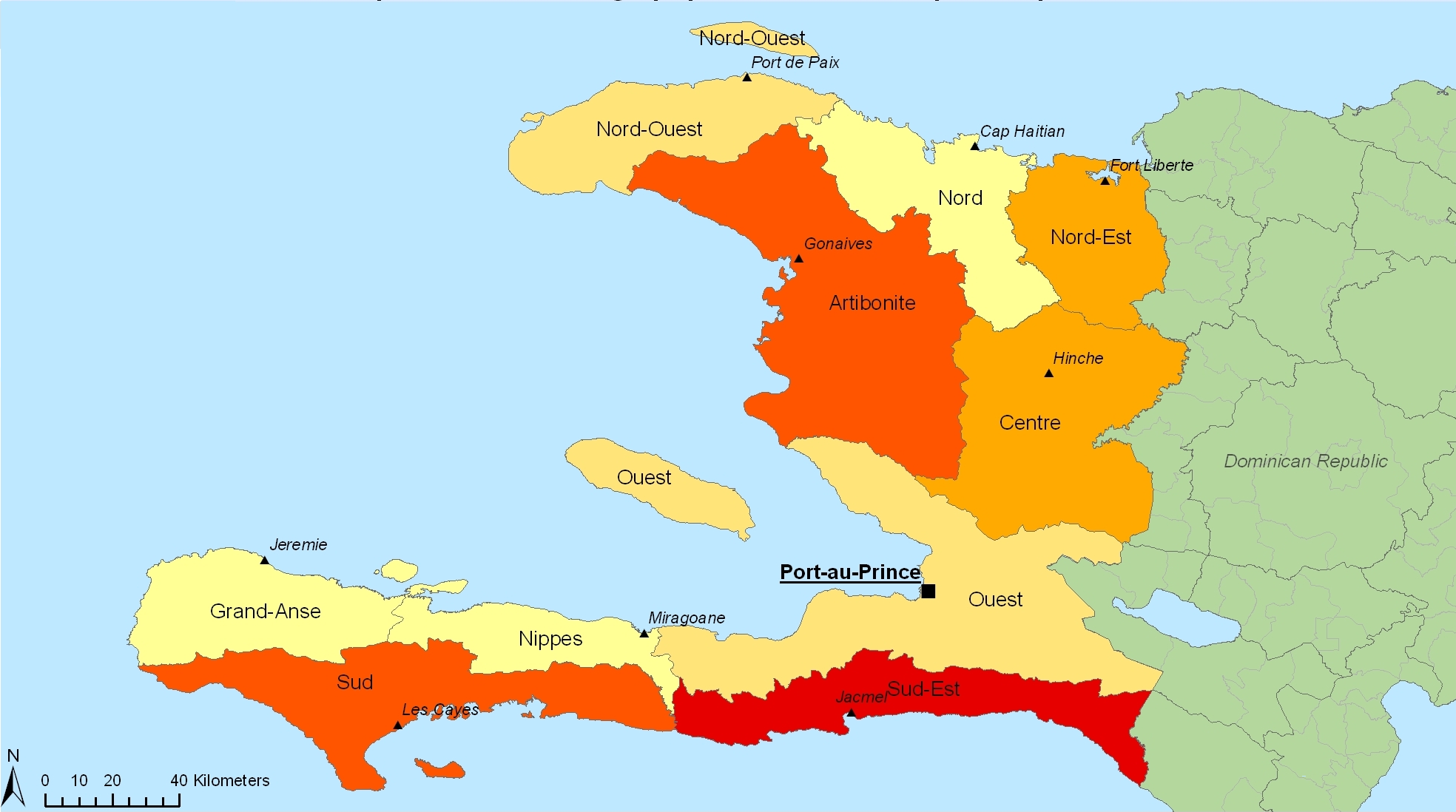
I had been at the Centre Hospitaliere du Sacre Coeur in Port-au-Prince since about nine o'clock that morning. Lord knows, there had been plenty of reasons to cry before then. The parking lot of the medical center, after all, was a tent city of sorts, providing shelter to some 56 people who had suffered some form of injury following Haiti's disastrous earthquake on Jan. 12.
For starters, there was Joshua. It's hard to tell how old he is, but his future looks like it will be a bleak one. He suffers from club feet and cerebral palsy, two conditions that are difficult anywhere, but especially in the poorest country in the Western hemisphere.
Sitting with Joshua, it's hard to feel down. He can't speak any language that I know, but he smiles constantly and he loves to smack his eager hands onto yours. You can turn it into a game, where he tries to smack your hand before you can move it away, and he cracks up when he misses. Or you can let him get into an easy rhythm, clap-clap-clap, and he finds it hysterical you do something unexpected and suddenly change the rules.
The head nurse at the clinic told me that Joshua's mom wants him back because his condition makes him useful as a beggar. A brutal story if true, but that didn't make me cry.
Then there's Katura. She's a vivacious little girl; in the United States she would be attending kindergarten and mastering the fundamentals of reading and writing. Instead, because she lost her right leg above the knee in the earthquake, she's sleeping in a tent in the parking lot of a hospital, and getting around in a bright red wheelchair.
The skin has mostly closed up over her wound, and when the medical crews change the dressing on her wounds, it's a perfunctory thing. It doesn't ooze and it doesn't seem to hurt her at all. God willing, she'll be outfitted with a prosthetic device and can begin the task of learning to walk all over again.
She has a long road ahead of her, but I didn't cry when I played with her.
Or there was Karl. He's a little bit older than Ketura, probably somewhere between the ages of my two older daughters. When I met him on Thursday, he was quiet, but not with the quiet of deep thought. He was overwhelmed by all that had happened, from the devastation to his country down to the fracture in his left patella that had left him in a wheelchair.
I did everything I could to get a smile out of Karl, but nothing worked.
Still, when I had wheeled him to the door outside the X-ray room and asked him if he wanted me to stay with him, he said yes. So I sat there, and told him jokes, and showed him a picture of my infant daughter, and when they had finished the X-ray imaging, I wheeled him back to the parking lot where he and the other patients have been living.
I felt deeply for him, and wished I could bridge the gulf between us to bring him comfort and assurance, but still I didn't cry.
There are others there, with stories too horrible to think about. There is a woman with a pressure wound so bad that you can put your entire hand into her side; there are adults and children alike with braces screwed into their legs to immobilize the pieces of shattered bone, but I expected horrible injuries when I came to Haiti, so while I ache for them, I didn't cry.
But then there were the babies. Twins, they were born last August and came to the hospital some time with a minor injury that has since healed. They have no home to go to, their mother has no way of providing for them, and so they have been allowed to stay in a tent out of compassion and a sense of human decency.
Their lives are so innocent, their needs so simple, and their promise is unbridled.
I picked one of them up, and I held her in arms that have missed another baby for the past four days.
And then I cried.
Copyright © 2010 by David Learn. Used with permission.
Tweet
I had been at the Centre Hospitaliere du Sacre Coeur in Port-au-Prince since about nine o'clock that morning. Lord knows, there had been plenty of reasons to cry before then. The parking lot of the medical center, after all, was a tent city of sorts, providing shelter to some 56 people who had suffered some form of injury following Haiti's disastrous earthquake on Jan. 12.
For starters, there was Joshua. It's hard to tell how old he is, but his future looks like it will be a bleak one. He suffers from club feet and cerebral palsy, two conditions that are difficult anywhere, but especially in the poorest country in the Western hemisphere.
Sitting with Joshua, it's hard to feel down. He can't speak any language that I know, but he smiles constantly and he loves to smack his eager hands onto yours. You can turn it into a game, where he tries to smack your hand before you can move it away, and he cracks up when he misses. Or you can let him get into an easy rhythm, clap-clap-clap, and he finds it hysterical you do something unexpected and suddenly change the rules.
The head nurse at the clinic told me that Joshua's mom wants him back because his condition makes him useful as a beggar. A brutal story if true, but that didn't make me cry.
Then there's Katura. She's a vivacious little girl; in the United States she would be attending kindergarten and mastering the fundamentals of reading and writing. Instead, because she lost her right leg above the knee in the earthquake, she's sleeping in a tent in the parking lot of a hospital, and getting around in a bright red wheelchair.
The skin has mostly closed up over her wound, and when the medical crews change the dressing on her wounds, it's a perfunctory thing. It doesn't ooze and it doesn't seem to hurt her at all. God willing, she'll be outfitted with a prosthetic device and can begin the task of learning to walk all over again.
She has a long road ahead of her, but I didn't cry when I played with her.
Or there was Karl. He's a little bit older than Ketura, probably somewhere between the ages of my two older daughters. When I met him on Thursday, he was quiet, but not with the quiet of deep thought. He was overwhelmed by all that had happened, from the devastation to his country down to the fracture in his left patella that had left him in a wheelchair.
I did everything I could to get a smile out of Karl, but nothing worked.
Still, when I had wheeled him to the door outside the X-ray room and asked him if he wanted me to stay with him, he said yes. So I sat there, and told him jokes, and showed him a picture of my infant daughter, and when they had finished the X-ray imaging, I wheeled him back to the parking lot where he and the other patients have been living.
I felt deeply for him, and wished I could bridge the gulf between us to bring him comfort and assurance, but still I didn't cry.
There are others there, with stories too horrible to think about. There is a woman with a pressure wound so bad that you can put your entire hand into her side; there are adults and children alike with braces screwed into their legs to immobilize the pieces of shattered bone, but I expected horrible injuries when I came to Haiti, so while I ache for them, I didn't cry.
But then there were the babies. Twins, they were born last August and came to the hospital some time with a minor injury that has since healed. They have no home to go to, their mother has no way of providing for them, and so they have been allowed to stay in a tent out of compassion and a sense of human decency.
Their lives are so innocent, their needs so simple, and their promise is unbridled.
I picked one of them up, and I held her in arms that have missed another baby for the past four days.
And then I cried.
Copyright © 2010 by David Learn. Used with permission.
Tweet
Saturday, March 06, 2010
After the quake: pressure wounds and delayed treatment
The doctors told me the woman had been trapped under the rubble of her house for days.
When an earthquake shook Haiti to its foundations on Jan. 12, she was one of the lucky ones. Unlike an estimated 200,000 people killed in the earthquake, she survived. And unlike other adults and several children staying at the clinic with her, the debris that fell on her didn't break her bones or require doctors to amputate her limbs.
But she was trapped and unable to move until rescuers freed her.
The human body, with its grand design of skeleton and muscle, is meant to be a poem of smooth motion. But when it is held still for days on end, as this woman's body was, the rhythm of the poetry is ruined. The concrete pressed down on her leg, and cut off the flow of blood.
When there is no relief from the tremendous pressure, the skin breaks down and splits open; and as the pressure continues, additional tissue dies.
"For some people, the pressure wound has gone so deep that it's gone all the way to the bone," said Krista Duval, a doctor of osteopathic medicine from Ohio University in Athens, Ohio. "These people will have very serious scars for the rest of their lives."
Krista was one of 18 people on a medical team that left from Quisqueya Crisis Relief Center on Thursday to run a medical clinic at at the Centre Hospitaliere du Sacré Coeur, in downtown Port-au-Prince. The medical team treated some 100 people who came to the clinic that day, as well as another 56 who have been living in tents in the parking lot of the medical center.
While several of those patients are receiving physical therapy and followup treatment to amputations that were needed after Haiti's horrific Jan. 12 quake, many others are receiving treatment for other injuries serious in their own right, such as the pressure wounds suffered by this woman.
Treatment takes time and patience. Gauze dressings must be changed at least daily, and a steady regimen of antibiotics contains the threat posed by infection.
Time, patience, and medical personnel. Most visiting medical crews leave Haiti after a week or two, and unfortunately, Haiti still lacks the infrastructure to provide the long-term medical care these patients need.
When the earthquake struck on Jan. 12, it destroyed more than an ability to provide immediate care for the victims of the quake. It also brought crashing to the ground the country's ability to provide long-term care in the weeks and months that are still to follow.
That was particularly in evidence on Friday. The medical center we visited is an 18-bed private hospital located a short distance from the wreckage of the National Cathedral. The building, although it survived the earthquake and the many aftershocks that have followed, is badly damaged. The hospital is still standing, and doctors and nurses working with teams from the Quisqueya Crisis Relief Center have been able to use its equipment, but until repairs can be made, the hospital is effectively closed.
And hospitals and medical care remain in great need. On the day I joined the medical team, there were some 100 patients who came to the clinic. That number has dropped from the average of 300 that visited the clinic when it first opened, but it remains high.
In the parking lot of the medical center stand a dozen tents, housing 56 men, women and children suffering from injuries suffered in the quake, or caring for those who had.
"Every day we discharge a few and admit one or two," said Beth Milbourne, 30, a registered nurse at Greenville Memorial Hospital in South Carolina who quit her job in the United States and moved to Haiti three weeks ago. She has been going to the clinic at the medical center every day since.
One of the patients admitted Friday was an elderly man who required an operation because of an obstructed urinary tract. Dave Drozek, a general surgeon from Ohio University who performed the surgery, spoke to me a moment about the operation as orderlies lowered the patient onto a makeshift cot under a tent in the parking lot.
"We're transitioning to more regular day-to-day needs," Dave said of the work he'd been doing that week at the clinic.
But, as he also noted, many of those needs have been delayed because of the pressing nature of the trauma inflicted by the quake.
Copyright © 2010 by David Learn. Used with permission.
Tweet
When an earthquake shook Haiti to its foundations on Jan. 12, she was one of the lucky ones. Unlike an estimated 200,000 people killed in the earthquake, she survived. And unlike other adults and several children staying at the clinic with her, the debris that fell on her didn't break her bones or require doctors to amputate her limbs.But she was trapped and unable to move until rescuers freed her.
The human body, with its grand design of skeleton and muscle, is meant to be a poem of smooth motion. But when it is held still for days on end, as this woman's body was, the rhythm of the poetry is ruined. The concrete pressed down on her leg, and cut off the flow of blood.
When there is no relief from the tremendous pressure, the skin breaks down and splits open; and as the pressure continues, additional tissue dies.
"For some people, the pressure wound has gone so deep that it's gone all the way to the bone," said Krista Duval, a doctor of osteopathic medicine from Ohio University in Athens, Ohio. "These people will have very serious scars for the rest of their lives."
Krista was one of 18 people on a medical team that left from Quisqueya Crisis Relief Center on Thursday to run a medical clinic at at the Centre Hospitaliere du Sacré Coeur, in downtown Port-au-Prince. The medical team treated some 100 people who came to the clinic that day, as well as another 56 who have been living in tents in the parking lot of the medical center.
While several of those patients are receiving physical therapy and followup treatment to amputations that were needed after Haiti's horrific Jan. 12 quake, many others are receiving treatment for other injuries serious in their own right, such as the pressure wounds suffered by this woman.
Treatment takes time and patience. Gauze dressings must be changed at least daily, and a steady regimen of antibiotics contains the threat posed by infection.
Time, patience, and medical personnel. Most visiting medical crews leave Haiti after a week or two, and unfortunately, Haiti still lacks the infrastructure to provide the long-term medical care these patients need.
When the earthquake struck on Jan. 12, it destroyed more than an ability to provide immediate care for the victims of the quake. It also brought crashing to the ground the country's ability to provide long-term care in the weeks and months that are still to follow.
That was particularly in evidence on Friday. The medical center we visited is an 18-bed private hospital located a short distance from the wreckage of the National Cathedral. The building, although it survived the earthquake and the many aftershocks that have followed, is badly damaged. The hospital is still standing, and doctors and nurses working with teams from the Quisqueya Crisis Relief Center have been able to use its equipment, but until repairs can be made, the hospital is effectively closed.
And hospitals and medical care remain in great need. On the day I joined the medical team, there were some 100 patients who came to the clinic. That number has dropped from the average of 300 that visited the clinic when it first opened, but it remains high.
In the parking lot of the medical center stand a dozen tents, housing 56 men, women and children suffering from injuries suffered in the quake, or caring for those who had.
"Every day we discharge a few and admit one or two," said Beth Milbourne, 30, a registered nurse at Greenville Memorial Hospital in South Carolina who quit her job in the United States and moved to Haiti three weeks ago. She has been going to the clinic at the medical center every day since.
One of the patients admitted Friday was an elderly man who required an operation because of an obstructed urinary tract. Dave Drozek, a general surgeon from Ohio University who performed the surgery, spoke to me a moment about the operation as orderlies lowered the patient onto a makeshift cot under a tent in the parking lot.
"We're transitioning to more regular day-to-day needs," Dave said of the work he'd been doing that week at the clinic.
But, as he also noted, many of those needs have been delayed because of the pressing nature of the trauma inflicted by the quake.
Copyright © 2010 by David Learn. Used with permission.
Tweet
Monday, March 01, 2010
On the eve of going to Haiti: Letter to myself, age 22
Dear 22-year-old self,e
In a sense, this may be one of the most pointless things I have ever written, since it comes 17 years and some months too late to make a difference in the trip you are about to take to Haiti, but foolish or not, I am writing it.
I know that you're still upstairs, somewhere, wearing clothes that haven't fit me in years and that were never exactly fashionable in the first place, so I write this in the hope that it will do some good, somehow. Often the value is not in the hearing, but in the saying.
Right now, you're pretty excited about the trip you'll be taking in two days. This is something you've been looking forward to since January 1991. You remember that, right? That was when you took a short-term missions trip to LaGonave with STEM Ministries, while everyone else in the college fellowship headed to Urbana, Ill., for the big missions conference.
You didn't say much at the time to the others on your team, but the experience was one that you found to be deeply meaningful. There was that moment in LaSource where you realized that Pentecostalism wasn't what you had thought it was; and then there was that boy, Samuel, whose stomach was distended, whose hair was going red from malnutrition, and who you learned hadn't eaten a decent meal in weeks.
So, as I say, you're keen to be headed back to Haiti, to work with STEM. You're an idealist at heart, and since the Peace Corps called to say they were ready to assign you in Africa, and then called back 15 minutes later to say, "Never mind, we just realized you're an evangelical Christian," you've been looking forward to the door that it appears God has opened for you. No Fortune 500 job for you, you are going to make a difference!
Oh, Dave, you're such an idiot. You really have no idea what's going to happen, do you? Over the next two years, everything is going to hit the fan. Everything.
For starters, you're going to see need - real need. Not like the men at the homeless shelter you volunteered at one night your freshman year, who had a place to stay and food to eat because the United States has the wealth to feed its indigents when we want to.
No, we're talking the sort of need that comes when you have 8 million people in a nation where $3 is a decent day's wages and most people are unemployed. It's the sort of need where children sleep on the concrete driveway of the Jamaican restaurant on Route de Delmas. It's the sort of need where 14-year-olds are so underfed that they look like they might be 8.
It's a need that will slap you in the face every time you step out the door and interact with the people. The beggars in particular will overwhelm you. Some will be adults and some will be children; some will be sincere and some will merely be con men preying on you.
There will be no escaping that need. It will greet you when you wake up in the morning, it will haunt you when you get something to eat, and it will steal its way into your dreams. No matter how many times you discuss it with others, no matter how often you pray about it, and no matter how you try to rationalize your way around it, you will never make peace with it. Never.
One by one, your illusions are going to fail. Right now you have some pretty naive ideas about Christians, about Christianity, and about missionaries. You understand Christianity as forgiveness of sins, Christians as American-style conservatives, and missionaries as bastions of indomitable faith in God.
Over the next two years, you're going to realize the inadequacy of evangelicalism to deal with the problem of suffering and need; you're going to begin appreciating just how radically liberal Jesus was in his social attitudes, and you're going to discover that missionaries are just as human as the people in your church back home. Many missionaries whom you meet will disappoint you, just as you will disappoint them.
Incidentally, God is going to die while you're in Haiti. It'll be a combination of things that will finally do the old bugger in, but one day the light will fail and you will start crawling around on all fours in the dark to find the body. Eventually you will, and you'll wonder how you ever thought such a sad and miserable thing was worthy of worship.
Which is not to say it'll be all bad in Haiti, because it won't be. It'll be two of the hardest years of your life, but even though it sets you on a path that ultimately destroys the evangelical brand of faith that took you there, you will treasure your time in Haiti for the rest of your life.
You're going to meet some tremendous people and have some tremendous experiences that will still shape you years later. There'll be the Haitian church services you attend, particularly the ones with Herve; there will be the time you realize that while it hurts to turn away 200 hungry children, at least you were able to help feed 300 others; and there will be friendships with people like Elizabeth Gerritesen, Brian VanWyhe and Dan Kramer; with Tammy Lynn Johnston; with Rick Root; and with the Murphys and the Herseys.
(There is a funny story about how you meet the Murphys. I wonder sometimes if Lonnie remembers it, or what her kindergartners called you.)
The reception you get when you return Stateside will be underwhelming. I hate to say this, but your own pastor is going to dismiss what you did as "not missions work." and from time to time, the lack of interest other people have in your experiences there will lead you to question whether you really accomplished anything. Sometimes the loudest voice there will be the one in your head.
Ignore the gainsayers. The difference you make to the people you meet will be real and lasting, especially when you become a teacher. A Jewish tradition holds that to teach a child is to be as a parent to her. In less than a year of teaching, you will have 40 children who will never forget you, nor the lessons you teach them.
It's going to come to an end far too soon for you, and when it does, it won't end nicely. I haven't liked that ending for 15 years now, and frankly, I think it's time for the curtain to rise on a second act.
Now 39,
Dave Learn
Copyright © 2010 by David Learn. Used with permission.
Tweet
In a sense, this may be one of the most pointless things I have ever written, since it comes 17 years and some months too late to make a difference in the trip you are about to take to Haiti, but foolish or not, I am writing it.
I know that you're still upstairs, somewhere, wearing clothes that haven't fit me in years and that were never exactly fashionable in the first place, so I write this in the hope that it will do some good, somehow. Often the value is not in the hearing, but in the saying.
Right now, you're pretty excited about the trip you'll be taking in two days. This is something you've been looking forward to since January 1991. You remember that, right? That was when you took a short-term missions trip to LaGonave with STEM Ministries, while everyone else in the college fellowship headed to Urbana, Ill., for the big missions conference.
You didn't say much at the time to the others on your team, but the experience was one that you found to be deeply meaningful. There was that moment in LaSource where you realized that Pentecostalism wasn't what you had thought it was; and then there was that boy, Samuel, whose stomach was distended, whose hair was going red from malnutrition, and who you learned hadn't eaten a decent meal in weeks.
So, as I say, you're keen to be headed back to Haiti, to work with STEM. You're an idealist at heart, and since the Peace Corps called to say they were ready to assign you in Africa, and then called back 15 minutes later to say, "Never mind, we just realized you're an evangelical Christian," you've been looking forward to the door that it appears God has opened for you. No Fortune 500 job for you, you are going to make a difference!
Oh, Dave, you're such an idiot. You really have no idea what's going to happen, do you? Over the next two years, everything is going to hit the fan. Everything.
For starters, you're going to see need - real need. Not like the men at the homeless shelter you volunteered at one night your freshman year, who had a place to stay and food to eat because the United States has the wealth to feed its indigents when we want to.
No, we're talking the sort of need that comes when you have 8 million people in a nation where $3 is a decent day's wages and most people are unemployed. It's the sort of need where children sleep on the concrete driveway of the Jamaican restaurant on Route de Delmas. It's the sort of need where 14-year-olds are so underfed that they look like they might be 8.
It's a need that will slap you in the face every time you step out the door and interact with the people. The beggars in particular will overwhelm you. Some will be adults and some will be children; some will be sincere and some will merely be con men preying on you.
There will be no escaping that need. It will greet you when you wake up in the morning, it will haunt you when you get something to eat, and it will steal its way into your dreams. No matter how many times you discuss it with others, no matter how often you pray about it, and no matter how you try to rationalize your way around it, you will never make peace with it. Never.
One by one, your illusions are going to fail. Right now you have some pretty naive ideas about Christians, about Christianity, and about missionaries. You understand Christianity as forgiveness of sins, Christians as American-style conservatives, and missionaries as bastions of indomitable faith in God.
Over the next two years, you're going to realize the inadequacy of evangelicalism to deal with the problem of suffering and need; you're going to begin appreciating just how radically liberal Jesus was in his social attitudes, and you're going to discover that missionaries are just as human as the people in your church back home. Many missionaries whom you meet will disappoint you, just as you will disappoint them.
Incidentally, God is going to die while you're in Haiti. It'll be a combination of things that will finally do the old bugger in, but one day the light will fail and you will start crawling around on all fours in the dark to find the body. Eventually you will, and you'll wonder how you ever thought such a sad and miserable thing was worthy of worship.
Which is not to say it'll be all bad in Haiti, because it won't be. It'll be two of the hardest years of your life, but even though it sets you on a path that ultimately destroys the evangelical brand of faith that took you there, you will treasure your time in Haiti for the rest of your life.
You're going to meet some tremendous people and have some tremendous experiences that will still shape you years later. There'll be the Haitian church services you attend, particularly the ones with Herve; there will be the time you realize that while it hurts to turn away 200 hungry children, at least you were able to help feed 300 others; and there will be friendships with people like Elizabeth Gerritesen, Brian VanWyhe and Dan Kramer; with Tammy Lynn Johnston; with Rick Root; and with the Murphys and the Herseys.
(There is a funny story about how you meet the Murphys. I wonder sometimes if Lonnie remembers it, or what her kindergartners called you.)
The reception you get when you return Stateside will be underwhelming. I hate to say this, but your own pastor is going to dismiss what you did as "not missions work." and from time to time, the lack of interest other people have in your experiences there will lead you to question whether you really accomplished anything. Sometimes the loudest voice there will be the one in your head.
Ignore the gainsayers. The difference you make to the people you meet will be real and lasting, especially when you become a teacher. A Jewish tradition holds that to teach a child is to be as a parent to her. In less than a year of teaching, you will have 40 children who will never forget you, nor the lessons you teach them.
It's going to come to an end far too soon for you, and when it does, it won't end nicely. I haven't liked that ending for 15 years now, and frankly, I think it's time for the curtain to rise on a second act.
Now 39,
Dave Learn
Copyright © 2010 by David Learn. Used with permission.
Tweet
Sunday, February 07, 2010
Ebooks and the storied history of reading
I don't like ebooks.
I'm sure the convenience of carrying an entire library in your bag is a wonderful thing, and like others before me, I'm all for reducing waste and conserving resources. And of course I adore the idea of being able to keep books "in print" in perpetuity. I've never been able to find a copy of "The Elder Edda" in translation when I've looked, but there's no reason to believe that would be a problem with an ebook reader in my hands. There's so much to appreciate about ebooks, really.
I can't do it, though.
The reasons for this disinterest are all around me. They're the 1930 edition of Herman Melville's "Moby Dick" and "The Complete Adventures of Sherlock Holmes" that used to belong to my grandfather, the copy of Neil Gaiman and Terry Pratchett's "Good Omens" that I have read a half-dozen times in the past ten years, and the hundreds of other books that line almost every room of my house.
Books are more than just stories; they are memories. There is the trip I took to Alaska in 1988 while I was reading "Paradise Lost," the conversation I had with Steve Hersey about "The Divine Comedy" in Port-au-Prince, the time I woke my roommate by talking in my sleep about "The Brothers Karamazov," and the tears I shed over the final chapter of "The Hunchback of Notre Dame."
Sometimes these memories are marked in the book with little notes, bent pages or other tells, and sometimes not; but the associations are always strongest with the copy I was reading at the time. The story may be the same in another edition or copy, but the pages I have are old friends, and they know me just as I know them.
In the end, books are more than just the words that they contain. They are sensations. A book is the rustle of paper as you turn the page, it is the rough yellowed fibers under your fingers. It is the ache in your hand that you're vaguely conscious of after holding the book open one-handed for an hour while you were doing something else.
And just as books are connections to their previous owners, so they also are bridges to our children. Already I've been able to hand my daughter treasured books from my childhood and watch as the exact same words on the exact same pages carry her away in wonder, horror, and awe. It doesn't matter if it's "Something Under the Bed is Drooling" or Mary Shelley's "Frankenstein." It's my book, and it's having its effect all over again.
Ebooks do none of this.
They read well enough, it's true, without the too-bright gleam of a computer, and as for transporting eager readers to realms of wonder, I am sure they do that as well. But it's also hard to imagine building a sentimental attachment to an ebook. "Here, Evangeline," I can't imagine myself saying. "I've had this computer file since I was your age. I'd like you to have it now."
Gone also are the other thrills of books. The wonder of walking into a bookstore to find something new to read, the thrill of running my eyes along a shelf of books for a familiar friend to read and rediscover, and the delicious smell of old books in a library either personal or public -- those are all gone with an ebook. All that is left of the selection process is a sterile screen and an experience no more transporting than browsing the Internet for something to buy.
Books are friends; books are life. An ebook is neither. It might as well be a jpeg or text file for all the emotional attachment it will get.
Something else ebooks lack: permanency. When I read a book, I can put it down for a day, a week, a year, or even a decade. When I return, I know not only that the book will still be there, but also that its contents won't have changed. The same foolish typos, the same controversial language, the same bold ideas will still be exactly as I left them.
We've already seen with ebooks that this is not true. It was only in July 2009 that Amazon erased copies of "1984" and "Animal Farm" from the Kindles of customers who had bought them. Books that can be erased or that can be changed, are not books.
The marketing mavens believe that ebooks and ebook readers are the way of the future. I fear they are right; I hope they are not. For as long as I can, I am going to continue to read books the way I always have, and hope that my children will as well.
Copyright © 2018 by David Learn. Used with permission.
Tweet
I'm sure the convenience of carrying an entire library in your bag is a wonderful thing, and like others before me, I'm all for reducing waste and conserving resources. And of course I adore the idea of being able to keep books "in print" in perpetuity. I've never been able to find a copy of "The Elder Edda" in translation when I've looked, but there's no reason to believe that would be a problem with an ebook reader in my hands. There's so much to appreciate about ebooks, really.
I can't do it, though.
The reasons for this disinterest are all around me. They're the 1930 edition of Herman Melville's "Moby Dick" and "The Complete Adventures of Sherlock Holmes" that used to belong to my grandfather, the copy of Neil Gaiman and Terry Pratchett's "Good Omens" that I have read a half-dozen times in the past ten years, and the hundreds of other books that line almost every room of my house.
Books are more than just stories; they are memories. There is the trip I took to Alaska in 1988 while I was reading "Paradise Lost," the conversation I had with Steve Hersey about "The Divine Comedy" in Port-au-Prince, the time I woke my roommate by talking in my sleep about "The Brothers Karamazov," and the tears I shed over the final chapter of "The Hunchback of Notre Dame."
Sometimes these memories are marked in the book with little notes, bent pages or other tells, and sometimes not; but the associations are always strongest with the copy I was reading at the time. The story may be the same in another edition or copy, but the pages I have are old friends, and they know me just as I know them.
In the end, books are more than just the words that they contain. They are sensations. A book is the rustle of paper as you turn the page, it is the rough yellowed fibers under your fingers. It is the ache in your hand that you're vaguely conscious of after holding the book open one-handed for an hour while you were doing something else.
And just as books are connections to their previous owners, so they also are bridges to our children. Already I've been able to hand my daughter treasured books from my childhood and watch as the exact same words on the exact same pages carry her away in wonder, horror, and awe. It doesn't matter if it's "Something Under the Bed is Drooling" or Mary Shelley's "Frankenstein." It's my book, and it's having its effect all over again.
Ebooks do none of this.
They read well enough, it's true, without the too-bright gleam of a computer, and as for transporting eager readers to realms of wonder, I am sure they do that as well. But it's also hard to imagine building a sentimental attachment to an ebook. "Here, Evangeline," I can't imagine myself saying. "I've had this computer file since I was your age. I'd like you to have it now."
Gone also are the other thrills of books. The wonder of walking into a bookstore to find something new to read, the thrill of running my eyes along a shelf of books for a familiar friend to read and rediscover, and the delicious smell of old books in a library either personal or public -- those are all gone with an ebook. All that is left of the selection process is a sterile screen and an experience no more transporting than browsing the Internet for something to buy.
Books are friends; books are life. An ebook is neither. It might as well be a jpeg or text file for all the emotional attachment it will get.
Something else ebooks lack: permanency. When I read a book, I can put it down for a day, a week, a year, or even a decade. When I return, I know not only that the book will still be there, but also that its contents won't have changed. The same foolish typos, the same controversial language, the same bold ideas will still be exactly as I left them.
We've already seen with ebooks that this is not true. It was only in July 2009 that Amazon erased copies of "1984" and "Animal Farm" from the Kindles of customers who had bought them. Books that can be erased or that can be changed, are not books.
The marketing mavens believe that ebooks and ebook readers are the way of the future. I fear they are right; I hope they are not. For as long as I can, I am going to continue to read books the way I always have, and hope that my children will as well.
Copyright © 2018 by David Learn. Used with permission.
Tweet
Monday, August 24, 2009
A pirate looks at 39
In about six more hours, the sun will set on my 39th birthday.
As milemarkers go, 39 isn't one of the big ones. For one thing, it doesn't end in zero like many landmark ages and anniversaries. And while it does lie at the very cusp of middle age, it's not an age particularly noted for anything.
At 16, I got my first driver's license. At 18, I received legal recognition as an adult. When she was 25, Queen Elizabeth I ascended the throne and ultimately became one of the best-loved and most powerful monarchs of England. At the age of 33, Alexander the Great had lain the foundations for what eventually would become modern Western civilization. But 39? That one's noteworthy only for being a year short of 40.
And that's essentially how I feel right now: that I'm staring down the barrel of 40 years old, and in another year it's going to blow my head off.
Six years ago, when I turned 33, I observed how nice it would be on my deathbed to quip that I had missed the best years of my career because I had spent them all with my children. Well, mission accomplished: Five years ago, I grabbed my career by its halter and led it to a place behind the stable, where I shot and killed it. Only, recently, I woke up and found its head on the pillow next to me.
Looking back I don't feel that I have much cause for regret. The past five years have been spent almost exclusively in the company of two children whom I have taught to read, whose scraped knees I have kissed, whose laughter has given me wings and whose razor-sharp tears have stripped me to the bone. I have sung with them, danced in their company, delighted in their artwork, and learned some of the most poignant and important lessons of love and life at their feet.
For their sake, I have served three years on the school board. For love of them, I have walked around in public with bows in my hair. I have scheduled my days around taking them to school, to the doctor's office, to friends' houses, and to art and ballet lessons. I have carried them on my shoulders, in my arms, and upon my back. Most of all I have carried them in my heart with such an earnestness that it has hurt.
I've received no salary for this new career, save in the only currency my children know: the tireless love and affection that they shower upon me.
It has been almost enough.
I only started to appreciate how much my career change to stay-at-home dad has cost me last Thursday, when I was talking to a friend. Only a few years older than I, Sonja is in the midst of a mid-life career change, to art history. She had just been offered an entry-level position, and she was thrilled. As she put it, it was difficult enough to compete with twentysomethings while she was in her 40s. There would be no way to start over again in her 50s.
There was a time when the world was an oyster with unlimited potential that I could crack with my good right hand. Now I am uncomfortably aware that a crocodile has eaten my right hand, and if I listen, I can hear the ticking of the clock that tells me the crocodile is coming back for the rest.
I have at most five, maybe six, years to begin my next career in earnest. Anything beyond that, and the odds stacked against my success will increase steadily with each year. So what's it going to be? Will I return to teaching? Will I return to writing news and feature stories, to magazines, or to editing and teaching other writers their wordcraft? I've done all of those, and I've done them well. On days when my neck doesn't feel the pinch of the blue monster, I am confident I can do them again.
Or maybe I should do something new. I could turn my blog into something with meaning and purpose that stretches beyond my fancy of the day, I could found an arts magazine with the local focus that I understand so well, or I could turn my full attention to my fledgling public relations business and make a living on that.
Whatever it is, I had better decide soon. That crocodile loved the taste of my hand, and he's definitely coming back for more.
What I really want, my driving passion, is not just to be a writer, but to be an author as well. The stories I can tell, the stories I need to tell, are stories that can inspire laughter, tears, longing and regret. Stories are the vehicle I use to teach the great truths that I have learned, and I want desperately to do nothing more than to take the sacred space at the head of my classroom and begin to teach.
Now, nearly five years after I left the workforce to spend more time with my children and complete the great novel that has been my ambition since middle school, I can safely say that I have spent more time with my children. The great novel, like many of my other children, lies gasping for breath in a pauper's field while I concoct excuse after excuse for not working to save it.
Three years ago, I wrote about my experience with cancer and the uncomfortable reminder it brought of my own mortality and how badly I had done on completing my life's most important work. Now three years later, I am shamed once again by how little I have changed. Age, like cancer once did, is awakening me to how briefly the candle flickers upon the stage before it disappears in a wisp of smoke.
If God is gracious, and if I am wise enough to accept that grace, I know that I can write and publish a few books in the years that lie before me, and I can give birth to many of the stories that have gestated within my mind all these years. I may even enjoy that moderate success that other writers have found, where they are not really household names, but they do enjoy a loyal following.
Whether I succeed or fail as a writer in large part depends on forces that are hardly mine to command, but I have seen the past 39 years that God prefers it when we give him something – anything – to work with.
In another 30 years, or 40 if I am lucky, I will ring down the curtain as everyone before me has done, and will exit the stage while younger performers put on their shows. When that day comes and the critics take stock of my life's work, I want to stand behind all my children and proudly say, “See what I have done with what I was given. I have been here, and I have mattered; not a thing has been wasted.”
That would be a good life.
Copyright © 2009 by David Learn. Used with permission.
Tweet
As milemarkers go, 39 isn't one of the big ones. For one thing, it doesn't end in zero like many landmark ages and anniversaries. And while it does lie at the very cusp of middle age, it's not an age particularly noted for anything.
At 16, I got my first driver's license. At 18, I received legal recognition as an adult. When she was 25, Queen Elizabeth I ascended the throne and ultimately became one of the best-loved and most powerful monarchs of England. At the age of 33, Alexander the Great had lain the foundations for what eventually would become modern Western civilization. But 39? That one's noteworthy only for being a year short of 40.
And that's essentially how I feel right now: that I'm staring down the barrel of 40 years old, and in another year it's going to blow my head off.
Six years ago, when I turned 33, I observed how nice it would be on my deathbed to quip that I had missed the best years of my career because I had spent them all with my children. Well, mission accomplished: Five years ago, I grabbed my career by its halter and led it to a place behind the stable, where I shot and killed it. Only, recently, I woke up and found its head on the pillow next to me.
Looking back I don't feel that I have much cause for regret. The past five years have been spent almost exclusively in the company of two children whom I have taught to read, whose scraped knees I have kissed, whose laughter has given me wings and whose razor-sharp tears have stripped me to the bone. I have sung with them, danced in their company, delighted in their artwork, and learned some of the most poignant and important lessons of love and life at their feet.
For their sake, I have served three years on the school board. For love of them, I have walked around in public with bows in my hair. I have scheduled my days around taking them to school, to the doctor's office, to friends' houses, and to art and ballet lessons. I have carried them on my shoulders, in my arms, and upon my back. Most of all I have carried them in my heart with such an earnestness that it has hurt.
I've received no salary for this new career, save in the only currency my children know: the tireless love and affection that they shower upon me.
It has been almost enough.
I only started to appreciate how much my career change to stay-at-home dad has cost me last Thursday, when I was talking to a friend. Only a few years older than I, Sonja is in the midst of a mid-life career change, to art history. She had just been offered an entry-level position, and she was thrilled. As she put it, it was difficult enough to compete with twentysomethings while she was in her 40s. There would be no way to start over again in her 50s.
There was a time when the world was an oyster with unlimited potential that I could crack with my good right hand. Now I am uncomfortably aware that a crocodile has eaten my right hand, and if I listen, I can hear the ticking of the clock that tells me the crocodile is coming back for the rest.
I have at most five, maybe six, years to begin my next career in earnest. Anything beyond that, and the odds stacked against my success will increase steadily with each year. So what's it going to be? Will I return to teaching? Will I return to writing news and feature stories, to magazines, or to editing and teaching other writers their wordcraft? I've done all of those, and I've done them well. On days when my neck doesn't feel the pinch of the blue monster, I am confident I can do them again.
Or maybe I should do something new. I could turn my blog into something with meaning and purpose that stretches beyond my fancy of the day, I could found an arts magazine with the local focus that I understand so well, or I could turn my full attention to my fledgling public relations business and make a living on that.
Whatever it is, I had better decide soon. That crocodile loved the taste of my hand, and he's definitely coming back for more.
What I really want, my driving passion, is not just to be a writer, but to be an author as well. The stories I can tell, the stories I need to tell, are stories that can inspire laughter, tears, longing and regret. Stories are the vehicle I use to teach the great truths that I have learned, and I want desperately to do nothing more than to take the sacred space at the head of my classroom and begin to teach.
Now, nearly five years after I left the workforce to spend more time with my children and complete the great novel that has been my ambition since middle school, I can safely say that I have spent more time with my children. The great novel, like many of my other children, lies gasping for breath in a pauper's field while I concoct excuse after excuse for not working to save it.
Three years ago, I wrote about my experience with cancer and the uncomfortable reminder it brought of my own mortality and how badly I had done on completing my life's most important work. Now three years later, I am shamed once again by how little I have changed. Age, like cancer once did, is awakening me to how briefly the candle flickers upon the stage before it disappears in a wisp of smoke.
If God is gracious, and if I am wise enough to accept that grace, I know that I can write and publish a few books in the years that lie before me, and I can give birth to many of the stories that have gestated within my mind all these years. I may even enjoy that moderate success that other writers have found, where they are not really household names, but they do enjoy a loyal following.
Whether I succeed or fail as a writer in large part depends on forces that are hardly mine to command, but I have seen the past 39 years that God prefers it when we give him something – anything – to work with.
In another 30 years, or 40 if I am lucky, I will ring down the curtain as everyone before me has done, and will exit the stage while younger performers put on their shows. When that day comes and the critics take stock of my life's work, I want to stand behind all my children and proudly say, “See what I have done with what I was given. I have been here, and I have mattered; not a thing has been wasted.”
That would be a good life.
Copyright © 2009 by David Learn. Used with permission.
Tweet
Saturday, July 11, 2009
an open letter to tritium
Dear Tritium:
I've been reading some of the stuff people have to say about you, and it seems pretty clear that you've got a lot of people almost as impresse
d with you as you are with yourself. I mean, look at what they have to say: "It has an atomic mass of 3.0160492! Like, omigosh, that's the same as an atom of lithium!"
And the comic book geekboys all love you, because you occur naturally when cosmic rays hit the Earth's atmosphere and interact with hydrogen. "Yo, dude," they say, in that annoying stoner voice that we always associated with Star Trek Voyager. "That's just like the Fantastic Four!"
But let's be clear about something: Dude, you are freaking hydrogen. That's it. When it comes to the Periodic Table of the Elements, you are at the bottom of the heap. Ever wonder why you have trouble getting a date with the noble gases? That's it.
You might think you're something special because you've got two neutrons and deuterium has only one, but it's the protons that count, buddy, and you've got only one. Even if she didn't have a thing for carbon -- and who doesn't, after all? -- the department secretary isn't going to be caught dead on a date with you any time soon. She has standards, and she has a reputation to uphold. Suck it up and deal.
And there's the way you're used in thermonuclear detonations. My, aren't you impressive. Stick a little tritium in the nuclear warhead, and a regular A-bomb goes straight to H-bomb. The extra punch you pack increases the payout of the fissile material and blows the lid off an otherwise conventional nuclear explosion.
Of course, that's not all it blows the lid off -- one of those nukes can destroy a major population center, killing millions of people just upon detonation, and creating radioactive fallout that will screw up the environment for generations to come.
You know, tritium, maybe you missed this in your contemplation of how awesome you are, but the phrase "You da bomb" isn't meant to be taken literally. Real bombs suck, just like fourth-graders suck when they think that wearing bling makes them cool even though they ignore their teachers and talk trash about girls.
You want to talk radiation? Plutonium is impressive. It's named after the Roman god of the dead and for good reason. All you have to do is hang out around plutonium for a few days and you'll have some really freaky, frightening and fatal forms of cancer springing up all over your body. Same thing with uranium.
Not you, though. Your beta radiation is so wimpy that it can't even penetrate human skin. Even the cheap pocketknife I had when I was 3 years old could do better than that.
Sure, you talk big when you swagger into a bar with unbonded oxygen atoms. "Hey, baby," you say, "I have a half-life of 4,500 days, plus or minus eight days." Wow, I'm so impressed. That means in about just 12 years and four months, you'll have turned into helium-3, and your main source of income will be inflating balloons at birthday parties.
You think you're something special, but you know it's all just hot air. Even your symbol, 3H, is embarrassing. You know what that makes you look like? An isotope that didn't have even have enough protons to join the local 4-H club. How pathetic.
Maybe you haven't quite got the picture yet, so let me spell it out for you. Every single link in this article so far is to Wikipedia. Wikipedia. You got that? You're not even impressive enough for me to bother linking to a real reference source.
Look tritium, there is one thing you do well, and we're all proud of you for doing it. You know what it is: You keep the sun going. Our sun is a big flaming ball of gas, a fusion-powered furnace that keeps us warm and toasty on this planet. I know a few people have been complaining about your job performance there too, saying that you've been letting the sun lose mass so that eventually the Earth will break free of its orbit and plunge deep into space where we'll all freeze to death.
I can't say I'm wild about that, but the truth is that we've known all along that this was only a temporary arrangement anyway. Sooner or later, we all expected you'd want to move on up the Periodic Table of Elements and try something new: maybe a stint as nickel, or copper, or even selenium. That's how these things have worked as long as the universe has been around, and you want your turn.
It'll come. Just be patient, and keep doing your job.
Signed,
Me
Copyright © 2009 by David Learn. Used with permission.
Tweet
I've been reading some of the stuff people have to say about you, and it seems pretty clear that you've got a lot of people almost as impresse
d with you as you are with yourself. I mean, look at what they have to say: "It has an atomic mass of 3.0160492! Like, omigosh, that's the same as an atom of lithium!"And the comic book geekboys all love you, because you occur naturally when cosmic rays hit the Earth's atmosphere and interact with hydrogen. "Yo, dude," they say, in that annoying stoner voice that we always associated with Star Trek Voyager. "That's just like the Fantastic Four!"
But let's be clear about something: Dude, you are freaking hydrogen. That's it. When it comes to the Periodic Table of the Elements, you are at the bottom of the heap. Ever wonder why you have trouble getting a date with the noble gases? That's it.
You might think you're something special because you've got two neutrons and deuterium has only one, but it's the protons that count, buddy, and you've got only one. Even if she didn't have a thing for carbon -- and who doesn't, after all? -- the department secretary isn't going to be caught dead on a date with you any time soon. She has standards, and she has a reputation to uphold. Suck it up and deal.
And there's the way you're used in thermonuclear detonations. My, aren't you impressive. Stick a little tritium in the nuclear warhead, and a regular A-bomb goes straight to H-bomb. The extra punch you pack increases the payout of the fissile material and blows the lid off an otherwise conventional nuclear explosion.
Of course, that's not all it blows the lid off -- one of those nukes can destroy a major population center, killing millions of people just upon detonation, and creating radioactive fallout that will screw up the environment for generations to come.
You know, tritium, maybe you missed this in your contemplation of how awesome you are, but the phrase "You da bomb" isn't meant to be taken literally. Real bombs suck, just like fourth-graders suck when they think that wearing bling makes them cool even though they ignore their teachers and talk trash about girls.
You want to talk radiation? Plutonium is impressive. It's named after the Roman god of the dead and for good reason. All you have to do is hang out around plutonium for a few days and you'll have some really freaky, frightening and fatal forms of cancer springing up all over your body. Same thing with uranium.
Not you, though. Your beta radiation is so wimpy that it can't even penetrate human skin. Even the cheap pocketknife I had when I was 3 years old could do better than that.
Sure, you talk big when you swagger into a bar with unbonded oxygen atoms. "Hey, baby," you say, "I have a half-life of 4,500 days, plus or minus eight days." Wow, I'm so impressed. That means in about just 12 years and four months, you'll have turned into helium-3, and your main source of income will be inflating balloons at birthday parties.
You think you're something special, but you know it's all just hot air. Even your symbol, 3H, is embarrassing. You know what that makes you look like? An isotope that didn't have even have enough protons to join the local 4-H club. How pathetic.
Maybe you haven't quite got the picture yet, so let me spell it out for you. Every single link in this article so far is to Wikipedia. Wikipedia. You got that? You're not even impressive enough for me to bother linking to a real reference source.
Look tritium, there is one thing you do well, and we're all proud of you for doing it. You know what it is: You keep the sun going. Our sun is a big flaming ball of gas, a fusion-powered furnace that keeps us warm and toasty on this planet. I know a few people have been complaining about your job performance there too, saying that you've been letting the sun lose mass so that eventually the Earth will break free of its orbit and plunge deep into space where we'll all freeze to death.
I can't say I'm wild about that, but the truth is that we've known all along that this was only a temporary arrangement anyway. Sooner or later, we all expected you'd want to move on up the Periodic Table of Elements and try something new: maybe a stint as nickel, or copper, or even selenium. That's how these things have worked as long as the universe has been around, and you want your turn.
It'll come. Just be patient, and keep doing your job.
Signed,
Me
Copyright © 2009 by David Learn. Used with permission.
Tweet
Monday, May 25, 2009
That ugly, vicious thing we call divorce
I don't get divorce.
Much of this is due to my parents, I'm sure. They were married my entire childhood, and still are. They've fought over money and they've dueled over how to raise the kids, but they've never parted ways. Sometimes my mom gets aggravated over my dad's sense of humor, and sometimes he zones her out, but here they are in their late 60s, and they're still together. They celebrated their 44th anniversary just this year.
And here I am in my late 30s, and it seems like one couple after another whom I've known is coming apart. They swore to be there for one another, never to part, and that foundation of love that they laid is splitting. My best friend and his wife married 17 years ago. They're separated. My other best friend and his wife married 12 years ago and divorced last year. And now another friend writes, after more than 20 years, "We're divorcing. He won't even consider reconclilation."
Why?
Why?
Why?
Divorce is an ugly, vicious thing. It takes lives that have grown together like flowers whose stems entwine one another so closely that you scarcely can tell where one begins and the other ends, and it tears them apart. Staying married isn't easy -- I doubt anyone alive can possibly begin to explain just how much work, hard work, marriage is, and how much it hurts sometimes -- but God knows it's worth it. When my heart was torn from me and I dropped into the volcano, it was my wife who saved me. When her mother died and drought came to my wife's life, I was there for her.
Marriage hurts, but in the end, it makes me far stronger than anything else does. I've been short on hope, but I made it through because my wife was at my side. I've lost friends, but I survived because my wife stood by me. I've lost jobs and I've seen dreams die, but because my wife was with me, I came out on top. I lost a son and though it was like the sun was extinguised and all life had vanished from the world, I found the strength to keep moving -- because my wife gave it to me.
How on earth do couples who swore to love one another all their lives, until the bitter parting of death, give that up?
When my friends Myron and Jessica separated two years ago, I told a friend of mine about it. I wished I hadn't. Jon is in his late 20s, but when he heard that two people he had never met were divorcing, I saw the pain in his eyes. His parents had divorced when he was 9, and he's never forgotten.
I have no anger, no harsh words for people who divorce. I know that their pain is deep and beyond expression. All I have is grief that anyone should have to go through such an experience.
Copyright © 2009 by David Learn. Used with permission.
Tweet
Much of this is due to my parents, I'm sure. They were married my entire childhood, and still are. They've fought over money and they've dueled over how to raise the kids, but they've never parted ways. Sometimes my mom gets aggravated over my dad's sense of humor, and sometimes he zones her out, but here they are in their late 60s, and they're still together. They celebrated their 44th anniversary just this year.
And here I am in my late 30s, and it seems like one couple after another whom I've known is coming apart. They swore to be there for one another, never to part, and that foundation of love that they laid is splitting. My best friend and his wife married 17 years ago. They're separated. My other best friend and his wife married 12 years ago and divorced last year. And now another friend writes, after more than 20 years, "We're divorcing. He won't even consider reconclilation."
Why?
Why?
Why?
Divorce is an ugly, vicious thing. It takes lives that have grown together like flowers whose stems entwine one another so closely that you scarcely can tell where one begins and the other ends, and it tears them apart. Staying married isn't easy -- I doubt anyone alive can possibly begin to explain just how much work, hard work, marriage is, and how much it hurts sometimes -- but God knows it's worth it. When my heart was torn from me and I dropped into the volcano, it was my wife who saved me. When her mother died and drought came to my wife's life, I was there for her.
Marriage hurts, but in the end, it makes me far stronger than anything else does. I've been short on hope, but I made it through because my wife was at my side. I've lost friends, but I survived because my wife stood by me. I've lost jobs and I've seen dreams die, but because my wife was with me, I came out on top. I lost a son and though it was like the sun was extinguised and all life had vanished from the world, I found the strength to keep moving -- because my wife gave it to me.
How on earth do couples who swore to love one another all their lives, until the bitter parting of death, give that up?
When my friends Myron and Jessica separated two years ago, I told a friend of mine about it. I wished I hadn't. Jon is in his late 20s, but when he heard that two people he had never met were divorcing, I saw the pain in his eyes. His parents had divorced when he was 9, and he's never forgotten.
I have no anger, no harsh words for people who divorce. I know that their pain is deep and beyond expression. All I have is grief that anyone should have to go through such an experience.
Copyright © 2009 by David Learn. Used with permission.
Tweet
Tuesday, May 12, 2009
Lower the shields and prepare for transport
Maybe I should take Eowyn to see the new "Star Trek" movie; I think she'd find it very accessible.
In many ways, she's like the Enterprise herself. Get into a talk with her, and if her long-range sensors pick up something getting too close, she raises her shields immediately. Get in closer and it's all power to the forward shields, launch decoys, or whatever it takes to keep you from getting in a position to harm the ship. And if she determines you're a real menace, she'll shut down all nonessential systems and float dead in space like Kirk had the Enterprise do in "Balance of Terror."
Is there someone there? the Romulan crew wonders. Or is it a faulty sensor reading?
But every now and then it's possible to fly in close enough that you get inside the shields. You can see the dents and dings the ship has taken from its years of flying at warp speed, scan for metal fatigue where Klingon warbirds have struck with their disruptors, and even beam a landing party aboard.
It's a rare treat to walk the corridors of Eowyn's starship, but it's more satisfying than anything Paramount has produced for its franchise.
Today Eowyn let me aboard. She let me walk the corridors, visit engineering, and even gave me a seat on the bridge. Put in non-Trek terms, this is a Big Deal. Essentially, Eowyn let me into the sacred grove as a sign of how much she trusts me not to desecrate it.
I walked carefully.
Eowyn and I were taking a walk while Ruth was at ballet, and discussion turned to hanging out with friends. Eowyn rarely does this, so I wasn't surprised when she made a silly remark to divert me. All power to the forward shields, Mr. Scott.
"You know," I said. "I've noticed that whenever the conversation gets uncomfortable, you make a silly remark. It's like this is you" -- I held up a clenched hand -- "and if someone gets too close, you try to keep them out here" -- I waved a safe distance away with my other hand. "Am I right?"
"Maybe," she said. But I could tell that I had nailed it. After all, it's not like I don't know where she learned this behavior. She has learned well.
But she has also learned over the past nine years that she can trust me when she wants to. And for some reason, she decided this time to trust me. To extend the Star Trek metaphor, she lowered her shields and allowed me to beam over, and while I was on board, we talked.
"I'm just kind of used to being alone," she said.
"Alone, or lonely?" I asked. She didn't answer, which was answer enough. "I see you alone too, and it tears me up inside, because I know how lonely you feel."
"It's okay," she said. "I'm kind of used to it."
And that, I pointed out, is one of the strangest things about human nature: We get used to anything, and tell ourselves that it's all right and even normal. I reminded her that the Bible tells us that Adam once had an easy time with his work. He would plant crops, and they would grow as easy as anything. It was work, but it was work that he could enjoy. But after the Fall, it didn't come as easy as it used to. Work became toil, weeds grew among his crops, and sometimes animals would eat his crops before he did.
"I'm sure Adam got used to living like that, but if he had a choice, which do you think he would have rather had: that life, or the one he and Eve used to have in Eden?"
"The one they used to have," Eowyn said.
So we talked some more about friends, and how sometimes you meet someone and she becomes one of your best friends almost immediately; and sometimes you meet someone, and you like her but she doesn't like you; and sometimes you meet someone and it takes a while to become friends, and you have to work at it, by talking with them, and hanging out with them, and getting to know one another.
"And sometimes that's risky, because sometimes you get hurt," I said.
"What do you mean?"
"Well," I said, "sometimes someone will do something that hurts you. They don't mean to, but it does, and you need to forgive them. And sometimes they won't do something that you thought they should, and that hurts too, and you need to forgive them."
"And sometimes they go away."
Aha.
"Eowyn," I said. "I miss him too."
Of course it's not just Christian. It's Gabe and Kyra, two of her best friends from preschool whom we used to see regularly, except Gabe moved away, and Kyra's family didn't fully reciprocate our efforts to build and maintain the relationship. It's also Cassie, the older sister of one of Ruth's preschool friends, whom Eowyn got to know, but whose parents also didn't fully reciprocate our efforts to maintain the friendships.
And of course it's also the entire stinking third grade at school, when Eowyn was thrust into a classroom with none of her friends, and was barred from sitting with her friends at lunchtime because of some petty administrative need for control during the one time the kids have each day to be themselves.
But we talked. We talked for a good 30 or 40 minutes, sometimes on a bench, sometimes squatting in the parking lot. We talked about how there are a lot of people in her classroom and on her softball team who like her, we talked about the need to talk to friends and to reach out to people we like so that we can become friends, and we talked about how there's only so much that I can do as her father, and she needs to do the rest herself.
We talked a long time, and when we were done, I knew she had been crying, though she didn't want me to see the tears that had gathered on her nose.
We talked, and before we had dinner she called one of her friends and invited her to come over on Monday after school.
I'm trying, Lord. It's not easy, but I'm doing my best.
Copyright © 2009 by David Learn. Used with permission.
Tweet
In many ways, she's like the Enterprise herself. Get into a talk with her, and if her long-range sensors pick up something getting too close, she raises her shields immediately. Get in closer and it's all power to the forward shields, launch decoys, or whatever it takes to keep you from getting in a position to harm the ship. And if she determines you're a real menace, she'll shut down all nonessential systems and float dead in space like Kirk had the Enterprise do in "Balance of Terror."
Is there someone there? the Romulan crew wonders. Or is it a faulty sensor reading?
But every now and then it's possible to fly in close enough that you get inside the shields. You can see the dents and dings the ship has taken from its years of flying at warp speed, scan for metal fatigue where Klingon warbirds have struck with their disruptors, and even beam a landing party aboard.
It's a rare treat to walk the corridors of Eowyn's starship, but it's more satisfying than anything Paramount has produced for its franchise.
Today Eowyn let me aboard. She let me walk the corridors, visit engineering, and even gave me a seat on the bridge. Put in non-Trek terms, this is a Big Deal. Essentially, Eowyn let me into the sacred grove as a sign of how much she trusts me not to desecrate it.
I walked carefully.
Eowyn and I were taking a walk while Ruth was at ballet, and discussion turned to hanging out with friends. Eowyn rarely does this, so I wasn't surprised when she made a silly remark to divert me. All power to the forward shields, Mr. Scott.
"You know," I said. "I've noticed that whenever the conversation gets uncomfortable, you make a silly remark. It's like this is you" -- I held up a clenched hand -- "and if someone gets too close, you try to keep them out here" -- I waved a safe distance away with my other hand. "Am I right?"
"Maybe," she said. But I could tell that I had nailed it. After all, it's not like I don't know where she learned this behavior. She has learned well.
But she has also learned over the past nine years that she can trust me when she wants to. And for some reason, she decided this time to trust me. To extend the Star Trek metaphor, she lowered her shields and allowed me to beam over, and while I was on board, we talked.
"I'm just kind of used to being alone," she said.
"Alone, or lonely?" I asked. She didn't answer, which was answer enough. "I see you alone too, and it tears me up inside, because I know how lonely you feel."
"It's okay," she said. "I'm kind of used to it."
And that, I pointed out, is one of the strangest things about human nature: We get used to anything, and tell ourselves that it's all right and even normal. I reminded her that the Bible tells us that Adam once had an easy time with his work. He would plant crops, and they would grow as easy as anything. It was work, but it was work that he could enjoy. But after the Fall, it didn't come as easy as it used to. Work became toil, weeds grew among his crops, and sometimes animals would eat his crops before he did.
"I'm sure Adam got used to living like that, but if he had a choice, which do you think he would have rather had: that life, or the one he and Eve used to have in Eden?"
"The one they used to have," Eowyn said.
So we talked some more about friends, and how sometimes you meet someone and she becomes one of your best friends almost immediately; and sometimes you meet someone, and you like her but she doesn't like you; and sometimes you meet someone and it takes a while to become friends, and you have to work at it, by talking with them, and hanging out with them, and getting to know one another.
"And sometimes that's risky, because sometimes you get hurt," I said.
"What do you mean?"
"Well," I said, "sometimes someone will do something that hurts you. They don't mean to, but it does, and you need to forgive them. And sometimes they won't do something that you thought they should, and that hurts too, and you need to forgive them."
"And sometimes they go away."
Aha.
"Eowyn," I said. "I miss him too."
Of course it's not just Christian. It's Gabe and Kyra, two of her best friends from preschool whom we used to see regularly, except Gabe moved away, and Kyra's family didn't fully reciprocate our efforts to build and maintain the relationship. It's also Cassie, the older sister of one of Ruth's preschool friends, whom Eowyn got to know, but whose parents also didn't fully reciprocate our efforts to maintain the friendships.
And of course it's also the entire stinking third grade at school, when Eowyn was thrust into a classroom with none of her friends, and was barred from sitting with her friends at lunchtime because of some petty administrative need for control during the one time the kids have each day to be themselves.
But we talked. We talked for a good 30 or 40 minutes, sometimes on a bench, sometimes squatting in the parking lot. We talked about how there are a lot of people in her classroom and on her softball team who like her, we talked about the need to talk to friends and to reach out to people we like so that we can become friends, and we talked about how there's only so much that I can do as her father, and she needs to do the rest herself.
We talked a long time, and when we were done, I knew she had been crying, though she didn't want me to see the tears that had gathered on her nose.
We talked, and before we had dinner she called one of her friends and invited her to come over on Monday after school.
I'm trying, Lord. It's not easy, but I'm doing my best.
Copyright © 2009 by David Learn. Used with permission.
Tweet
Subscribe to:
Posts (Atom)


